Key takeaways
- Choose the best oil for Jeep Wrangler JK models: the correct 5W-20 grade and MS-6395 specification for the 3.8L and Pentastar 3.6L engines, explained.
The Wrangler JK ran from 2007 to 2018 with two engines, and oil selection is simpler than the forum arguments suggest: both engines take the same grade. The 3.8L V6 fitted from 2007 to 2011 and the 3.6L Pentastar V6 fitted from 2012 to 2018 both specify 5W-20 engine oil meeting Chrysler’s MS-6395 material standard. That pair of facts — 5W-20, MS-6395 — is the whole specification, and any quality full synthetic oil that carries both is a correct oil for a JK. This guide presents the verified picks that meet it, explains the capacities and intervals that differ between the two engines, and covers honestly the two JK-specific oil topics that generate the most confusion: 3.8L oil consumption and the Pentastar’s plastic oil filter housing.

The Specification, and Why It Is Not Negotiable
MS-6395 is Chrysler’s own oil standard, layered on top of the industry API and ILSAC categories. An oil carrying it has been tested to Chrysler’s requirements for these engines; an oil without it may be excellent in another application and still not be the oil the manual asks for. The good news is that MS-6395 is widely licensed among mainstream full synthetics, so meeting it costs nothing and narrows the shelf to exactly the oils in this guide’s class.
The 5W-20 grade deserves the same respect. Owners periodically propose 5W-30 for a high-mileage JK or for hot-climate use, reasoning that thicker oil protects better. In the Pentastar, the variable valve timing and the oil-controlled components are calibrated around the specified grade’s flow characteristics, and the 3.8L’s clearances were designed for it as well. Both manuals name 5W-20; the correct response to an ageing engine is a high mileage formula in 5W-20 — covered in this site’s high mileage oil guide — not a grade change.
The Picks
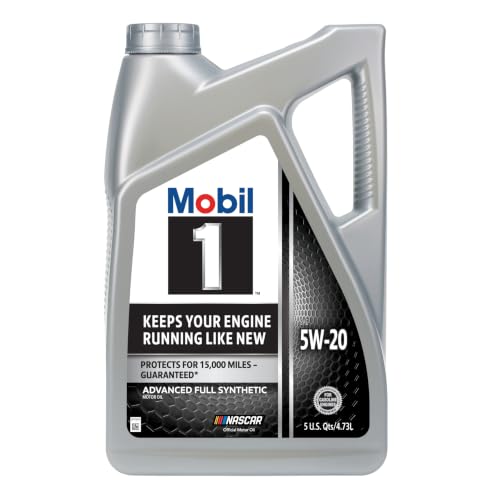
Mobil 1 Advanced Full Synthetic 5W-20, 5 Quart
The default answer for a JK (ASIN: B00J00X7QK). Mobil 1’s Advanced Full Synthetic in 5W-20 meets the MS-6395 specification the JK’s manual requires, in the standard 5-quart jug format. Mobil positions this formula around long drain capability and sludge and wear protection under its Triple Action branding, and it is the oil a great many JK owners run for the vehicle’s life in both engines. For the 3.8L, which takes about 5 quarts with a filter change, one jug is the whole job. For the 3.6L Pentastar, which takes about 6 quarts with filter, add a single quart of the same oil to complete the fill.
Choose this pick if you want the set-and-forget option: correct grade, correct Chrysler specification, available everywhere, equally at home in a 2008 Sport and a 2017 Rubicon.
Castrol EDGE 5W-20 Advanced Full Synthetic, 5 Quarts
The strength-focused alternative (ASIN: B00IPS3G96, Castrol model 03083). Castrol’s EDGE line is built around maintaining oil film strength under pressure — the maker’s Fluid Titanium positioning — and its 5W-20 is a full synthetic meeting the JK’s requirements in the same 5-quart format. It is a particularly sensible match for JKs that work hard: sustained low-range crawling, towing near the vehicle’s limit, and long highway grades in summer all load the oil film in exactly the way this formula is marketed to resist.
Choose this pick if your JK’s life is harder than average, or if you are already in the Castrol ecosystem from other vehicles. Between the two picks there is no wrong answer for a JK in normal service — the specification is the decision, and both meet it.
Capacities, Filters and Intervals
The 3.8L takes about 5 quarts with a filter change and uses a conventional spin-on filter. The 3.6L Pentastar takes about 6 quarts with filter and uses a cartridge filter accessed from the top of the engine — and here sits the JK’s most notorious oil-service trap. The Pentastar’s oil filter housing is a plastic assembly that also carries the oil cooler, and it cracks and leaks with age and heat cycling; a leak from the top rear of a 3.6L that pools in the engine valley and drips at the back is this housing until proven otherwise. When changing the cartridge, the cap’s torque matters: overtightening the plastic cap is a leading cause of housing damage, so snug it to its specification rather than by feel. If the housing ever needs replacement, aluminium aftermarket housings exist precisely because the plastic original is a known wear item.
Intervals: the JK’s oil change indicator system calculates from actual use, and both engines also carry a time-and-mileage backstop in the manual — follow whichever arrives first, and treat sustained off-road, dusty or short-trip use as the severe service it is. Check the level between changes on both engines. The 3.8L in particular is known for consumption as miles climb; a quart between changes in a high-mileage 3.8L is common and manageable, but only if it is caught by the dipstick rather than by the oil pressure light.
The 3.8L Consumption Question, Answered Straight
No oil topic follows the early JK around like the 3.8L’s appetite for oil. The honest summary is that consumption in these engines varies enormously by individual engine and history: some use almost nothing between changes at high mileage, others have consumed a quart every thousand miles or so since middle age. The causes are ordinary — ring and bore wear, valve guide wear, and a PCV system that deserves checking before any of those are blamed — and the management is ordinary too. Check the dipstick at every second fuel stop until your engine’s pattern is known, top up with the same oil you run, and keep records; a stable consumption rate is a maintenance fact, while a suddenly rising rate is a diagnostic event.
What not to do is chase the consumption with viscosity. The thicker-oil experiment trades a measurable, manageable consumption pattern for unmeasured risks in an engine whose oil passages and pump were designed around 5W-20, and it rarely changes the consumption much anyway, because most 3.8L consumption is not happening across a gap that thicker oil bridges. A high mileage 5W-20 with seal conditioners is the legitimate version of the same instinct: correct grade, correct specification, additive help aimed at the seals that actually weep.
Reading the Oil Change Indicator
The JK does not use a fixed mileage interval; its indicator system models oil life from engine operating conditions — temperature, trip length, load — and asks for a change when the model says the oil is spent, with a maximum time and mileage ceiling in the manual as a backstop. Two ownership patterns defeat the model’s assumptions and deserve manual discipline instead. The first is the low-mileage JK: a Wrangler driven a few thousand miles a year on short trips accumulates condensation and fuel dilution that the calendar, not the odometer, should govern — change it at least annually regardless of the indicator. The second is the trail JK: hours of low-range, high-load, low-airflow running age oil far faster than the road miles suggest, and dusty environments load the air filter that keeps grit out of the oil in the first place. For both patterns, shortening the interval is cheap insurance on engines that are now all at least eight years old, and on vehicles whose next decade of life depends entirely on how the last one was maintained by the people who owned them.
Top-Up Oil and the Quart in the Back
Both JK engines reward an owner who carries a spare quart. The 3.8L’s consumption pattern makes it obvious; the Pentastar justifies it differently — a JK used off-road can be a long way from a parts store when a trail-side check shows the level low after a housing seep or a hard day. The top-up quart should always be the same oil as the fill where possible, and where it cannot be, any 5W-20 meeting MS-6395 mixes safely for top-up purposes: engine oils of the same specification are miscible by design, and a slightly mixed sump at the correct level is unambiguously better than a pure sump a quart low. Buy the single quart when you buy the jug, store it upright and sealed in the vehicle, and rotate it into the next change so the spare is always fresh. Note the level and the exact date each time you add oil — that simple written log is the data that separates a stable, manageable consumption pattern from a developing problem, and it is the first thing a mechanic will ask about if the Jeep ever goes in for oil use.
Frequently Asked Questions
Can I use 5W-30 in my JK for better protection?
The manual specifies 5W-20 for both JK engines, and the Pentastar’s valve timing system is calibrated for it. Stay with 5W-20 meeting MS-6395; if the engine is old and consuming, use a high mileage formula in the correct grade.
How much oil does my JK take?
About 5 quarts with filter for the 3.8L (2007–2011) and about 6 quarts with filter for the 3.6L Pentastar (2012–2018). Fill to the dipstick rather than pouring the nominal capacity blindly, and recheck after the first short drive.
My 3.6L is leaking oil from the top of the engine. Is it the oil?
Almost certainly not — the Pentastar’s plastic oil filter and cooler housing is a well-known leak source as it ages. Oil pooled in the engine valley points to the housing and its seals, a parts repair, not an oil selection problem.
Is synthetic required, or will conventional 5W-20 do?
The specification is grade plus MS-6395, and conventional oils meeting it exist. Full synthetics like both picks here add cold-flow, heat resistance and longer safe intervals, which suit how most JKs are actually used — the guide recommends them on that basis, not because the manual demands the word synthetic.
My 3.8L uses oil between changes. Which pick helps?
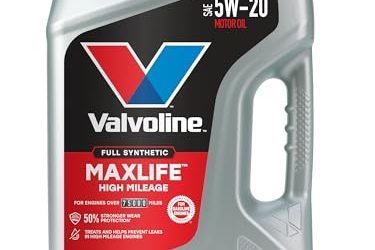
Neither pick is a high mileage formula; for a consuming 3.8L, step to a high mileage full synthetic in 5W-20 meeting MS-6395 — Valvoline’s MaxLife full synthetic is the category’s reference product — and keep the level checked. Rising consumption is also worth a PCV valve check before blaming the rings.
Disclosure: As an Amazon Associate, this site may earn from qualifying purchases made through links in this article, at no additional cost to you.