Our Short List of 3

- Best for: bakers who want one durable steel pan that stays flat and releases well for years.
- Material: heavy-gauge aluminized steel
- Cups: 12 wells
- Cup size: 2.75 x 2.0625 x 1.375 inches per cup
- Surface: fluted design for airflow, silicone nonstick coating

- Best for: bakers who prefer bare metal and do not mind greasing cups or using liners.
- Material: pure natural aluminum, uncoated
- Cups: 12
- Weight: 1.3 pounds
- Finish: natural aluminum, no nonstick coating
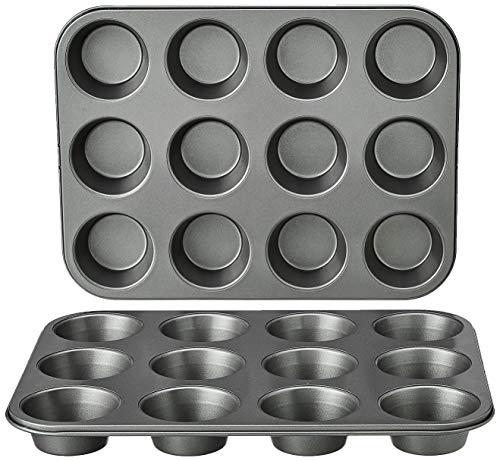
- Best for: households that bake double batches and want a matched pair of pans.
- Material: steel with nonstick coating
- Set: 2 pans, 12 cups each
- Dimensions: 13.9 x 10.55 x 1.22 inches per pan
- Oven limit: 428 degrees Fahrenheit
All 5 Picks at a Glance
| Product | Specs | Action |
|---|---|---|
| USA Pan Bakeware Muffin Pan, 12-Well, Aluminized Steel |
| Check price on Amazon |
| Nordic Ware Natural Aluminum Commercial Muffin Pan, 12 Cup |
| Check price on Amazon |
| Amazon Basics Nonstick Muffin Pan, Set of 2, 12 Cups |
| Check price on Amazon |
 Wilton Recipe Right Muffin Pan, 12-Cup Non-Stick |
| Check price on Amazon |
 Trudeau Structure Silicone Muffin Pan, 12 Cup |
| Check price on Amazon |
Key takeaways
- Five 12-cup muffin pans compared across aluminized steel, bare aluminum, nonstick steel, and framed silicone, with cup sizes, oven limits, and care notes.
A muffin pan looks like one of the simplest tools in the kitchen, yet the wrong one shows up in every batch: pale bottoms from a pan that moves heat slowly, torn tops from cups that grip the crumb, or a warped corner that rocks on the rack and bakes one side faster than the other. Material, cup spacing and rim design settle most of that before the batter is even mixed.
The five pans below are all standard 12-cup trays, but they take different routes to the same job: heavy aluminized steel, bare commercial aluminum, two nonstick steel designs at different weights, and a silicone pan with a steel frame hidden inside. The quick picks give the short version. The sections after them explain where each material helps, where it gets in the way, and which pan suits the way you actually bake.
Quick Picks
As an Amazon Associate we earn from qualifying purchases.
| Product | Best for | Key spec from title |
|---|---|---|
| USA Pan Bakeware Muffin Pan, 12-Well | Long service life | Heavy-gauge aluminized steel |
| Nordic Ware Natural Aluminum Muffin Pan, 12 Cup | Coating-free baking | Pure uncoated natural aluminum |
| Amazon Basics Nonstick Muffin Pan, Set of 2 | Two batches at once | Two 12-cup steel pans |
| Wilton Recipe Right Muffin Pan, 12-Cup | Everyday nonstick baking | Non-stick steel, 12 cups |
| Trudeau Structure Silicone Muffin Pan, 12 Cup | Flexible release | Silicone with integrated steel frame |
How to Choose
Pan Material: Steel, Aluminum, or Silicone
Steel pans are the default in most kitchens because they hold their shape, shrug off daily handling, and pair well with nonstick coatings. Aluminum conducts heat faster and more evenly than steel, which tends to give paler, more uniform crusts, and commercial bakeries lean on it for that reason. Silicone sits at the other end of the range: it releases baked goods with a push from below and folds away in a drawer, but it flexes under a full load of batter and browns more gently. None of the three is wrong. The better question is which behaviour matches your oven and your habits.
Coating or Bare Metal
A nonstick coating does the release work for you, so muffins come out with a light spray or none at all, and cleanup is mostly a rinse. The trade-off is lifespan: coatings thin out over years of use, and metal utensils or abrasive pads speed that up. Bare aluminum asks for grease or paper liners every batch, yet there is nothing to wear off, so a well-kept uncoated pan can stay in service for decades. Silicone splits the difference, since the material itself resists sticking without a sprayed-on layer. Pick based on whether you would rather grease a pan forever or replace a coated one eventually.
Cup Size and Pan Footprint
Standard muffin cups hold the volume most recipes assume, and every pan in this guide uses that size, so batter quantities translate directly. What varies is the frame around the cups. A wider pan with generous spacing lets hot air circulate between cups and gives you room to grip the edges with mitts, while a compact frame fits smaller ovens and stacks more neatly. Check the outer dimensions against your oven rack before ordering, especially for two-pan sets that may sit side by side. Cup depth matters too: deeper wells suit tall bakery-style muffins, and shallower ones spread heat faster for even tops.
Rim, Weight, and Handling
A full muffin pan is awkward cargo: twelve cups of liquid batter, carried in two mitt-covered hands, into a hot oven. A reinforced or rolled rim keeps the tray from twisting as you lift it, and a fluted or textured surface adds stiffness without extra metal. Weight cuts both ways. A heavier pan feels planted and resists warping, but a lighter one is easier to rotate halfway through baking and kinder to arthritic wrists. Silicone pans need the most support of all, which is why the better designs hide a steel frame in the rim. Handle each candidate on paper: rim first, weight second, coating last.
The 5 Best Options
USA Pan Bakeware Muffin Pan, 12-Well, Aluminized Steel
- Best for: bakers who want one durable steel pan that stays flat and releases well for years.
- Material: heavy-gauge aluminized steel
- Cups: 12 wells
- Cup size: 2.75 x 2.0625 x 1.375 inches per cup
- Surface: fluted design for airflow, silicone nonstick coating
bakers who want one durable steel pan that stays flat and releases well for years.
the coating still dislikes metal tools and scouring pads, so treat it like nonstick, not bare steel.
This is the pan for bakers who buy bakeware the way they buy cast iron: once, and for good. The heavy-gauge aluminized steel spreads heat steadily across all twelve wells, and the fluted surface is not decoration, since the ridges stiffen the sheet and let air move under the batter. A reinforced rim resists the slow twist that turns older pans into rocking trays. The silicone-based nonstick coating releases muffins cleanly without being as fragile as conventional coatings, and the whole design mirrors what the maker sells to commercial bakeries, scaled down for a home oven.
Nordic Ware Natural Aluminum Commercial Muffin Pan, 12 Cup
- Best for: bakers who prefer bare metal and do not mind greasing cups or using liners.
- Material: pure natural aluminum, uncoated
- Cups: 12
- Weight: 1.3 pounds
- Finish: natural aluminum, no nonstick coating
bakers who prefer bare metal and do not mind greasing cups or using liners.
release depends entirely on your prep, so dry cups will hold on to delicate batters.
Nordic Ware skips the coating entirely. This pan is pure natural aluminum, the same material commercial bakeries use when they want heat to arrive quickly and evenly at every cup. Without a nonstick layer, muffins brown gently and uniformly, and there is no surface to scratch, peel, or wear thin over time. At 1.3 pounds it is light in the hand even when loaded, and the commercial-gauge build is meant to shrug off daily use. The honest cost of that simplicity is prep: every batch needs greased cups or paper liners, and the pan rewards hand washing rather than the dishwasher.
Amazon Basics Nonstick Muffin Pan, Set of 2, 12 Cups
- Best for: households that bake double batches and want a matched pair of pans.
- Material: steel with nonstick coating
- Set: 2 pans, 12 cups each
- Dimensions: 13.9 x 10.55 x 1.22 inches per pan
- Oven limit: 428 degrees Fahrenheit
households that bake double batches and want a matched pair of pans.
the 428 degrees Fahrenheit ceiling is lower than most steel pans, so check high-heat recipes before baking.
Most muffin recipes make twelve, but many households bake twenty-four: a dozen for now and a dozen for the freezer, or one batch of muffins alongside one of cupcakes. This set answers that with two identical 12-cup steel pans, so the second batch goes in the moment the first comes out instead of waiting on a wash and a cool-down. The nonstick surface keeps release simple, the gray finish hides the staining that light pans show, and the footprint is a touch more compact than most, which helps in smaller ovens. For new bakers stocking a kitchen, it covers the muffin job twice over in one box.
Wilton Recipe Right Muffin Pan, 12-Cup Non-Stick
- Best for: occasional bakers who want light, simple nonstick bakeware for standard recipes.
- Cups: 12, standard size
- Surface: non-stick
- Weight: 1.14 pounds
- Model: WI2105-954
occasional bakers who want light, simple nonstick bakeware for standard recipes.
the non-stick surface does the release work, so metal spatulas and abrasive scrubbing will wear it down.
Wilton’s Recipe Right line is the bakeware equivalent of a reliable house brand: plain, light, and built around a non-stick surface that lets muffins slide out with minimal greasing. At 1.14 pounds the pan is easy to lift, turn, and wash, which matters more than it sounds when baking happens on weeknights rather than weekends. The standard 12-cup layout matches the recipes in most cookbooks exactly, and the shallow profile heats quickly for batters that should set fast. It will not outlast the heavy-gauge pans in this guide, but for occasional baking it covers the job with the least fuss and the least storage weight.
Trudeau Structure Silicone Muffin Pan, 12 Cup
- Best for: bakers short on storage who want effortless release and dishwasher cleanup.
- Material: silicone with integrated steel frame
- Cups: 12
- Cup diameter: 2.8 inches
- Heat resistance: up to 428 degrees Fahrenheit
bakers short on storage who want effortless release and dishwasher cleanup.
even with the frame, silicone flexes more than metal, so fill it on a flat surface and support it with both hands.
Plain silicone pans wobble. Trudeau’s answer is a patented structure: a steel frame sealed inside the silicone, so the pan keeps the easy release and flexibility of silicone while holding its shape on the way into the oven. Muffins pop out with a push from underneath, the pan itself is dishwasher safe, and it folds or rolls into storage spaces where a rigid tray will not fit. The listing rates it to 428 degrees Fahrenheit, which covers standard muffin and cupcake temperatures comfortably. Browning runs gentler than on metal, so pale, tender crusts are the style here rather than deep golden tops.
Which One Fits Your Situation
You Bake Muffins Every Week
Frequent baking wears out bargain pans first at the rim and then at the surface. The USA Pan’s heavy-gauge aluminized steel and reinforced rim are built for that rhythm, and its silicone coating tolerates weekly use better than standard nonstick. Choose it if the pan will live on the counter rather than in a cupboard, and if even browning across all twelve cups matters more to you than the lowest possible weight.
You Want to Skip Nonstick Coatings
If you would rather grease a pan than wonder about a coating, the Nordic Ware is the only bare-metal option here. Pure aluminum heats quickly and evenly, releases well once greased or lined, and has no surface layer to degrade. It asks for hand washing and a minute of prep per batch, and in return it should still be baking long after coated pans have been replaced.
You Bake for a Crowd or a Bake Sale
Doubling a recipe in a single pan means baking in shifts while the first dozen cools in the tray. The Amazon Basics set removes that bottleneck with two matched pans rotating through the oven back to back. The same logic suits meal prep: bake a savoury batch and a sweet batch in one session, then freeze both. Confirm your recipes stay under the pans’ stated oven limit.
Your Storage Space Is Tight
Rigid pans demand a cupboard shelf or a deep drawer. The Trudeau silicone pan bends, rolls, and tucks into gaps that metal cannot use, and its steel frame keeps that flexibility from becoming floppiness at baking time. Pick it if storage is the binding constraint in your kitchen, or if easy release matters more than deep browning on your muffins.
Common Mistakes
- Filling every cup to the brim, which makes batter spill over, fuse the tops together, and glue the batch to the pan.
- Judging doneness by the centre cups only, when corner and edge cups often bake at a different pace.
- Releasing muffins with a metal knife, which cuts nonstick coatings and scratches bare aluminum.
- Washing a hot pan under cold water, a shock that can warp thinner steel trays.
- Storing pans wet or nested without drying, which invites rust on steel and odours in silicone.
Frequently Asked Questions
Do muffin pans need liners if they are nonstick?
Not always. A sound nonstick surface releases plain muffins and cupcakes with little or no greasing, especially once the pan has cooled for a few minutes. Liners still earn their place for sticky batters with fruit or caramel, for serving at gatherings, and for keeping a pan clean when you bake two flavours back to back.
What is the difference between a muffin pan and a cupcake pan?
In practice, very little. The two names describe the same tray of round cups, and most listings, including several in this guide, use both terms for one pan. Cup size is the detail that matters: standard cups suit both muffins and cupcakes, while mini and jumbo versions change baking times and portion sizes enough that recipes need adjusting.
Can a silicone muffin pan go straight on the oven rack?
Yes, within its stated temperature limit, and a steel-framed design like the Trudeau holds its shape well enough to sit on the rack directly. Many bakers still slide a flat baking sheet underneath for the trip between counter and oven, because even framed silicone flexes a little when twelve cups of batter are moving at once.
How do I stop muffin bottoms from browning too fast?
Dark nonstick pans absorb more heat than pale aluminum, so bottoms colour sooner in them. Moving the rack up one level, setting the pan on a light-coloured baking sheet, or choosing a bare aluminum pan all slow the bottom heat down. If only one batch in three scorches, check for a hot spot by rotating the pan halfway through.