Our Short List of 3
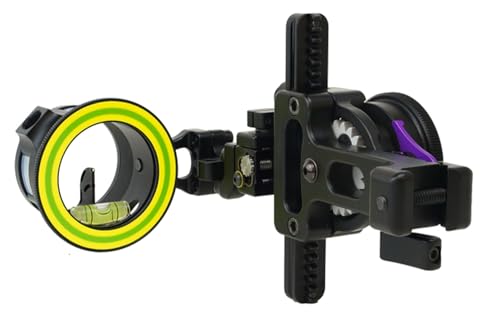
- Best for: Owners of picatinny-rail risers who want quiet, tool-free yardage changes.
- Single pin sight with picatinny mount (PM)
- Solid 6061 aluminum construction
- Micro adjustable 2nd and 3rd axis with coarse horizontal and vertical tuning
- Toolless micro-adjustment throughout

- Best for: Hunters who want the shortest sight-in process and full 100 yard range.
- Single pin with React Technology automatic yardage spacing
- Tool-less micro-click windage and elevation adjustments
- Fiber optic yardage indicators from 20 to 100 yards
- 2nd and 3rd axis leveling

- Best for: Tree stand and blind hunters who dial often and shoot in low light.
- Single all-metal .019 inch pin wrapped in fiber optic
- ZERO-IN adjustment dial with micro-adjustable elevation
- Over 80 pre-marked yardage tapes included
- Toolless yardage lock and one-hand adjustment
All 3 Picks at a Glance
| Product | Specs | Action |
|---|---|---|
| Spot Hogg Fast Eddie PM |
| Check price on Amazon |
| Trophy Ridge React One Pro Dovetail |
| Check price on Amazon |
| TRUGLO Range Rover |
| Check price on Amazon |
Key takeaways
- Compare four single pin bow sights for hunting, with slider dials, pin sizes, axis adjustment and low-light brightness explained for compound bow setups.
Choosing a single pin sight is really a decision about habit. A fixed multi-pin housing asks nothing of you in the moment, while a slider gives you one clean aiming point only if you range the animal, dial the exact yardage, and remember to reset the wheel afterward. Get the dialing habit right and the uncluttered view is a genuine advantage; skip it once and the same sight causes a clean miss over or under the animal.
This guide is for compound bow hunters weighing that trade: tree stand hunters shooting known lanes, western spot-and-stalk hunters who face longer and less predictable distances, and owners of newer picatinny-rail risers. Every sight below was picked from its Amazon listing name and published specifications, comparing pin diameter, housing size, mount style, axis adjustment, and how each yardage system works.
Quick Picks
As an Amazon Associate we earn from qualifying purchases.
| Product | Best for | Key spec from title |
|---|---|---|
| HHA Optimizer Lite X (LX-5519) | Lever-slider fans who sight in at two distances | .019 pin in a 1 5/8 inch housing |
| Spot Hogg Fast Eddie PM | Picatinny riser owners who adjust quietly | Solid 6061 aluminum, picatinny mount |
| Trophy Ridge React One Pro Dovetail | Hunters who want the fastest sight-in | React Technology with 20 to 100 yard indicators |
| TRUGLO Range Rover | Low-light shots and one-hand dialing | ZERO-IN dial with rheostat light included |
How to Choose
Yardage System: Lever, Dial, or Automatic Math
Every single pin sight moves the same pin a different way, and that mechanism decides how the sight behaves under pressure. Lever sliders like the HHA design travel fast and read against a printed tape, which suits hunters who pre-range landmarks. Large dials give finer, more deliberate movement and usually lock down harder. The React system takes a third route: set two distances and the mechanism spaces the rest mathematically. Think about how you actually hunt. If most shots happen inside 35 yards, raw dial speed matters less than a positive lock and a tape you can read at a glance in dim light.
Pin Diameter and Brightness Control
Pin size is a real fork in the road. A .019 pin stays visible in dark timber and during the last minutes of legal light, but it covers more of a distant target. A .010 pin leaves the aiming point open at 50 or 60 yards, yet it can fade against a shadowed background. Brightness control matters just as much: a mechanical rheostat that shields or exposes fiber lets you dim a glowing pin on bright days and open it up at dusk, while a battery light adds punch but adds one more thing to check before a hunt. Match the pin to your typical shot distance and cover, not to what looks sharpest indoors.
Axis Adjustment and Mounting Style
A slider only shoots straight at every distance when the housing is leveled to the bow, which is why second and third axis adjustment separates serious hunting sights from basic ones. Third axis matters most on angled shots from a stand or sidehill, where an unleveled housing throws arrows sideways. Mounting style deserves the same attention. A standard bracket bolts to common riser holes, a dovetail lets you slide the sight in or out to match your peep, and a picatinny mount only fits risers built with that rail. Confirm the mount against your riser before anything else, because the finest dial in the world is useless on a sight that cannot attach.
Housing Size, Fiber Protection, and Build
Housing diameter shapes your sight picture. A compact 1 5/8 inch housing keeps weight down and centers naturally inside most peeps, while a larger circular housing gathers more light and frames the target with more air around it. Fiber protection is the quiet durability factor: fully wrapped or enclosed fiber survives brush, pack straps, and bow cases far better than exposed strands. Machined aluminum frames from the established makers hold zero through seasons of vibration, and a listed weight helps you judge total bow balance, since a heavy slider on a long dovetail changes how the bow settles at full draw.
The 4 Best Options
HHA Optimizer Lite X (LX-5519)
The Optimizer Lite X is the lever-action slider that defined this category, and the current X version keeps the formula hunters trust: sight in at 20 and 60 yards, pick the matching preprinted tape, and the lever then reads true out to 80 yards in 5-yard steps. The slotted side bracket gives fine second axis and vertical adjustment without the fiddly shims of older models, and the mechanical rheostat lets you tune pin brightness by hand. It suits hunters who want a proven, mostly metal sight that sets up once and then simply works season after season.
Specs
- Single .019 inch pin in a 1 5/8 inch scope housing
- Infinite adjust slotted side bracket with micro windage adjustment
- RDS sight tape technology, 20 to 80 yards in 5-yard increments
- Mechanical rheostat to adjust pin brightness
- Machined aluminum pin carrier and leveling bubble
- Water resistant preprinted sight tapes included
- Lens kit and Blue Burst light compatible
- Right hand, black
Best for: Hunters who want the classic lever slider with a two-distance sight-in.
Watch out for: Confirm right hand and the .019 pin before ordering, since this listing family also includes a finer .010 version.
ASIN: B0B2HNZZDM
Spot Hogg Fast Eddie PM
- Best for: Owners of picatinny-rail risers who want quiet, tool-free yardage changes.
- Single pin sight with picatinny mount (PM)
- Solid 6061 aluminum construction
- Micro adjustable 2nd and 3rd axis with coarse horizontal and vertical tuning
- Toolless micro-adjustment throughout
Owners of picatinny-rail risers who want quiet, tool-free yardage changes.
The mount only fits risers with a picatinny sight rail; bows with standard sight holes need a different Fast Eddie version.
The Fast Eddie PM takes Spot Hogg’s silent slider platform and mounts it on a picatinny rail, which makes it the natural pick for the growing number of hunting risers machined with that rail. Yardage changes are click-free, so nothing ticks or clicks while an animal is close, and the quick release lock on the yardage knob holds the setting once you make it. HRD technology removes bushings from the moving parts, which is Spot Hogg’s answer to the slop and buzz that plague cheaper sliders. Everything adjusts without tools, including the micro-adjustable second and third axes, so tuning at the range or in camp stays simple.
Trophy Ridge React One Pro Dovetail
- Best for: Hunters who want the shortest sight-in process and full 100 yard range.
- Single pin with React Technology automatic yardage spacing
- Tool-less micro-click windage and elevation adjustments
- Fiber optic yardage indicators from 20 to 100 yards
- 2nd and 3rd axis leveling
Hunters who want the shortest sight-in process and full 100 yard range.
The lens is not included, and your two reference distances must be shot carefully, since every other mark is calculated from them.
The React One Pro exists for hunters who hate the long tape-testing ritual. Its React Technology works from two sighted distances: set your shortest and one longer mark, and the mechanism spaces the fiber optic yardage indicators mathematically across the full 20 to 100 yard range. Adjustments are tool-less micro-clicks for both windage and elevation, and the dovetail mount lets you slide the housing to center it in your peep. Triple axis leveling keeps the pin honest on steep stand angles. Ten custom sight tapes come in the box, and the retainer ring accepts a 1 5/8 inch lens if you later want magnification for longer practice sessions.
TRUGLO Range Rover
- Best for: Tree stand and blind hunters who dial often and shoot in low light.
- Single all-metal .019 inch pin wrapped in fiber optic
- ZERO-IN adjustment dial with micro-adjustable elevation
- Over 80 pre-marked yardage tapes included
- Toolless yardage lock and one-hand adjustment
Tree stand and blind hunters who dial often and shoot in low light.
The large housing needs a matching peep diameter to center cleanly, so check your peep size before ordering.
The Range Rover builds its whole design around a big ZERO-IN dial and a large circular housing, which makes it easy to run with one hand and easy to read in poor light. The dial turns with micro-adjustable elevation steps against pre-marked yardage tapes, and the yardage lock needs no tools, so a quick reset after a shot becomes second nature. The all-metal .019 pin is wrapped in fiber for brightness, and a rheostat light is included for the dimmest minutes of the day. An adjustable quiver mount is a small but real convenience, since it keeps a bow-mounted quiver clear of the dial through its full travel.
Which One Fits Your Situation
You Hunt Known Lanes From a Tree Stand
Most of your shots are pre-measured, so the sight that wins is the one you can set and forget at a marked distance. The HHA Optimizer Lite X fits this rhythm well: set the lever to your lane distance at first light and leave it there. Its rheostat keeps the pin from blooming against a bright background, and the simple tape stays readable in dim timber.
You Spot and Stalk Across Open Country
Distances change constantly and shots stretch longer, so you need fine dialing and full axis leveling for sidehill angles. The Spot Hogg Fast Eddie PM gives silent, click-free yardage changes that will not alert a bedded animal, plus micro-adjustable second and third axes for uneven ground. If your riser lacks a picatinny rail, the React One Pro covers the same ground on a dovetail.
You Want the Fastest Possible Setup
If range time is scarce, the Trophy Ridge React One Pro shortens the work more than any other sight here. Two honest distances shot carefully are enough for its mechanism to space the remaining marks out to 100 yards. That leaves your practice time for shooting form instead of printing, testing, and swapping sight tapes through a whole afternoon.
Your Shots Happen at First and Last Light
Dim light is where pin brightness decides the shot. The TRUGLO Range Rover pairs a fiber-wrapped metal pin with an included rheostat light, so you can add glow without buying anything else. Its large circular housing also gathers the scene well at dawn. Dial the yardage before the light fades, because reading any tape in near darkness is the weak point of every slider.
Common Mistakes
- Ranging the animal and forgetting to move the dial, then holding the pin dead-on at the wrong distance.
- Skipping second and third axis leveling, which throws shots sideways on angled tree stand and sidehill shots.
- Choosing a fine .010 pin for dark timber, where it disappears against shadowed backgrounds at last light.
- Leaving the yardage knob unlocked after an adjustment, so brush or a bow case creeps the setting off zero.
- Picking a sight tape by guessing arrow speed instead of confirming it with two real distances.
Frequently Asked Questions
Is a single pin sight a good choice for hunting?
Yes, provided your hunting style includes ranging before the shot. One pin removes the gap-shooting guesswork and the clutter of a five-pin housing, and it forces a disciplined routine that many hunters find calming. The trade is real, though: an animal that moves after you dial will not wait while you adjust again.
How do you sight in a slider bow sight?
Start by mounting the sight level and setting a close mark, usually 20 yards. Then shoot a longer distance such as 60 yards and adjust until groups center. Those two points select the correct printed tape on lever and dial sights. React models use the same two distances, but the mechanism spaces every other yardage for you automatically.
Should I pick a .010 or .019 pin for hunting?
Choose .019 if most shots fall inside 40 yards or happen in thick cover and low light, because the thicker fiber stays visible. Choose .010 if you regularly practise and shoot beyond 50 yards in open country, where a fine pin covers less of a small target. Many hunters split the difference by pairing a .019 pin with a rheostat.
Do I need third axis adjustment on a hunting sight?
You need it if you shoot from elevated stands or across slopes, which describes most hunting. Third axis keeps the housing level relative to gravity rather than the bow, so the pin stays truthful when the shot angles down or the ground tilts. On flat ground at short range you may never notice it missing, but angled shots expose it quickly.