Key takeaways
- Three mesh office chairs for long coding sessions, compared on breathable mesh, adjustable lumbar support, armrests, and fit at a keyboard-first desk.
A coding workstation asks more of a chair than most desks do. You sit for long, unbroken stretches, hands on the keyboard, eyes on the screen. A chair that feels fine for an hour of email can leave you with a sore lower back and stiff shoulders by the afternoon, so the real question is whether the chair keeps air moving, supports your lower back without constant fiddling, and lets your arms rest at keyboard height.
Full-time developers who code through the day need breathable mesh and lumbar support that stays put. Home-office coders in warm rooms need airflow across the back and seat. Taller or heavier coders need a published weight rating and a seat that fits. The three chairs below cover those groups: the Herman Miller Aeron with 8Z Pellicle mesh on seat and back, the Steelcase Series 1 with a flexing LiveBack mesh back, and the SIHOO Doro C300 with full mesh on seat, back, and headrest.
Quick Picks
As an Amazon Associate we earn from qualifying purchases
| Product | Best for | Key spec from title |
|---|---|---|
| Herman Miller Aeron Ergonomic Chair, Size B, Graphite | All-day coding in a warm room | 8Z Pellicle mesh suspension seat and back |
| Steelcase Series 1 Office Chair, Licorice | A buy-once chair for a shared home office | LiveBack flexor system with mesh back |
| SIHOO Doro C300 Ergonomic Office Chair | Full mesh comfort with adaptive lumbar support | Mesh seat, back, and headrest with dynamic lumbar support |
How to Choose
Mesh That Actually Breathes
Mesh is the reason these chairs suit coding workstations, but not every mesh chair breathes the same way. A mesh back alone helps, yet a mesh seat matters just as much when you sit for hours, because heat builds up wherever your body meets the chair. The Aeron uses a tensioned Pellicle suspension for both seat and back, while the SIHOO Doro C300 pairs a mesh seat with a mesh back and headrest. The Steelcase Series 1 uses a knit-mesh back with an upholstered seat, which still moves air across your back but feels different underneath. Check the listing for exactly which parts are mesh before you order.
Lumbar Support That Meets Your Lower Back
Lumbar support is the feature that decides whether a chair works for a full coding day or only for the first hour. Some chairs give you a pad you move up, down, and in or out until it meets the curve of your lower back. Others, like the SIHOO Doro C300, use a self-adaptive panel that shifts as you lean and change posture, which suits people who recline and sit upright through the day. The Aeron uses PostureFit SL pads that flex independently. Whichever style you pick, make sure the support reaches your lower back at your normal typing posture, not only when you sit bolt upright.
Armrests and Keyboard Posture
Coding is keyboard-first work, so armrests matter more here than they do for a meeting-room chair. Your forearms should rest level with the keyboard, with your shoulders relaxed rather than hunched. Look for armrests that adjust in height at minimum, and in depth and width if you switch between typing and using a mouse. The Steelcase Series 1 and the Aeron both have fully adjustable arms that slide forward, back, and sideways as well as up and down. The SIHOO Doro C300 uses 3D armrests that adjust in height, depth, and pivot. Also check that the armrests can drop low enough to slide under your desk edge when you pull in close.
Seat Fit: Height, Depth, and Weight Rating
A chair that does not fit your body will fight you all day, no matter how good its mesh is. Seat height should let your feet rest flat on the floor with your knees level, so compare the published height range with your desk height before ordering. Seat depth matters too: a seat that is too deep presses behind your knees, while one that is too shallow leaves your thighs unsupported. The SIHOO Doro C300 lists a fixed seat depth, while the Steelcase Series 1 lets you slide the seat forward and back. Finally, check the weight rating on the listing itself, since it reflects the configuration you are actually buying.
The 3 Best Options
Herman Miller Aeron Ergonomic Chair, Size B, Graphite

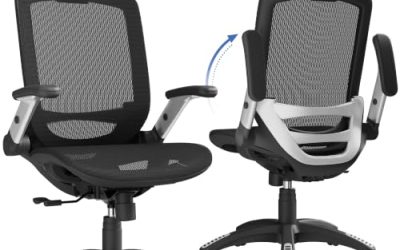
The Aeron is the reference point every other mesh chair gets measured against, and for a coding workstation its case is simple: the seat and back are both a woven suspension mesh, so air keeps moving through long sessions instead of collecting as heat. PostureFit SL pads support the lower back and pelvis, the arms adjust in every direction, and the tilt limiter lets you set how far the chair reclines when you lean back to read code. Size B fits most adults, and the graphite frame suits a plain desk setup without drawing attention to itself.
Specs
- 8Z Pellicle suspension mesh on the seat and back, divided into zones of varying tension
- PostureFit SL sacral and lumbar support with two individual pads that flex independently
- Fully adjustable arms that move in height, depth, and pivot
- Tilt limiter that sets the recline range
- Available in three sizes, A, B, and C, with Size B the medium fit
- Model AER1B22AWALPG1G1G1BBBK23103
Best for: coders who sit all day in a warm room and want mesh under them as well as behind them.
Watch out for: Aeron listings on Amazon are often sold by third-party sellers, so confirm the chair is new and that the configuration is Size B in graphite before ordering. No headrest is included in this configuration.
Steelcase Series 1 Office Chair, Licorice

The Series 1 brings contract-office engineering to a home coding desk, and its strongest idea is the LiveBack system: the backrest flexes as you shift, so it keeps following your spine instead of holding one fixed curve. The weight-activated recline sets its own resistance from your body weight, which means less knob-turning when you switch between typing and leaning back to think. Seat depth slides to fit your leg length, the arms adjust in four directions, and the lumbar support moves to meet your lower back. It is a plain, sturdy chair that looks at home in any office.
Specs
- LiveBack flexor system in the backrest that conforms to the body and moves with you
- Mesh back upholstery with an upholstered seat
- Adjustable seat depth and flexible seat edge
- Fully adjustable 4D arms that move in height, depth, width, and pivot
- Adjustable lumbar support
- Pneumatic seat height adjustment with a seat height range of 15.5 to 20 inches
- Weight-activated recline with tension adjustment and lock, plus a synchro-tilt mechanism
- Rated for users up to 400 lb
- Wheels for carpet flooring
Best for: coders who want a sturdy, buy-once chair with a high weight rating and a back that moves with them.
Watch out for: the seat is upholstered foam rather than mesh, so if you want mesh underneath you as well as behind you, look at the other two chairs here. No headrest is included in the listed configuration.
SIHOO Doro C300 Ergonomic Office Chair

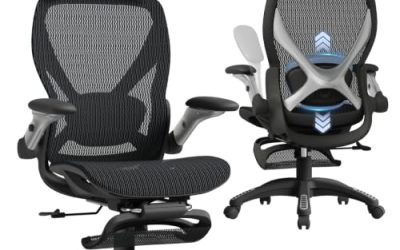
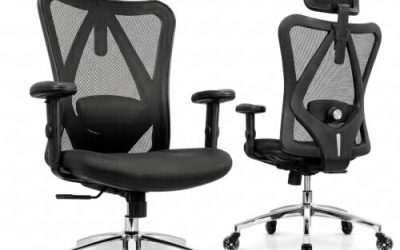
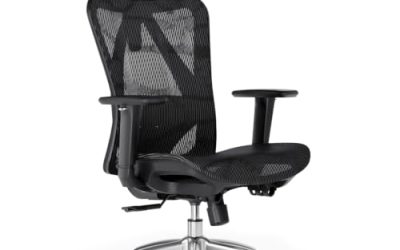
The Doro C300 is the full-mesh pick in this group: mesh seat, mesh back, and mesh headrest, so airflow is not limited to one panel. Its self-adaptive lumbar panel follows your posture as you move between typing upright and leaning back, which suits coders who shift position through the day without wanting to adjust a lumbar knob each time. The headrest adjusts for reading and calls, the backrest adjusts too, and the 3D armrests cover height, depth, and pivot. It is the most adjustable chair here for the way most coding desks are actually used.
Specs
- Mesh seat, mesh back, and mesh headrest
- Self-adaptive dynamic lumbar support that follows posture shifts
- 3D armrests that adjust in height, depth, and pivot
- Adjustable headrest and adjustable backrest
- Seat depth of 16.54 inches, fixed on this configuration
- Seat height range of 16.14 to 19.49 inches
- Rated for users up to 300 lb on the Amazon listing
- Model DORO-C
Best for: coders who want full mesh and adaptive lumbar support without stepping up to a premium brand.
Watch out for: this ASIN is the 3D-armrest configuration, and SIHOO also sells a 4D-armrest version under a different listing, so confirm the exact title and armrest type before ordering. Footrest variants are separate listings.
Which One Fits Your Situation
You Code Eight Hours a Day and Run Hot
Pick the Herman Miller Aeron in Size B. The Pellicle mesh seat and back move air on both sides of your body, which is the difference that shows up in the second half of a long day. PostureFit SL support holds your lower back without a separate lumbar pad to adjust, and the fully adjustable arms keep your forearms level with the keyboard through long typing sessions.
You Want One Chair That Lasts for Years
Pick the Steelcase Series 1. Its LiveBack backrest, weight-activated recline, and 400 lb rating point to a chair built for daily office use rather than occasional sitting. The adjustable seat depth and 4D arms let you dial in the fit once and leave it alone, which suits a coder who wants to stop thinking about seating and get on with work.
You Want Full Mesh Without a Premium Brand
Pick the SIHOO Doro C300. It is the only chair here with mesh on the seat, back, and headrest together, and its self-adaptive lumbar support suits coders who change posture often. The adjustable headrest helps when you lean back to read documentation or take a call between coding sessions, which helps during long workdays.
Your Desk Height Is Fixed and Your Keyboard Sits High
Pick the chair whose seat height range matches your desk, and check armrest travel before anything else. The SIHOO Doro C300 lists a seat height range from 16.14 inches, which suits lower desks, while the Steelcase Series 1 reaches 20 inches for taller setups. Whichever you choose, confirm the armrests drop low enough to clear your desk edge when you pull in close to type.
Common Mistakes
- Choosing a mesh back and ignoring the seat: a foam seat still traps heat on long coding days, so check whether the seat itself is mesh.
- Skipping the weight rating: the rating on the listing reflects the exact configuration you buy, and an overloaded chair loses height and tilt control over time.
- Buying a chair with fixed armrests: fixed arms rarely sit level with your keyboard, which pushes your shoulders up while you type.
- Ignoring seat depth: a seat that is too deep presses behind your knees, and one that is too shallow leaves your thighs unsupported.
- Ordering the wrong variant: several of these chairs sell under similar titles with different armrests, casters, or colours, so match the ASIN and title exactly before ordering.
Frequently Asked Questions
Is mesh better than a padded seat for coding all day?
Mesh suits long coding sessions because it lets air pass through the seat and back instead of trapping heat, which matters when you sit for hours without standing up. A padded seat can feel softer at first, but it holds warmth in a warm room. The Aeron and the SIHOO Doro C300 both use mesh seats, while the Steelcase Series 1 pairs a mesh back with an upholstered seat.
Do I need a headrest for coding?
A headrest is not essential for typing, since you sit upright with your eyes on the screen, but it helps when you lean back to read code or take a call. The SIHOO Doro C300 includes an adjustable headrest, while the Aeron and Steelcase Series 1 do not. If you recline, a headrest is worth having; if you stay upright at the keyboard, you can skip it.
What seat height works with a standard desk?
Your seat height should let your feet rest flat on the floor, your knees roughly level, and your forearms level with the keyboard. The Steelcase Series 1 lists 15.5 to 20 inches, and the SIHOO Doro C300 lists 16.14 to 19.49 inches, so both cover usual desk heights. Measure your desk and leg length before ordering, since the wrong height leaves you hunching.
Can one chair fit two coders sharing a workstation?
A shared workstation works best with a chair that adjusts quickly between users, especially in seat height, armrest height, and lumbar position. The Steelcase Series 1 suits sharing because its weight-activated recline resets itself for each person and its seat depth slides. The SIHOO Doro C300 also adapts well, since its lumbar panel follows each sitter. Whoever is taller should check the top of the seat height range first.