Key takeaways
- Compare five tofu presses, from the self-contained Tofuture box to bamboo and stainless steel models, with notes on block fit, pressure style and cleaning.
A block of tofu straight from its tub is full of water, and that water is the reason tofu steams in the pan instead of searing, crumbles when you try to slice it thin, and dilutes whatever marinade you put it in. The real decision is not whether to press, but how: a spring box you load and leave, a screw press you tighten in stages, or a self-contained tub that catches its own drainage. Each mechanism suits a different cooking rhythm.


This guide is for weeknight cooks who press one block at a time, meal preppers working through several blocks a week, buyers who want plastic out of the equation, and anyone who also presses paneer or fresh cheese. The five picks below were chosen from current Amazon listings to cover all three pressure styles and three materials, in sizes matched to the blocks supermarkets actually sell.
Quick Picks
As an Amazon Associate we earn from qualifying purchases
| Product | Best for | Key spec from title |
|---|---|---|
| Tofuture Tofu Press | Everyday pressing in one sealed box | Fits 8-16 oz blocks |
| TofuBud Tofu Press | Small kitchens and fridge pressing | 2 spring pressure levels |
| EZ Tofu Press | Dialing in pressure gradually by hand | Stainless steel knob hardware |
| YARKOR Bamboo Tofu Press | Kitchens that avoid plastic | Bamboo plates, cheesecloth included |
| BenDuTec Stainless Steel Tofu Press | Tofu plus paneer and cheese | Stainless steel with drip tray |
How to Choose
Match the press to the blocks you actually buy
Most supermarket tofu comes in blocks between 8 and 16 ounces, but the footprint varies by brand, and a press that is too small will bow the block or leave its edges unpressed. Check the inner dimensions of any press against the blocks in your usual store before ordering. Boxes and tubs state a weight range, while plate presses state a footprint, so compare like with like. If you split your buying between two brands with different block shapes, a plate-style press with open sides tolerates the variation better than a fixed tub.
Pick a pressure mechanism that fits your habits
Spring presses apply one or two preset levels of force and then work unattended, which suits cooks who prep tofu while doing something else. Screw and knob presses let you raise pressure in stages as the block gives up water, and they reach the firmest results, but they ask you to come back and tighten them once or twice. Self-contained boxes press gently as the tofu drains into their own base. None of these is objectively best; the right choice is the one whose routine matches how you already cook dinner on a busy evening.
Decide where the water goes
A pressed block releases a surprising amount of liquid, and where it ends up matters more than most first-time buyers expect. Self-contained designs collect it in a base tray you empty afterward, which keeps counters and fridge shelves dry. Plate presses drain freely, so they need to sit in a shallow dish or on a rimmed tray while they work. If you like to press tofu in the fridge overnight, a lidded box that contains its own drainage is far easier to live with than an open plate setup.
Weigh material against cleaning effort
Plastic presses are light, usually dishwasher safe, and the cheapest route into pressing, but clear bases can crack if dropped. Bamboo plate presses keep plastic away from food and look good on the counter, yet they need hand washing and the steel hardware should be dried after each use. Stainless steel presses are the heaviest and most durable option, and they double as paneer and cheese presses, but they take up more storage room. Decide which trade-off you will still be happy with after a hundred uses, not just the first one.
The 5 Best Options
Tofuture Tofu Press
The Tofuture is the press most people picture when they first go looking: a three-part box with an inner strainer, an outer tub that catches the water, and a lid that closes the whole thing into one tidy unit. Load the block, close it up, and the tofu presses as it drains, with nothing leaking onto the counter or fridge shelf. It is a gentle, set-and-leave design rather than a maximum-firmness tool, which makes it a comfortable first press for cooks who want better texture without learning a new routine or babysitting a screw mechanism.
Specs
- Design: 3-part box with inner strainer, outer tub and lid
- Material: BPA-free polypropylene
- Block fit: 8-16 oz blocks
- Dimensions: 6 x 5 x 2.8 inches
- Care: Dishwasher safe
Best for: Cooks who want one sealed unit that presses and stores in the fridge.
Watch out for: Measure your usual block first, since extra-wide blocks can sit proud of the strainer.
ASIN: B01698J0RU
TofuBud Tofu Press
The TofuBud builds its pressure around a stainless steel coil spring with two selectable levels, so the same compact box handles a gentler press for firm tofu and a deeper one for extra firm. A removable drainer lifts out to empty, the whole press comes apart into six dishwasher-safe parts, and a healthy recipes cookbook is included in the box. At under five inches square it is the smallest footprint here, sized for the standard blocks most US brands sell, and flat enough to press inside the fridge rather than taking up counter space during dinner prep.
Specs
- Pressure: Spring with 2 pressure levels
- Block fit: Standard 8-12 oz blocks
- Material: BPA- and BPS-free plastic with stainless steel coil
- Dimensions: 5.4 x 4.7 x 4.7 inches, 1 lb
- Care: Dishwasher safe
- Includes: Removable water drainer and recipe cookbook
Best for: Small kitchens where the press has to earn its shelf space.
Watch out for: The clear base can crack if dropped, and the second pressure level takes a firm twist to engage.
ASIN: B086Q4TRG8
EZ Tofu Press
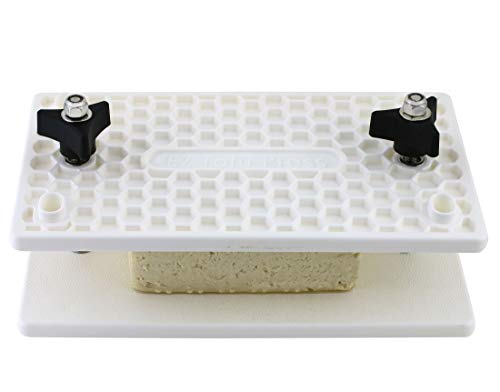
The EZ Tofu Press is the simplest mechanism in this guide: two plates drawn together by stainless steel knobs that you tighten by hand. Because pressure is entirely manual, you can start gently, let the block settle, then add another turn or two as water escapes, which gives the most control over final firmness of any pick here. It is made in the USA, carries no springs to wear out and no tub to fit, and its open plate design accepts blocks of less standard shapes. The trade-off is attention: it rewards cooks who check back rather than load and forget.
Specs
- Design: Two plates drawn together by hand-tightened knobs
- Hardware: Stainless steel bolts and knobs
- Origin: Made in the USA
- Dimensions: 10.3 x 6.6 x 5.6 inches, 2.29 lb
- Care: Dishwasher safe
- Suited to: Firm and extra firm tofu
Best for: Cooks who want gradual, adjustable pressure and the firmest slices.
Watch out for: There is no drip tray, so set it in a shallow dish to catch the water it releases.
ASIN: B007LLGMG2
YARKOR Bamboo Tofu Press
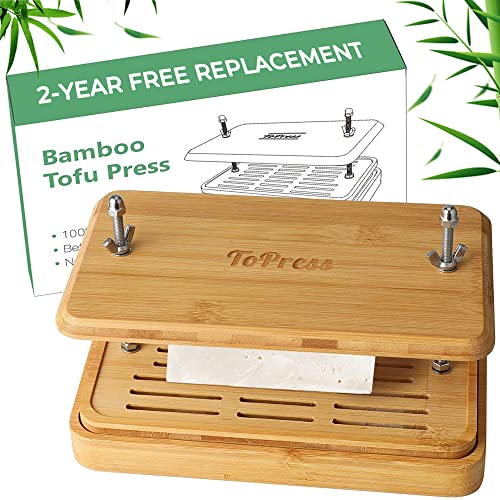
YARKOR’s bamboo press answers the plastic question directly: two solid bamboo plates, a built-in strainer and drip tray, and food-grade stainless steel bolts, nuts and washers doing the clamping. A cheesecloth is included for lining the block, which helps with softer curds and makes the pressed tofu easier to lift out in one piece. It is sized for blocks up to 16 ounces, so it handles the larger bricks some brands sell. Bamboo asks for a little more care than plastic, but in return nothing synthetic touches the food and the press looks at home left out on the counter.
Specs
- Material: Bamboo plates
- Hardware: Food-grade stainless steel bolts, nuts and washers
- Includes: Built-in strainer, drip tray and cheesecloth
- Block fit: Up to 16 oz blocks
- Care: Hand wash, dry hardware after use
Best for: Buyers who want a plastic-free press for standard and large blocks.
Watch out for: Dry the steel hardware thoroughly after washing so it does not spot or rust in storage.
ASIN: B086BTRKDL
BenDuTec Stainless Steel Tofu Press

The BenDuTec is built from food-grade stainless steel and sold as a multi-purpose press, with a press cloth and drip tray in the box and a screw-down plate that bears evenly on the block. That combination makes it the natural pick for households that press more than tofu: the same setup handles paneer and fresh cheese curds, which plastic tubs are not shaped for. Stainless steel is also the easiest material here to keep hygienic over years of use, and the whole press can be scrubbed without worrying about staining or lingering odors from strong marinades.
Specs
- Material: Food-grade stainless steel
- Design: Screw-down press plate
- Includes: Tofu press cloth and drip tray
- Use: Tofu, paneer and cheese pressing
- Care: Wash and dry after use
Best for: Households that press tofu, paneer and cheese with one tool.
Watch out for: Position the cloth carefully before tightening, or the block can squeeze out unevenly at the edges.
ASIN: B0CNGLWM8P
Which One Fits Your Situation
You press a block most weeknights
Choose the Tofuture. Its sealed three-part box presses while it drains, goes straight into the fridge, and comes apart for the dishwasher, so the whole task adds seconds to your routine. When pressing becomes this frictionless, you stop skipping it, and your weeknight tofu starts searing properly instead of steaming in the pan.
You want the firmest, cleanest slices
Choose the EZ Tofu Press. Hand-tightened knobs let you add pressure in stages as the block compresses, which squeezes out more water without splitting the curd the way a sudden full press can. It asks for a few return visits to the counter, but for stir-fries and cutlets where edges matter, that control is the point.
You are cutting plastic out of your kitchen
Choose the YARKOR Bamboo Tofu Press. Bamboo plates and stainless hardware do the work, the included cheesecloth keeps softer blocks intact, and it fits the larger 16 ounce bricks. Accept the hand washing and dry the bolts after each use, and it will serve as a durable, plastic-free fixture.
You also make paneer or fresh cheese
Choose the BenDuTec Stainless Steel Tofu Press. Its cloth, drip tray and screw-down plate are shaped for curds as much as for tofu blocks, and stainless steel shrugs off the heat and acidity that cheese work involves. One tool covers both jobs, which matters in a small kitchen where every gadget has to justify its drawer.
Common Mistakes
- Pressing silken or soft tofu, which is made for soups and blending and will collapse into curds under any real pressure.
- Skipping the press and then blaming the recipe when tofu steams, sticks and refuses to brown in the pan.
- Buying a press sized for 12 ounce blocks when the brand you actually buy sells 16 ounce bricks.
- Cranking a screw or knob press to full pressure immediately, which splits the block before its water has anywhere to go.
- Putting a bamboo or steel press away still wet, inviting rust spots on the hardware and odors in the material.
Frequently Asked Questions
How long should I press tofu?
For most firm and extra firm blocks, 15 to 20 minutes under pressure removes enough water for good browning and marinade absorption. If you want the driest, firmest result for cutlets or crumbling, press for an hour or park a lidded box press in the fridge overnight. Softer textures need less time, so start short and adjust to the dishes you cook most.
Can a tofu press crack the block?
Yes, if pressure rises faster than the water can escape, especially with screw and knob presses tightened hard in one go. Tighten in stages, let the block settle for a few minutes between turns, and line plate presses with the included cloth or a clean towel. Spring presses with preset levels are more forgiving for beginners because their maximum force is fixed by the spring.
Do I need a press for silken tofu?
No. Silken and soft tofu are formulated to stay delicate for soups, sauces and desserts, and pressing breaks their structure rather than improving it. Presses are designed for firm and extra firm blocks, the kind sold for stir-frying, baking and grilling. If a recipe calls for silken tofu, drain it briefly on a towel and handle it gently instead of reaching for the press.
How do I clean and store a tofu press?
Plastic box and spring presses usually go in the dishwasher once dismantled, which is one of their main conveniences. Bamboo and stainless models wash easily by hand, but dry the hardware and plates fully before storing so nothing rusts or picks up odors. Store any press dry and unlatched where possible, since keeping springs compressed or cloths damp between uses shortens the life of both.