Key takeaways
- Compare the best potato mashers for smooth or rustic results, from wire and grid heads to nonstick-safe nylon, with specs that decide comfort and cleanup.
A potato masher looks like the simplest tool in the drawer, yet the wrong one turns a pot of boiled potatoes into a workout and still leaves lumps behind. The real decision is the head: wire loops leave a rustic, textured mash, flat grids push potatoes finer, and nylon heads protect nonstick pots that steel would scratch. Handle shape matters just as much, because mashing is a straight-down pressing job and a thin handle digs into your palm long before the last potato gives in.

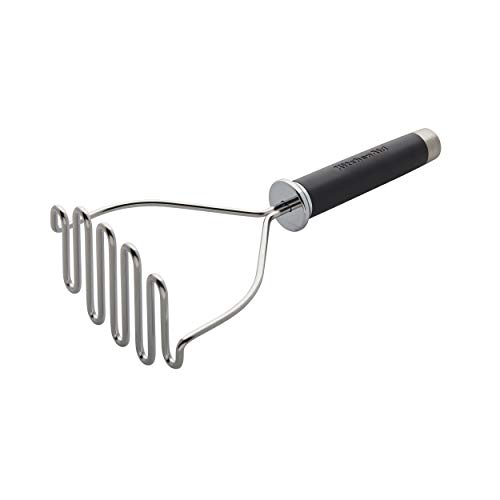
This guide serves weeknight cooks who want one dependable masher, nonstick pan owners who need a coating-safe head, and anyone who mashes big holiday batches and feels it in their hands. Every pick below comes from current Amazon listings, chosen across the main head styles and materials so the differences are easy to compare.
Quick Picks
As an Amazon Associate we earn from qualifying purchases
| Product | Best for | Key spec from title |
|---|---|---|
| OXO Good Grips Stainless Steel Potato Masher | Everyday mashing with less hand strain | Stainless steel wire head, cushioned handle |
| KitchenAid Gourmet Stainless Steel Wire Masher | Large batches in deep pots | 10.24-inch length, 4.5 mm wire |
| Joseph Joseph Easy-Mash Potato Masher | Scraping every last bit from the pan | Pan-scraping edges, non-slip grip |
| Farberware Nylon Meat and Potato Masher | Breaking up potatoes and ground meat | 5-blade nylon head, heat-resistant build |
| OXO Good Grips Nylon Potato Masher | Nonstick cookware owners | Nylon head made for non-stick pans |
How to Choose
Head style decides the texture
Wire heads loop through potatoes and leave a chunkier, rustic mash, which suits skins-on potatoes and anyone who likes body in the bowl. Flat grid and plate heads press potatoes through smaller openings and give a finer, smoother result with fewer passes. Five-blade chopper-style heads break food apart rather than pressing it, so they handle potatoes well but shine when the same tool also crumbles ground meat. Match the head to the texture you actually serve, not the one that sounds most powerful on the box.
Material and your cookware
Stainless steel heads are the strongest option and shrug off years of pressing, but bare steel can scratch nonstick coatings and enamel if you mash directly in the pot. Nylon heads are the safe pick for coated cookware and are usually heat resistant enough to work over warm food, though they flex more under a heavy load. Plastic mashers sit between the two on stiffness. If you always transfer potatoes to a steel mixing bowl, material matters less; if you mash in the cooking pot, it matters most.
Handle shape and grip comfort
Mashing is downward pressure, repeated dozens of times, so the handle carries the whole job. Cushioned, wide grips spread that pressure across the palm and stay comfortable through a full pot. Slim straight handles are fine for a couple of potatoes but bite into the hand on big batches. A horizontal handle, found on some smooth-mash designs, lets you press with your whole arm behind the tool. Check for a hanging hole or loop as well, because a masher that lives on a hook gets used more than one buried in a drawer.
Size, reach, and cleanup
A masher around ten inches long reaches the bottom of a stockpot without your knuckles meeting the rim, while shorter tools suit small saucepans and single servings. One-piece heads with no seams trap less food and rinse clean faster than designs with joints and screws. Dishwasher-safe construction is worth confirming on the listing, since dried potato starch sets like glue. Finally, weigh the tool against your pot size: an oversized head in a narrow pan rocks and splashes, and an undersized one doubles your pressing time.
The 5 Best Options
OXO Good Grips Stainless Steel Potato Masher
This is the masher for cooks who mash often and want the job done without sore palms. The stainless steel wire head cuts through boiled potatoes, yams, and carrots with a few firm presses, and the cushioned handle absorbs the impact of each stroke instead of passing it to your hand. It also handles softer jobs like apples and bananas for homemade baby food. If your current masher bends or hurts to use, this is the straightforward upgrade.
Specs
- Head material: Stainless steel wire
- Handle: Cushioned grip designed to absorb pressure
- Care: Dishwasher safe
- Also suited to: Root vegetables, apples, and bananas
Best for: Everyday family mashing where comfort matters
Watch out for: The wire head leaves a textured mash, so choose a grid style if you want a completely smooth result
ASIN: B00004OCJK
KitchenAid Gourmet Stainless Steel Wire Masher
Reach and leverage define this pick. At 10.24 inches long with a 4.8-inch-wide head, it works the bottom of deep stockpots where shorter mashers leave your knuckles against the rim, and the thick 4.5 mm wire holds its shape under pressure instead of flexing. The listing states a one-year replacement and limited lifetime warranty, which is rare detail for a hand tool at this level. It suits cooks who mash for a crowd and want a wire masher built to stay rigid.
Specs
- Length: 10.24 inches
- Head width: 4.8 inches
- Wire thickness: 4.5 mm
- Materials: Stainless steel and plastic
- Warranty: One-year replacement and limited lifetime, per the listing
Best for: Big holiday batches in deep pots
Watch out for: The wide head is awkward in narrow saucepans, so check your smallest pot before ordering
ASIN: B07TKMY2NW
Joseph Joseph Easy-Mash Potato Masher

The Easy-Mash solves the annoying ring of unmashed potato that collects around the edge of the pan. Its head carries pan-scraping edges that sweep the sides as you press, pulling strays back into the middle instead of leaving them for a second pass with a spoon. The ergonomic handle has a non-slip grip, and the whole tool is plastic, so it is gentle on coated pans. It is a good fit for smaller households that mash in the cooking pan and hate extra washing up.
Specs
- Model: Joseph Joseph 20140 Easy-Mash
- Material: Plastic
- Grip: Ergonomic with non-slip finish
- Edges: Pan-scraping sides built into the head
- Care: Dishwasher safe
- Color: White
Best for: Mashing directly in the pan with nothing left behind
Watch out for: Plastic flexes more than steel under very firm potatoes, so let them cook fully soft first
ASIN: B07YGK2QS5
Farberware Nylon Meat and Potato Masher

Some tools earn their drawer space by doing two jobs, and this five-blade masher is one of them. The nylon blades chop and crumble ground meat in the skillet, then turn to potatoes, avocados, and eggs without changing tools. The head is heat resistant to 450 degrees Fahrenheit, so it can work over warm food in the pan, and the nylon is safe for nonstick coatings. At ten inches it is compact enough for everyday pans while still giving reasonable reach.
Specs
- Head: 5-blade chopper and masher design
- Material: Nylon
- Heat resistance: Up to 450 degrees Fahrenheit
- Length: 10 inches
- Care: Dishwasher safe
- Cookware: Safe for non-stick pans
Best for: Small kitchens that want one tool for meat and potatoes
Watch out for: The chopping blades break potatoes down rather than pressing them smooth, so texture stays rustic
ASIN: B07D15V7T3
OXO Good Grips Nylon Potato Masher

Nonstick owners often end up mashing in a separate bowl just to protect the pan, and this masher removes that step. Its nylon head is made for non-stick cookware, so you can press potatoes right where they boiled without worrying about scratches. The Good Grips handle carries the same cushioned shape as the steel version, which keeps longer sessions comfortable. It is the natural pick when your best pot has a coating you intend to keep intact for years.
Specs
- Head material: Nylon, made for non-stick cookware
- Handle: Cushioned Good Grips design
- Color: Black
- Count: 1 masher
Best for: Mashing in nonstick pots without scratching
Watch out for: Nylon flexes under very dense, undercooked potatoes, so boil until a knife slides in easily
ASIN: B00004OCOJ
Which One Fits Your Situation
You mash in a nonstick pot
Go straight to a nylon head. The OXO Good Grips Nylon Potato Masher is built for coated cookware, and the Farberware five-blade model adds heat resistance for working over warm food. Either one lets you mash where the potatoes cooked, which saves a bowl, a transfer, and the splashes that come with both.
You cook for a crowd
Batch size changes the tool you want. The KitchenAid Gourmet wire masher brings the length, head width, and rigid wire that big pots demand, while the cushioned OXO steel masher keeps your hand comfortable across repeated batches. Both are dishwasher safe, which matters when the sink is already full of holiday dishes.
You want the smoothest mash a hand tool gives
Wire heads leave texture by design, so technique has to help: boil potatoes until they fall apart at a touch, mash while they are steaming hot, and work in the butter and warm milk early. The Joseph Joseph Easy-Mash helps by scraping the pan edges back into the mix, catching the lumps that usually survive at the sides.
Your drawer space is limited
Pick the tool that covers the most jobs. The Farberware masher crumbles ground meat, breaks up potatoes, and handles eggs and avocados, so it replaces a separate meat chopper. The Joseph Joseph Easy-Mash also earns its place by combining masher and pan scraper in one piece, which is one less utensil to store and wash.
Common Mistakes
- Mashing potatoes while they are still firm, which forces the tool to do the cooking and guarantees lumps no head style can fix.
- Using a bare steel masher inside a nonstick pot and scratching the coating, when a nylon head would have done the same job safely.
- Adding cold milk and butter, which cools the potatoes and makes them gluey instead of fluffy.
- Buying the widest head available without checking the diameter of the pan it has to fit into.
- Leaving the masher to soak unwashed, since dried potato starch hardens and turns a quick rinse into a scrubbing session.
Frequently Asked Questions
What is the difference between a wire masher and a grid masher?
A wire masher pushes loops of steel through the potatoes and leaves a rustic, textured result with small lumps. A grid or plate masher presses potatoes through a flat perforated head, which gives a finer, smoother mash. Neither is better in general; the right choice depends on the texture your household prefers at the table.
Can I mash potatoes directly in a nonstick pot?
Yes, as long as the masher head is nylon or plastic rather than bare steel. Nylon heads such as the OXO Good Grips Nylon and the Farberware five-blade model are made for coated cookware and will not scratch the surface. Steel wire mashers belong in stainless or enamel-free metal pots and mixing bowls instead.
Is a potato masher better than a ricer?
They do different jobs. A ricer forces potatoes through small holes for the lightest, smoothest result, but it works in small loads and has more parts to wash. A masher handles a whole pot at once, rinses clean in seconds, and leaves some texture. Most home cooks reach for the masher on weeknights and save the ricer for special occasions.
How do I keep mashed potatoes from turning gluey?
Start with potatoes cooked until completely tender, drain them well, and let the steam escape for a minute before mashing. Add warm milk and melted butter rather than cold, and stop as soon as the lumps are gone. Overworking any mash, with any tool, releases too much starch and turns the texture gummy.