Key takeaways
- Find the best large lawn mowers for big yards. Compare wide-deck riding mowers and zero-turn models by deck size, engine, and transmission.
When a yard grows past what a standard walk-behind mower can handle in a reasonable afternoon, the best large lawn mowers start to make sense. A wide cutting deck, a seated riding position, and a strong engine turn a long chore into a manageable routine, and the right machine can cover an acre or more without wearing out its owner. This guide looks at three large lawn mowers with wide decks and seated operation, comparing deck size, engine, transmission, and build so you can match a machine to the size and shape of your property.
What to Look For in a Large Lawn Mower
Deck width is the first number to check. A 42-inch deck cuts a path nearly twice as wide as a typical 21-inch walk-behind mower, which means far fewer passes across a big lawn. Wider decks save time on open ground, but they also need wider gates, wider shed doors, and more storage space, so measure your access points before settling on a size.
Engine power decides how well the mower handles thick grass, damp growth, and gentle slopes. Single-cylinder engines suit flat, regularly mowed lawns, while V-twin engines deliver smoother power and cope better with tall or dense grass. Look at the engine brand and displacement as well as the horsepower figure, since a well-known engine family usually means easier access to parts and service.
Transmission type shapes how the mower feels to drive. A pedal-operated hydrostatic transmission lets you change speed smoothly without shifting gears, which is convenient when you are weaving around trees and beds. A manual gear transmission is simpler in design and asks the driver to stop and shift, while a zero-turn mower uses two lap bars or levers to steer each rear wheel independently, giving it a very tight turning circle.
Deck construction matters for longevity. Stamped steel decks are formed from a single sheet and keep weight and cost down, while fabricated decks are welded from heavier plate steel and stand up better to bumps, rocks, and years of use. A fabricated deck is a sensible choice if your ground is rough or uneven.
Fuel capacity sets how long you can mow before refueling. A larger tank matters on properties over an acre, where stopping to refuel breaks the rhythm of the job. Also consider turning radius, cutting-height range, and whether the mower accepts bagging or mulching attachments, since those extras decide how tidy the finished lawn looks.
Comfort is easy to overlook and hard to live without. A well-padded seat, a clear view of the deck edge, and controls within easy reach make a long session far less tiring. Finally, think about delivery and setup: riding mowers arrive on a pallet or in a crate and need space, tools, and often a second person to unload and assemble.
Our Top Picks for Large Lawns
The three mowers below all use wide 42-inch decks and seated operation, but they take different approaches. One is a straightforward lawn tractor, one is an entry-level gear-drive tractor, and one is a zero-turn machine built for maneuverability. Each one suits a different kind of property.
1. Husqvarna TS 120 42-Inch Lawn Tractor
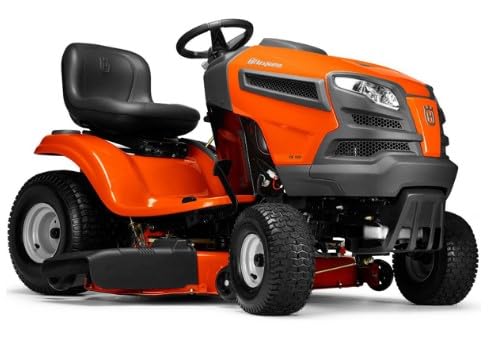
View the Husqvarna TS 120 on Amazon
The Husqvarna TS 120 is a gas-powered lawn tractor built around a 42-inch stamped steel deck with twin blades. Its 19 HP Briggs and Stratton engine displaces 540cc, giving it enough power for lawns up to about two acres of regular, flat to gently rolling ground. The pedal-operated hydrostatic transmission lets the driver control speed with a foot pedal while keeping both hands on the steering wheel, which makes it a friendly choice for someone moving up from a walk-behind mower for the first time.
Air Induction mowing technology is built into the deck design, drawing air through the deck to lift grass for a more even cut. The tractor is designed for homeowners who want a simple, conventional riding mower without the complexity of a zero-turn machine. Its 42-inch width strikes a useful balance: wide enough to cut mowing time substantially on a large lawn, yet narrow enough to pass through a standard garden gate and fit in a typical shed or garage bay.
Who it suits: Homeowners with one to two acres of mostly open, level lawn who want a straightforward gas tractor with smooth pedal drive and a familiar steering wheel layout.
Considerations: The stamped deck is lighter than a fabricated deck, so it is best kept away from rocks, stumps, and rough ground. The listing does not state a weight figure or a full cutting-height range, so check the current listing and the manual for those details before ordering. As a freight item, the tractor arrives crated on a pallet, and uncrating takes tools, space, and ideally a second person.
2. CRAFTSMAN T110 42-Inch Gas Riding Lawn Mower
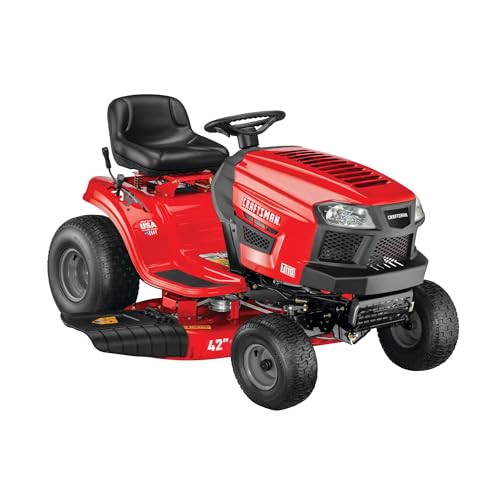
View the CRAFTSMAN T110 on Amazon
The CRAFTSMAN T110 is a 42-inch gas riding lawn mower powered by a 17.5 HP Briggs and Stratton single-cylinder engine. It uses a 7-speed manual transmission, which keeps the drivetrain simple and mechanical, and an 18-inch turning radius that helps it navigate around trees, flower beds, and other obstacles without excessive backing and repositioning. The stamped steel deck spans 42 inches, covering a wide path on every pass.
At around 410 pounds, the T110 is one of the lighter riding mowers in its class, which makes it easier to store, transport, and maneuver on softer ground. The single-cylinder engine is a proven, widely serviced design, and parts support is broad. The mower is aimed squarely at homeowners who want the lowest-complexity route into riding-mower ownership: a familiar brand, a standard deck size, and controls that anyone who has driven a garden tractor will recognize.
Who it suits: Homeowners with small to mid-size yards who are buying their first riding mower and prefer a simple gear-drive machine with a tight turning radius and a well-known engine.
Considerations: The 7-speed gear transmission requires stopping to shift, which is less convenient than a hydrostatic pedal drive when mowing around many obstacles. The single-cylinder engine suits regular mowing on flat ground; very tall, thick, or wet grass will ask more of it than a V-twin would handle. Check the current listing for the included accessories, since bagging and mulching kits vary by listing.
3. Husqvarna Z242F Special Edition 42-Inch Zero-Turn Mower

View the Husqvarna Z242F on Amazon
The Husqvarna Z242F Special Edition is a gas zero-turn mower built for properties where maneuverability matters as much as cutting width. Its 42-inch fabricated ClearCut deck is welded rather than stamped, giving it a tougher cutting platform for lawns with rough patches, exposed roots, or uneven ground. A 21.5 HP Kawasaki V-twin engine supplies smooth, steady power, and the Hydro-Gear EZT transmission drives each rear wheel independently for true zero-turn steering.
Cutting height adjusts across nine settings from 1.5 to 4 inches, so the deck can be set low for a neat finish or high for rough, fast-growing grass. The 3.5-gallon fuel tank supports long sessions without a refueling stop, and the machine weighs about 570 pounds. The Z242F is the strongest choice in this roundup for thick grass and for lawns broken up by trees, beds, and landscaping, since the zero-turn steering lets the driver pivot around obstacles instead of making wide loops.
Who it suits: Homeowners with one to three acres of lawn with many trees, beds, and tight corners, who want a fabricated deck, a V-twin engine, and the tight turning of a zero-turn machine.
Considerations: Zero-turn steering feels different from a steering wheel and takes a short learning period, especially on slopes, where a zero-turn mower needs careful handling. At 570 pounds it is the heaviest mower here, so check gate widths, trailer capacity, and storage space. The listing does not state a top speed or a slope limit, so read the manual for guidance on inclines before mowing hilly ground.
Large Lawn Mowers at a Glance
| Mower | Deck | Engine | Transmission | Deck build | Fuel tank | Weight |
|---|---|---|---|---|---|---|
| Husqvarna TS 120 | 42 inches, twin blade | 19 HP Briggs and Stratton, 540cc | Pedal-operated hydrostatic | Stamped steel | Not stated | Not stated |
| CRAFTSMAN T110 | 42 inches | 17.5 HP Briggs and Stratton single-cylinder | 7-speed manual | Stamped steel | Not stated | About 410 pounds |
| Husqvarna Z242F Special Edition | 42 inches, fabricated ClearCut, two blades | 21.5 HP Kawasaki V-twin | Hydro-Gear EZT zero-turn | Fabricated steel | 3.5 gallons | About 570 pounds |
Choosing the Right Mower for Your Yard
Start with the size and shape of the property. For an open acre or two of mostly flat lawn, a conventional lawn tractor like the Husqvarna TS 120 covers the ground efficiently and feels familiar to drive. If the lawn is broken up by trees, beds, paths, and garden features, the zero-turn steering of the Husqvarna Z242F saves time on every turn and reaches into corners a tractor would need several passes to tidy. For a smaller property where budget and simplicity matter most, the CRAFTSMAN T110 delivers the same 42-inch cutting width with a simpler gear-drive layout.
Ground conditions should shape the decision too. Smooth, well-kept lawns are kind to any of these machines, but rough or uneven ground favors the fabricated deck and V-twin engine of the Z242F. Lawns with gentle slopes suit a tractor with a steering wheel, which holds a straight line more easily, while zero-turn mowers need a careful hand on inclines and are best kept off steep ground.
Think about how often you mow and how tall the grass gets between sessions. Regular weekly mowing keeps grass short and easy to cut, which suits any of the three mowers. If the lawn sometimes grows tall between cuts, the V-twin engine and wider power reserve of the Z242F will handle the extra load more comfortably. A larger fuel tank also matters when sessions run long, so the 3.5-gallon tank on the Z242F is a genuine advantage on properties over an acre.
Storage and access deserve a final check. All three mowers need a dry, covered space with room to walk around the machine for maintenance. Measure gate widths, shed doors, and any ramps or steps the mower must cross, and confirm that the delivery route works for a large freight item. A mower that cannot reach the lawn is no bargain at any size.
Care and Use Tips for a Large Lawn Mower
A little routine care keeps a large mower running well for years. Check the engine oil level before the first mow of the season and change the oil on the schedule in the manual. Clean grass clippings from the deck after mowing, since packed clippings hold moisture against the steel and dull the cut over time. Keep the blades sharp: a sharp blade slices grass cleanly, while a dull blade tears it and leaves brown tips across the lawn.
Before each use, walk the lawn and clear sticks, stones, toys, and anything else the blades could strike. A wide deck covers more ground per pass, which also means it meets more hidden debris. Check tire pressure regularly, since uneven tires tilt the deck and leave an uneven cut. On a zero-turn mower, practice steering in an open area before working near beds and fences, and always mow across slopes rather than straight up or down them.
At the end of the season, stabilize the fuel or run the tank down, clean the machine thoroughly, and store it under cover with the battery disconnected or on a maintainer if it has one. Grease the fittings the manual calls out, inspect the belts for cracks, and keep spare blades and an air filter on hand so a small job never turns into a lost weekend.
Frequently Asked Questions
What size lawn needs a large lawn mower?
A good rule of thumb is that lawns around half an acre and larger start to justify a riding mower, and lawns of one acre or more benefit clearly from a 42-inch deck. Smaller lawns can still suit a riding mower if the owner values comfort or has limited mobility, but a wide deck on a small, fenced yard can be awkward around tight corners and narrow gates.
Is a zero-turn mower better than a lawn tractor for a large yard?
It depends on the shape of the yard. A zero-turn mower turns in place, so it finishes faster around trees, beds, and landscaping. A lawn tractor with a steering wheel feels more familiar, holds a straight line on slopes more easily, and often costs less for the same deck width. Open, rectangular lawns suit either type, while lawns full of obstacles favor a zero-turn machine.
How wide should the deck be on a large lawn mower?
A 42-inch deck is a practical starting point for most large residential lawns, cutting a wide path while still fitting through standard gates and shed doors. Wider decks of 46 to 54 inches cover open ground faster but need more storage space and wider access, and they can scalp uneven ground more easily than a narrower deck.
Do large lawn mowers handle slopes well?
Conventional lawn tractors handle gentle slopes reasonably well, especially with a hydrostatic transmission that lets the driver control speed smoothly. Zero-turn mowers need more care on inclines because their steering works differently, and steep slopes are best avoided with any riding mower. Always read the manual for slope guidance and mow across a slope rather than up and down it.
What maintenance does a large lawn mower need?
Regular maintenance includes checking and changing the engine oil, cleaning the deck after mowing, keeping the blades sharp, checking tire pressure, and inspecting belts and filters on the schedule in the manual. Fuel should be stabilized or drained before long storage, and the machine should be kept under cover. Following the manual’s schedule is the simplest way to keep a large mower reliable for many seasons.
Conclusion
The best large lawn mowers share a wide deck, a strong engine, and seated operation, but the right one depends on the property. The Husqvarna TS 120 suits open lawns up to about two acres with smooth, familiar pedal drive. The CRAFTSMAN T110 is a simple, approachable first riding mower with the same 42-inch cutting width. The Husqvarna Z242F Special Edition brings a fabricated deck, a V-twin engine, and zero-turn agility to larger, obstacle-filled yards. Measure the property, check the gates and storage, and choose the machine whose strengths match the ground it will mow.
Disclosure: As an Amazon Associate, we earn from qualifying purchases.