Our Short List of 3
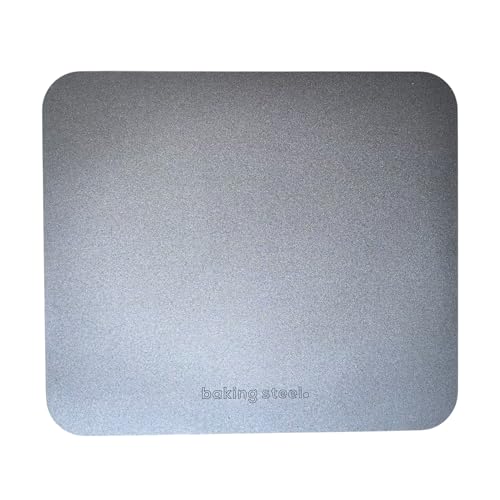
- Best for: Weekly pizza nights in a full-size home oven.
- Material: Low-carbon steel
- Size: 16 x 14 inches
- Thickness: 1/4 inch
- Made in the USA
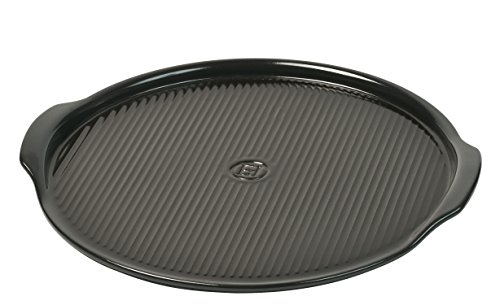
- Best for: Cooks who want stone-baked pizza without the no-soap cleaning rules.
- Material: Flame ceramic, made in France
- Size: 14.5 inches round, ridged surface
- Heat rating: Up to 930 degrees Fahrenheit
- Care: Dishwasher safe, stain and odor resistant

- Best for: Family-size pizzas and bread on a traditional stone.
- Material: Cordierite
- Size: 14 x 16 inches
- Heat rating: Up to 1,450 degrees Fahrenheit
- Design: Heat core for even center baking
All 4 Picks at a Glance
| Product | Specs | Action |
|---|---|---|
| The Original Baking Steel, 16 x 14 x 1/4 Inch |
| Check price on Amazon |
| Emile Henry Flame Ceramic Pizza Stone, 14.5-Inch, Charcoal |
| Check price on Amazon |
| Old Stone Pizza Kitchen Rectangular Pizza Stone, 14 x 16-Inch |
| Check price on Amazon |
 Unicook 15 x 12 Inch Rectangular Pizza Stone |
| Check price on Amazon |
Key takeaways
- Compare the best pizza stones and steels for home ovens, from cordierite and ceramic to cast iron and steel, with sizes, heat ratings and care checks.
A home oven cannot reach pizzeria heat, so a pizza baked on a thin sheet pan steams on the bottom long before the top browns. A preheated stone or steel fixes that by storing heat and driving it straight into the dough. The real decision is material: steel browns fastest and never cracks, cordierite is the lighter classic, cast iron splits the difference, and glazed ceramic trades some heat for far easier cleaning. Size matters just as much, because a surface that fills the whole rack blocks the airflow the crust needs.
This guide serves weekly pizza-night households, bread bakers after a hearth-style loaf, grill cooks, and first-time buyers working with a small oven. Every pick is sold on Amazon, and each was chosen from its listing name and stated specifications: material, dimensions, thickness or weight, and the maker’s heat rating, so you can match a surface to your oven and your habits.
Quick Picks
As an Amazon Associate we earn from qualifying purchases
| Product | Best for | Key spec from title |
|---|---|---|
| The Original Baking Steel | Darkest, crispest crust from a home oven | 16 x 14 inch low-carbon steel, 1/4 inch thick |
| Emile Henry Flame Ceramic Pizza Stone | Easy cleanup and serving at the table | 14.5 inch glazed ceramic rated to 930 degrees Fahrenheit |
| Lodge BW15PP Cast Iron Pizza Pan | Oven, grill and stovetop in one pan | 15 inch pre-seasoned cast iron with loop handles |
| Old Stone Pizza Kitchen Rectangular Stone | Family-size pies on a classic stone | 14 x 16 inch cordierite with heat core |
| Unicook Rectangular Pizza Stone | Small ovens and first-time stone buyers | 15 x 12 inch cordierite rated to 1,450 degrees Fahrenheit |
How to Choose
Start With the Material
Steel conducts heat into dough faster than any stone, browns the deepest crust, and cannot crack, but a quarter-inch plate is a serious lift. Cordierite is porous, so it pulls moisture out of the dough for a drier, classic base, and it weighs far less. Cast iron holds heat like a stone yet works as a pan on the stovetop. Glazed ceramic, like the Emile Henry Flame stone, is sealed and easy to clean, though its heat ceiling is lower. Match the material to the crust you want and the upkeep you will actually do.
Measure Your Oven Before You Fall for a Size
Measure the rack, not the oven door opening, and leave roughly an inch of open space on every side so hot air can circulate; Unicook’s own listing asks for one to two inches of clearance. A 16 x 14 inch steel needs a full-size oven, while a 15 x 12 inch stone suits compact and RV ovens. Round surfaces fit round grills but waste the corners of a rectangular rack. Rectangular stones and steels also fit long bread loaves, which a round stone handles poorly.
Thickness and Preheat Decide the Crust
A thicker surface stores more heat, so it can bake pizza after pizza without the base going pale. Quarter-inch steel and stones around 0.6 inch thick need a full 45 to 60 minutes of preheating at the oven’s highest setting to soak through. Thin ceramic heats faster but gives its heat back to the first pie and needs recovery time between bakes. If you cook one pizza a week, a midweight stone is plenty. If pizza night means four pies in a row, the heavy steel earns its keep.
Care Rules Differ by Surface
Cordierite should never meet soap or oil: scrape it, brush it, and let it cool inside the oven so a sudden temperature swing does not crack it. Steel needs the opposite routine, a thorough drying and a thin wipe of oil now and then to hold rust off. Cast iron is seasoned like a skillet. Glazed ceramic is the forgiving one, since it resists stains and goes in the dishwasher. Handles matter too: loop handles and molded ears make a hot, heavy surface far safer to move.
The 5 Best Options
The Original Baking Steel, 16 x 14 x 1/4 Inch
- Best for: Weekly pizza nights in a full-size home oven.
- Material: Low-carbon steel
- Size: 16 x 14 inches
- Thickness: 1/4 inch
- Made in the USA
Weekly pizza nights in a full-size home oven.
It is a two-handed lift, so confirm the 16 x 14 inch footprint fits your rack before ordering.
For the home baker chasing a pizzeria-style base in a standard oven, this quarter-inch plate of low-carbon steel is the strongest performer in this guide. Steel pushes heat into dough faster than stone, so the bottom browns deeply and evenly while the crumb stays tender, and there is no thermal-shock cracking to worry about. It is heavy enough that most owners park it on a rack permanently, where it also improves bread and roast vegetables, and it doubles as a stovetop griddle. Choose it when pizza night is a weekly habit and your oven fits the footprint.
Emile Henry Flame Ceramic Pizza Stone, 14.5-Inch, Charcoal
- Best for: Cooks who want stone-baked pizza without the no-soap cleaning rules.
- Material: Flame ceramic, made in France
- Size: 14.5 inches round, ridged surface
- Heat rating: Up to 930 degrees Fahrenheit
- Care: Dishwasher safe, stain and odor resistant
Cooks who want stone-baked pizza without the no-soap cleaning rules.
The round surface limits you to pizzas of about 14 inches, and the heat ceiling sits below cordierite.
Most stones punish you at cleanup time, and this glazed Flame ceramic stone from France is the exception. Its ridged surface lifts the pizza slightly so steam escapes and the base crisps, while the sealed glaze resists stains and odors and goes straight into the dishwasher. Emile Henry rates it to 930 degrees Fahrenheit for ovens and for gas and charcoal grills, and the stone can move from the freezer into a hot oven. Molded side handles make it easy to carry to the table and serve from. The trade-off is a round surface that caps your pizza size and a gentler bake than steel delivers.
Lodge BW15PP Seasoned Cast Iron Pizza Pan, 15-Inch
Cast iron splits the difference between stone and steel, and this pre-seasoned Lodge pan is the versatile pick of the five. The flat 15-inch cooking surface heats evenly, holds that heat through back-to-back pizzas, and will not crack if it is handled roughly. Loop handles make it far easier to move than a handleless steel, and the pan works in the oven, on the grill, and on the stovetop, so it doubles for flatbreads, roasted vegetables, and reheating leftovers. Care is the familiar skillet routine: dry it well and keep the seasoning intact.
Specs
- Material: Pre-seasoned cast iron
- Cooking surface: 15 inches
- Overall length: 19.25 inches including handles
- Handles: Dual loop handles
- Weight: 9.9 pounds
- Use: Oven, grill and stovetop
Best for: Households that want one heavy pan for pizza, flatbreads, and roasting.
Watch out for: The 19.25 inch overall length needs a wide oven or grill, so measure handle-to-handle space first.
ASIN: B0971MC534
Old Stone Pizza Kitchen Rectangular Pizza Stone, 14 x 16-Inch
- Best for: Family-size pizzas and bread on a traditional stone.
- Material: Cordierite
- Size: 14 x 16 inches
- Heat rating: Up to 1,450 degrees Fahrenheit
- Design: Heat core for even center baking
Family-size pizzas and bread on a traditional stone.
Cordierite cracks under sudden temperature swings, so heat it with the oven and let it cool inside.
This is the classic cordierite rectangle, sized for family pizzas and long loaves alike. The 14 x 16 inch surface leaves room for a large pie or two smaller ones, and the engineered heat core in the middle targets the soggy-center problem that plagues big stones. The maker rates it to 1,450 degrees Fahrenheit for ovens and grills, and the porous cordierite pulls moisture from the dough for a drier, crisper base. It is a long-running model from the Old Stone line, and care is the traditional routine: scrape, brush, and never reach for soap.
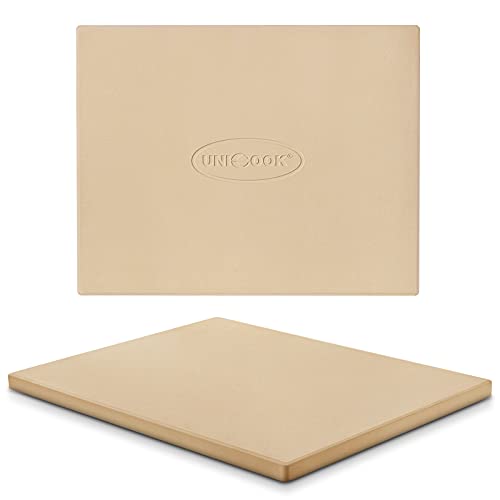
Unicook 15 x 12 Inch Rectangular Pizza Stone
- Best for: Small ovens, compact kitchens, and first-time stone buyers.
- Material: Cordierite
- Size: 15 x 12 x 0.6 inches
- Weight: 6.8 pounds
- Heat rating: Up to 1,450 degrees Fahrenheit
Small ovens, compact kitchens, and first-time stone buyers.
Leave one to two inches of clearance on all sides for airflow, as the maker directs, or baking turns uneven.
The compact pick here is a 15 x 12 inch cordierite stone built for smaller ovens, including the RV and compact models its listing names. At 0.6 inch thick it is rated to 1,450 degrees Fahrenheit, resists thermal shock, and has a reversible surface, and Unicook includes a plastic scraper that doubles as a dough cutter for cleanup and portioning. The footprint is sized for pizzas up to 11 inches across, which suits personal pizzas, frozen pizzas, cookies, and small loaves. It is a sensible first stone: light enough to store in a cupboard, heavy enough to hold a proper preheat.
Which One Fits Your Situation
You Bake Pizza Every Week
Leave the Original Baking Steel parked on the rack and it is always ready. It browns faster than any stone here, cannot crack, and holds enough heat to bake several pies in a row without the bases fading. The only real cost is the lift when you do move it.
Your Oven Is Small
The Unicook 15 x 12 inch stone is the fit. Its footprint leaves the clearance compact ovens need, it is light enough to store in a cupboard between uses, and it handles personal and frozen pizzas up to 11 inches. The Emile Henry round stone is the alternative if easy cleanup matters more than maximum surface.
You Split Time Between Oven and Grill
Take the Lodge cast iron pan or the Emile Henry stone, both rated for grill use. The Lodge adds stovetop duty and shrugs off rough handling, while the Emile Henry cleans up in the dishwasher and serves at the table. Either one moves between the two heat sources without special treatment.
You Want Bread as Well as Pizza
A rectangular surface is the answer, since long loaves fit poorly on round stones. The Old Stone 14 x 16 inch stone takes batards and baguettes and evens out the center with its heat core. Bakers chasing a dark, hearth-style crust should step up to the Baking Steel instead.
Common Mistakes
- Skipping the long preheat, so the first pizza steams on a lukewarm surface instead of crisping.
- Washing a cordierite stone with soap, which soaks into the pores and flavors later bakes.
- Setting a cold stone into a fully hot oven, or running cold water over a hot one, until it cracks.
- Buying a surface that fills the entire rack and leaves no gap for hot air to circulate.
- Stretching dough wider than the stone, so the rim hangs off the edge and sauce drips onto the oven floor.
Frequently Asked Questions
Is a pizza steel better than a pizza stone?
For browning, yes. Steel transfers heat faster than stone, produces a darker, crisper base, and cannot crack. Stone is lighter, easier to store, and gives a slightly drier, more classic crust. Pick steel if the surface can live in your oven, and stone if you will lift it in and out for every bake.
How long should I preheat a pizza stone or steel?
Give it 45 to 60 minutes at your oven’s highest setting, with the surface inside from cold so it heats gradually. Thick steel and thick cordierite need the full hour to soak heat all the way through. A stone that feels hot on top but is cool in the center will bake a pale first pizza.
Can I use a pizza stone on a grill?
Cordierite stones and cast iron pans handle grill heat well as long as they heat up gradually with the grill rather than meeting full flame cold. The Emile Henry stone is rated for gas and charcoal grills, and the Lodge pan works over grills and stovetops. Always check the maker’s stated rating for your model first.
How do I clean a cordierite pizza stone?
Let it cool completely inside the oven, then scrape off stuck residue with a scraper or stiff brush and wipe it with a damp cloth. Never use soap and never soak it, because the porous surface absorbs both. Dark stains are normal, build up with use, and do not affect how the stone bakes.