Our Short List of 3

- Best for: yards where cardinals arrive in numbers and squirrels are a daily problem.
- 6 feeding ports
- 5.1-pound seed capacity
- Cardinal Ring System
- Weight-adjustable shroud

- Best for: everyday feeding in a mid-size yard with regular cardinal visits.
- 4 feeding ports
- 2.4-pound seed capacity
- Weight-activated shroud
- Squirrel-proof design
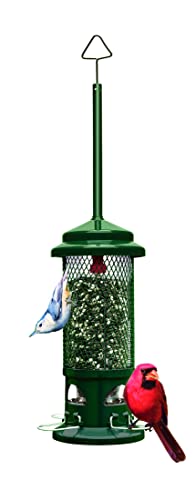
- Best for: small spaces, balconies, and buyers trying a squirrel-proof feeder for the first time.
- 4 metal perches
- 1.3-pound seed capacity
- Squirrel-proof design
- Metal construction
All 4 Picks at a Glance
| Product | Specs | Action |
|---|---|---|
| Squirrel Buster Plus |
| Check price on Amazon |
| Squirrel Buster Classic |
| Check price on Amazon |
| Squirrel Buster Standard |
| Check price on Amazon |
 Perky-Pet Squirrel-Be-Gone Max |
| Check price on Amazon |
Key takeaways
- Compare squirrel proof bird feeders with cardinal rings and weight-activated perches, and pick the right size for your yard and visitors this season.
Cardinals are among the most welcome visitors a yard can attract, yet they are also among the first to vanish when squirrels take over a feeder. A cardinal needs a steady perch and room to sit upright while it cracks seed, and a squirrel-empty feeder is the only kind that keeps them coming back. The wrong feeder spills seed, jams in wet weather, or lets a single squirrel drain a week’s supply in an afternoon, and the birds simply move on to a neighbour’s yard.
This article is for backyard birders who want cardinals at the feeder every morning, for households tired of refilling a feeder the squirrels emptied, and for anyone setting up a first feeding station. Every feeder below comes from its Amazon listing title and specifications, with a real ASIN, so the choice rests on capacity, perch design, and squirrel defense rather than guesswork.
Quick Picks
As an Amazon Associate we earn from qualifying purchases.
| Product | Best for | Key spec from title |
|---|---|---|
| Squirrel Buster Plus | Busy yards with heavy cardinal traffic | 6 feeding ports, 5.1-pound seed capacity |
| Squirrel Buster Classic | Everyday feeding in a mid-size yard | 4 feeding ports, 2.4-pound seed capacity |
| Squirrel Buster Standard | Small spaces and first-time buyers | 4 metal perches, 1.3-pound seed capacity |
| Perky-Pet Squirrel-Be-Gone Max | Larger seed loads and bigger appetites | Flexports, 4LB seed capacity |
How to Choose
Look for perching that suits a cardinal’s body
Cardinals are heavier than chickadees and finches, and they feed sitting upright rather than clinging upside down. A feeder with a ring perch or a broad, stable perch lets a cardinal settle and feed comfortably, while tiny perches and mesh tubes favour smaller birds. The Squirrel Buster Plus earns its place here through the cardinal ring in its title, a circular perch that gives cardinals a proper footing. When comparing feeders, check whether the perch is described as a ring or a tray, and picture a cardinal landing on it. If the perch looks suited only to clinging birds, cardinals will visit once and not return.
Understand how the squirrel defense actually works
Squirrel proofing comes in several forms, and they are not equal. Weight-activated shrouds close the feeding ports when a squirrel climbs on, weight-activated perches collapse under a heavy animal, and metal cages keep teeth away from seed while letting small birds slip through. A shroud that closes under a squirrel but stays open for a cardinal is the sweet spot, because cardinals are heavy enough to trip a badly adjusted mechanism. Look for an adjustable spring or tension setting in the listing, since that adjustment is what separates a feeder that blocks squirrels from one that blocks the very birds it was bought for.
Match capacity to your refill routine
Seed capacity decides how often you climb a ladder, and the right size depends on how many birds visit and how often you are home. A 5.1-pound reservoir suits a busy yard where cardinals, jays, and finches feed all day, while a 1.3-pound feeder suits a balcony where a few birds visit and seed stays fresh. Large capacities save trips but can let seed go stale in damp weather, so a mid-size feeder refilled twice a week often beats a huge one refilled once a month. Be honest about your routine: a feeder that needs refilling more often than you will manage spends half its life empty.
Check build, cleaning, and placement before buying
A feeder lives outdoors through rain, frost, and sun, so the materials decide how long it lasts. Metal parts resist squirrel teeth, clear tubes show the seed level, and a feeder that comes apart by hand makes cleaning far less of a chore. Dirty feeders spread disease among birds, so easy disassembly is a genuine health feature rather than a convenience. Placement matters just as much: hang the feeder well clear of roofs, fences, and branches a squirrel can jump from, and keep it within view of a window if watching the birds is part of the pleasure.
The 4 Best Options
Squirrel Buster Plus
- Best for: yards where cardinals arrive in numbers and squirrels are a daily problem.
- 6 feeding ports
- 5.1-pound seed capacity
- Cardinal Ring System
- Weight-adjustable shroud
yards where cardinals arrive in numbers and squirrels are a daily problem.
the pole adaptor is sold separately, so budget for it if you plan to pole-mount rather than hang the feeder.
The Squirrel Buster Plus is the flagship of the Brome line and the most direct answer to this keyword, because its title names the cardinal ring outright. Six feeding ports spread birds around the tube so several cardinals can feed at once, and the 5.1-pound capacity means the feeder keeps working through a busy weekend without a refill. Its weight-adjustable shroud closes the ports when a squirrel climbs aboard, yet stays open for cardinals and other songbirds, and the pole-mountable design suits a permanent feeding station in an open part of the yard.
Squirrel Buster Classic
- Best for: everyday feeding in a mid-size yard with regular cardinal visits.
- 4 feeding ports
- 2.4-pound seed capacity
- Weight-activated shroud
- Squirrel-proof design
everyday feeding in a mid-size yard with regular cardinal visits.
the smaller reservoir needs refilling more often during peak winter feeding, so check the seed level every couple of days.
The Squirrel Buster Classic takes the same weight-activated shroud idea and packages it in a smaller, lighter feeder that suits an ordinary yard. Four feeding ports give several birds room to feed, and the 2.4-pound capacity is enough for a steady stream of cardinals without the seed sitting long enough to go stale. It hangs easily from a branch or a hook, comes apart for cleaning, and costs less in time and effort to maintain than the larger Plus. For a household feeding one or two cardinal pairs, this is the balanced middle of the range.
Squirrel Buster Standard
- Best for: small spaces, balconies, and buyers trying a squirrel-proof feeder for the first time.
- 4 metal perches
- 1.3-pound seed capacity
- Squirrel-proof design
- Metal construction
small spaces, balconies, and buyers trying a squirrel-proof feeder for the first time.
the modest capacity means frequent refills in a busy yard, and large cardinals may prefer the ring perch on the Plus model.
The Squirrel Buster Standard is the compact entry in the Brome range, built for small gardens, patios, and first-time buyers who want proven squirrel defense without a large feeder. Four metal perches give birds a firm footing, and the 1.3-pound capacity keeps seed fresh because it turns over quickly. Its light weight makes it easy to hang, move, and clean, and the metal construction stands up to chewing. Cardinals can use it, though the perches suit smaller birds more readily, so it works best where cardinals visit alongside finches and chickadees rather than dominating the feeder.
Perky-Pet Squirrel-Be-Gone Max
- Best for: households that want a large, sturdy feeder with weight-activated perches at a practical capacity.
- 4LB seed capacity
- Flexports
- Weight-activated perches
- Squirrel-proof design
households that want a large, sturdy feeder with weight-activated perches at a practical capacity.
confirm the hanging spot can carry a fully loaded large feeder, and keep it clear of launch points a squirrel could use.
The Perky-Pet Squirrel-Be-Gone Max takes a different route to the same goal, using weight-activated perches and Flexports to shut out squirrels while letting songbirds feed. Its 4-pound capacity sits between the Classic and the Plus, so it suits a yard with steady traffic and a weekly refill routine. The large format holds plenty of seed for mixed flocks, and the metal build resists chewing. Cardinals feed well from its perches, and the Max size means fewer interruptions during cold snaps when birds feed hardest and owners least want to go outside.
Which One Fits Your Situation
A busy cardinal hotspot with daily squirrel raids
Choose the Squirrel Buster Plus. Its cardinal ring is made for the birds you want, its six ports let several feed at once, and the 5.1-pound reservoir survives a weekend of heavy traffic. The adjustable shroud is the key: set it so cardinals feed freely while squirrels close the ports. Hang it in open ground, well clear of fences and branches, and the feeder does the work for you.
A small patio or balcony with a few regulars
Choose the Squirrel Buster Standard. Its compact size hangs neatly in a small space, the 1.3-pound capacity keeps seed fresh, and the metal perches handle daily use. Refill it every few days and clean it often, since a small feeder in a sheltered spot can go mouldy fast. If cardinals become daily visitors, consider stepping up to the Classic for the extra capacity.
A first squirrel-proof feeder on a normal budget
Choose the Squirrel Buster Classic. It carries the same proven shroud mechanism as the Plus in a mid-size body that is easy to hang, fill, and clean. The 2.4-pound capacity fits a weekly refill habit, and four ports keep a small flock fed without crowding. It is the safest first step for a buyer who wants results without committing to the largest model in the range.
A large property with mixed flocks and cold winters
Choose the Perky-Pet Squirrel-Be-Gone Max. Its 4-pound capacity and weight-activated perches handle mixed flocks through cold weather, when birds feed hardest and refills are least welcome. Pair it with a sturdy hanging point and a clear line of sight from the house, and keep a spare supply of seed indoors so a refill never waits for a trip to the store.
Common Mistakes
- Hanging the feeder within jumping distance of a roof, fence, or branch, which lets squirrels bypass any mechanism.
- Choosing a feeder with perches too small for a cardinal, then wondering why cardinals never settle to feed.
- Setting a weight adjustment too stiff or too loose, so the shroud blocks cardinals or lets squirrels through.
- Leaving seed in a large feeder for weeks until it goes stale or mouldy, which drives birds away and risks disease.
- Filling a feeder with mixed seed full of filler that cardinals ignore, then blaming the feeder for the lack of visitors.
Frequently Asked Questions
Do cardinals need a special perch to use a tube feeder?
Cardinals feed sitting upright and need a stable perch, which is why ring perches and tray perches suit them better than tiny pegs. A cardinal can cling briefly, but it will not settle and feed comfortably without proper footing. Feeders with a cardinal ring or broad perches see far more cardinal visits, and the Squirrel Buster Plus names that ring in its title for exactly this reason.
Will a weight-activated feeder block cardinals as well as squirrels?
It can if the tension is set wrong, since cardinals are heavier than finches. That is why an adjustable mechanism matters: set it so a cardinal feeds freely while a squirrel’s weight closes the ports. Start at the lightest setting that still stops squirrels, watch the feeder for a day, and adjust in small steps until cardinals feed and squirrels give up.
What seed should I put in a squirrel-proof feeder for cardinals?
Cardinals favour black oil sunflower seed and safflower seed, both of which fit the ports on the feeders in this article. Avoid mixes heavy with millet and cracked corn, which cardinals largely ignore and which spill onto the ground. Fresh seed matters as much as the type, so buy in quantities you will use within a few weeks and store it dry.
How far from a launch point should I hang the feeder?
Squirrels jump surprisingly far, so hang the feeder at least eight feet from any roof, fence, branch, or deck rail, and five feet above the ground. A clear zone around the feeder forces the squirrel to climb the hanger itself, which is exactly what the weight-activated mechanism is designed to defeat. Check the spot after the first week and move the feeder if squirrels are still reaching it.