Our Short List of 3

- Best for: Families who want one durable 6-quart cooker that works on induction, gas and smooth-top ranges alike.
- Capacity: 6 quarts
- Material: stainless steel body and lid
- Base: tri-clad with aluminum core, induction compatible
- Pressure: 15 psi with rocking regulator

- Best for: Cooks who open and close the lid often during a recipe and want that done with one hand.
- Capacity: 6.3 quarts
- Material: stainless steel
- Model number: P4500734
- Lid: one-hand easy-open system with secure locking

- Best for: Large households and batch cooks who need 8 quarts and the highest pressure rating in this group.
- Capacity: 8 quarts
- Material: 304 stainless steel
- Maximum pressure: up to 17 psi
- Safety: three steam outlets with anti-clog cover
All 5 Picks at a Glance
| Product | Specs | Action |
|---|---|---|
| Presto 01362 6-Quart Stainless Steel Pressure Cooker |
| Check price on Amazon |
| T-fal Clipso Stainless Steel Pressure Cooker, 6.3 Quart |
| Check price on Amazon |
| KOBACH 8QT Stainless Steel Pressure Cooker |
| Check price on Amazon |
 Hawkins 5 Litre Contura Pressure Cooker, Stainless Steel (SSC50) |
| Check price on Amazon |
 Presto 01241 4-Quart Aluminum Pressure Cooker |
| Check price on Amazon |
Key takeaways
- Compare five stovetop pressure cookers from Presto, T-fal, KOBACH and Hawkins by capacity, pot material, lid design and pressure system before you buy.
A stovetop pressure cooker has no timer, no programs and no electronics, so the buying decision rests on hardware you can verify before ordering: whether the base works on your stove, how much food the pot holds once the fill limit is applied, and how the lid locks, regulates pressure and vents. A cooker that fights your range or your routine ends up stored away, while the right one becomes the fastest pot you own.
This guide serves cooks who want beans, stews, stocks and tough cuts handled on the burner, from induction owners to small households and batch cooks. The five picks come from their Amazon listings, spanning aluminum and stainless steel, 4 quarts to 8 quarts, weighted regulators and adjustable valves.
Quick Picks
As an Amazon Associate we earn from qualifying purchases
| Product | Best for | Key spec from title |
|---|---|---|
| Presto 01362 6-Quart Stainless Steel Pressure Cooker | Weeknight dinners for a family of four | 6-Quart Stainless Steel |
| T-fal Clipso Stainless Steel Pressure Cooker, 6.3 Quart | Cooks who want a one-hand lid | 6.3 Quart, Steam Basket |
| KOBACH 8QT Stainless Steel Pressure Cooker | Batch cooking for larger households | 8QT, One-Hand Opening Design |
| Hawkins 5 Litre Contura Pressure Cooker, Stainless Steel (SSC50) | Dal, rice and curry cooking | 5 Litre, Inner Lid Cooker |
| Presto 01241 4-Quart Aluminum Pressure Cooker | Singles and couples in small kitchens | 4-Quart Aluminum |
How to Choose
Size It by Usable Capacity, Not the Label
The quart figure on the box is the brim capacity, not the cooking capacity. Pressure cookers should be filled no more than two thirds full, and only halfway for foods that foam or expand, such as beans, rice and grains. A 6-quart pot therefore handles roughly 4 quarts of stew, which suits most families, while a 4-quart model is a two-person pot in practice. Match the size to your largest regular batch, and check the handle-to-handle width against your storage shelf, because long helper handles make these pots wider than a standard saucepan of the same volume.
Pick the Pot Material for Your Stove
Stainless steel is the default for induction ranges, since aluminum bodies will not register on an induction burner unless they carry a bonded magnetic base. Stainless also shrugs off acidic tomato and vinegar based dishes and can go in the dishwasher on many models. Aluminum heats faster, costs less in spirit and weighs noticeably less, which matters in large sizes, but it can discolor and is usually limited to gas, electric coil and smooth-top ranges. If you cook on induction now or may switch later, stainless with a tri-clad or composite base is the safer long-term pick.
Understand How Pressure Is Held and Released
Traditional weighted regulators sit on the vent pipe and rock gently at 15 psi, holding pressure automatically once the burner is set. Spring valve designs, common on European style cookers, are quieter and often offer two settings, a gentle level for vegetables and fish and a high level for meat and beans. Adjustable valves on newer lids let you choose the pressure before cooking starts. Release method matters too: natural release suits stews and beans, while cold water release stops delicate vegetables quickly. Pick the system that matches the food you cook most often.
Check the Lid Design and Spare Parts
Lids close in three main ways: rim clamping handles that align and twist, one-hand systems that press down and lock in any position, and inside-fitting lids that seat within the pot rim and are held by pressure itself. Every design depends on a rubber sealing ring that hardens with age, so confirm that replacement gaskets, regulators and overpressure plugs for your exact model are easy to order. A cover lock indicator that shows pressure inside the pot is worth having, because it physically prevents opening the lid while the contents are still pressurized.
The 5 Best Options
Presto 01362 6-Quart Stainless Steel Pressure Cooker
- Best for: Families who want one durable 6-quart cooker that works on induction, gas and smooth-top ranges alike.
- Capacity: 6 quarts
- Material: stainless steel body and lid
- Base: tri-clad with aluminum core, induction compatible
- Pressure: 15 psi with rocking regulator
Families who want one durable 6-quart cooker that works on induction, gas and smooth-top ranges alike.
The pot is dishwasher safe only with the sealing ring and overpressure plug removed and washed by hand, so expect that small extra step after cooking.
The 01362 is the reference point for American stovetop pressure cooking: a stainless body over a tri-clad base, a rocking regulator that holds 15 psi on its own, and a cover lock that will not let the lid turn while pressure remains inside. Six quarts is the size most recipes assume, and the stainless construction works on induction as well as gas and smooth-top ranges. It fits households that want one durable cooker for weeknight stews, beans and pot roasts, with every wear part, from the sealing ring to the overpressure plug, sold separately for long-term upkeep.
T-fal Clipso Stainless Steel Pressure Cooker, 6.3 Quart
- Best for: Cooks who open and close the lid often during a recipe and want that done with one hand.
- Capacity: 6.3 quarts
- Material: stainless steel
- Model number: P4500734
- Lid: one-hand easy-open system with secure locking
Cooks who open and close the lid often during a recipe and want that done with one hand.
The one-hand mechanism uses a lid-specific sealing ring, so confirm the exact gasket model for the Clipso before ordering spares.
The Clipso is built around its lid: it opens and closes with one hand through a secure locking system, which helps when the other hand is holding a spoon, a tray or a child back from the stove. An adjustable pressure valve lets you set the cooking level before the pot heats, and the listing bundles a steam basket for vegetables, fish and dumplings above the liquid line. At 6.3 quarts in stainless steel, it covers family quantities while staying induction compatible, and the pot and lid are dishwasher safe for straightforward cleanup after rich or tomato based meals.
KOBACH 8QT Stainless Steel Pressure Cooker
- Best for: Large households and batch cooks who need 8 quarts and the highest pressure rating in this group.
- Capacity: 8 quarts
- Material: 304 stainless steel
- Maximum pressure: up to 17 psi
- Safety: three steam outlets with anti-clog cover
Large households and batch cooks who need 8 quarts and the highest pressure rating in this group.
This is a big, wide pot, so measure your largest burner and your storage shelf before choosing it over a 6-quart model.
Eight quarts makes the KOBACH the batch cooker of this group, sized for double stews, large roasts and meal prep for five or six people. Its listing rates the pot to 17 psi, higher than the 15 psi standard, and protects that pressure with three separate steam outlets: a safety release valve, a gravity pressure release valve and an anti-opening valve, plus an anti-clog cover over the vent. The toothless lid locks through 360 degrees with a single downward press, stands upright on the counter while you stir, and interior measurement lines mark the minimum and maximum fill levels.
Hawkins 5 Litre Contura Pressure Cooker, Stainless Steel (SSC50)
- Best for: Everyday dal, rice and curry cooking, and anyone who prefers an inside-fitting lid design.
- Capacity: 5 litres
- Material: stainless steel
- Model number: SSC50
- Lid: inside-fitting inner lid design
Everyday dal, rice and curry cooking, and anyone who prefers an inside-fitting lid design.
Capacity is stated in litres rather than quarts, and the inside-fitting lid seats differently from rim-clamp lids, so read the closing instructions before first use.
Hawkins uses an inside-fitting lid that sits within the pot rim and is held in place by the pressure itself, a design the brand has used for decades in Indian kitchens. The Contura body is shaped with a rounded handi profile that makes stirring and serving dals, rice and curries easier than a straight-sided pot. This stainless steel SSC50 version adds an induction compatible base, which many aluminum Hawkins models lack. At 5 litres it lands between the compact and family sizes, suiting households that cook rice or lentils under pressure several times a week.
Presto 01241 4-Quart Aluminum Pressure Cooker
- Best for: Singles, couples and small kitchens that need a light, simple 4-quart cooker.
- Capacity: 4 quarts (3.8 litres)
- Material: aluminum
- Item weight: 3.5 pounds
- Dimensions: 9 inches diameter, 14 inches including handle, 7 inches tall
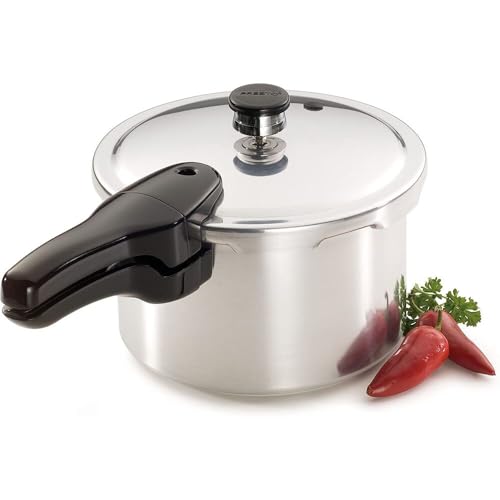
Singles, couples and small kitchens that need a light, simple 4-quart cooker.
The aluminum body is not induction compatible and can react with long-simmered acidic foods, so pick the stainless Presto if either point matters.
The 01241 is the small, light end of the stovetop range: 4 quarts of heavy-gauge aluminum that weighs just 3.5 pounds, heats quickly and responds fast when you lower the burner. Its pressure regulator maintains cooking pressure automatically once it starts to rock, and the size suits one or two people cooking rice, vegetables, small soups or a few chicken pieces without heating a family pot. Presto backs it with the same extended 12-year warranty as its stainless models, and the design has been in production for decades, so gaskets and regulators remain easy to find.
Which One Fits Your Situation
You Cook on an Induction Range
Rule out plain aluminum first, because it will not register on an induction burner. The Presto 01362 is the straightforward choice, with a tri-clad base made for induction and a 6-quart size that matches most recipes. The T-fal Clipso and the KOBACH also carry induction compatible bases, and the stainless Hawkins SSC50 works too, so among those four the decision becomes lid style and capacity rather than stove compatibility.
You Cook for One or Two People
A 4-quart pot keeps small batches at the right fill level, which a half-empty 8-quart cannot do well. The Presto 01241 is light enough to move on and off the burner without effort and stores in a shallow cabinet. If your small household cooks mostly rice and lentils, the 5-litre Hawkins is the alternative, giving a little more headroom for grains that expand while staying compact.
You Batch Cook for a Big Household
Capacity decides this one. The KOBACH at 8 quarts handles double batches, whole chickens and large roasts, and its marked maximum fill line removes the guesswork that causes foaming foods to clog a vent. Its three steam outlets and anti-opening valve suit the longer, fuller cooks batch sessions involve. The 6.3-quart T-fal Clipso is the step down if 8 quarts would crowd your stove or your shelves.
You Are New to Pressure Cooking
Start with the clearest feedback signals. The Presto 01362 rocks its regulator audibly at pressure and shows a cover lock indicator, so you can hear and see the pot’s state while you learn burner control. The T-fal Clipso is the other beginner friendly route, since its lid locks with one press and its pressure valve is set before cooking rather than judged by ear.
Common Mistakes
- Filling the pot past two thirds full, or past halfway with beans, rice and grains that foam and expand, which can clog the vent pipe.
- Buying an aluminum cooker for an induction range, then discovering the burner will not recognize the pot at all.
- Choosing by headline quarts alone and ignoring the usable capacity once the fill limit is applied.
- Letting a hardened sealing ring stay in service for years, causing slow pressure loss that gets blamed on the stove.
- Forcing the lid or using quick release on foaming foods, instead of waiting for pressure to drop on its own.
Frequently Asked Questions
Are stovetop pressure cookers faster than electric models?
Usually, yes. Most stovetop cookers work at 15 psi, while many electric models run at a lower pressure, so the stovetop pot reaches a higher cooking temperature and finishes dense foods such as beans and tough cuts sooner. The trade-off is attention: you control the burner, the timing and the release yourself, with no program to manage the cycle for you.
Can a stovetop pressure cooker be used for canning?
Only some can, and size is the limiting factor. Safe pressure canning requires the pot to hold the required pressure steadily and fit jars of the size your recipe specifies, which most 4 to 6 quart cookers cannot do for quart jars. Check the manual for an explicit canning rating, and follow current USDA guidance rather than assuming a cooker doubles as a canner.
How do I know when it is safe to open the lid?
Wait until pressure has fully dropped: the weighted regulator stops rocking and sits still, a spring valve stem drops back down, and the cover lock indicator releases. The lid should then turn or lift without resistance. If it resists, pressure remains inside, so give it more time instead of forcing the handles apart.
How often does the sealing ring need replacing?
Replace it when the cooker starts losing steam around the rim, takes noticeably longer to reach pressure, or the ring feels hard, stretched or cracked. For a cooker used weekly, that is often every one to two years. Keep a spare ring for your exact model in the drawer so a worn gasket never cancels a meal.