Key takeaways
- Find the right rechargeable battery for your Cobra walkie talkie: the HQRP FA-BP NiMH pack, the Empire Li-ion pack for BK-70128 radios, and how to match voltage and pack shape before you buy.
A Cobra walkie talkie is only as useful as the battery inside it, and the most common reason an old MicroTalk radio goes quiet is a tired rechargeable pack rather than a broken radio. The best rechargeable battery for a Cobra walkie talkie is the pack that matches your exact radio model, its voltage, and its battery shape, because Cobra has used several different pack designs over the years and they are not interchangeable. This guide compares the two replacement packs with the clearest fit for the most common Cobra radios and explains how to identify the pack your radio needs.
Affiliate Disclosure: As an Amazon Associate, we may earn a commission from qualifying purchases made through links in this article, at no additional cost to you.
The Short Answer
If your Cobra radio takes the FA-BP pack, the HQRP rechargeable battery for Cobra FA-BP and FABP two-way radios is the most broadly compatible choice, covering a long list of FRS, PR, and marine radios that run on four AAA-size cells. If your radio is one of the lithium-powered MicroTalk models that use the BK-70128 pack, such as the LI3900 or LI6500 series, you need a completely different battery, and the Empire FRS-001-LI is the matching lithium-ion replacement for that pack. These two batteries are not substitutes for each other. One is a 4.8 volt nickel-metal hydride pack and the other is a 7.4 volt lithium-ion pack, and fitting the wrong one is not a matter of shorter run time. It simply will not fit, and forcing the issue risks damage to the radio.
Everything else in this guide exists to help you tell which of those two situations you are in, and to stop you buying a pack that looks right in a thumbnail but belongs to a different Cobra family.
How Cobra Radios Take Power
Cobra has sold family radio service radios under the MicroTalk name for many years, and across that range the company has used three different power arrangements. Understanding which one your radio uses is the whole buying decision.
The first arrangement is a sealed nickel-metal hydride pack, usually labelled FA-BP. This is the pack found in a large number of classic FRS, PR, and marine handhelds. It is a multi-cell pack that occupies the space of four AAA cells, delivers 4.8 volts, and is charged in the radio or in a drop-in charger supplied with the radio. When this pack ages, the radio still works perfectly on disposable cells, which is often how owners discover the pack is the problem rather than the radio.
The second arrangement is a lithium-ion pack, identified by part numbers such as BK-70128. This pack appears in the compact lithium-powered MicroTalk models, including the LI3900 and LI6500 series, which were sold as lightweight radios with a rated battery life of around ten to twelve hours. The lithium pack is a different shape, a different voltage, and a different chemistry from the FA-BP pack, and it charges only in the charger designed for it.
The third arrangement is individual rechargeable cells. Many newer Cobra radios ship with rechargeable nickel-metal hydride AA or AAA cells that the user can remove and replace individually, with disposable alkaline cells as a backup. Cobra’s own two-way radio battery guide states that its radios only support charging nickel-metal hydride batteries in the radio, and that other chemistries should not be charged in the radio itself. The same guide advises replacing all cells at the same time, never mixing new cells with old ones, and never mixing chemistries in one radio. For radios that charge cells internally, Cobra advises using nickel-metal hydride cells of 1000 milliamp hours or less. That limit matters, because a higher-capacity cell will take longer to charge in the radio and may never reach a full charge on the radio’s own charging circuit.
The Picks
1. HQRP Rechargeable Battery for Cobra FA-BP/FABP Two-Way Radio: The Broadest Fit
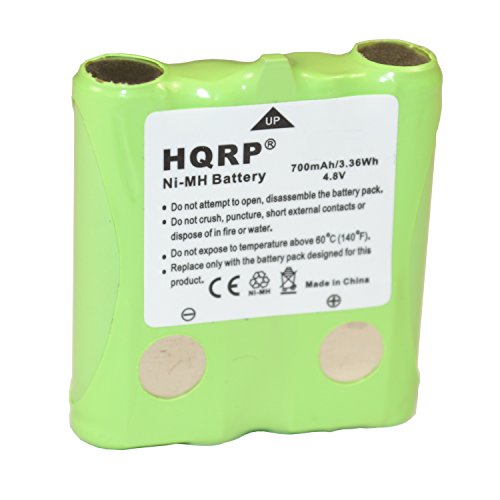
ASIN: B004VM3IPM (evidence level: CANDIDATE — the Amazon US product page for this ASIN is linked from the referring product roundup and the ASIN was confirmed from that outbound Amazon link; the live Amazon product page itself returned an access-denied response when re-read, so availability and any featured offer could not be confirmed at the time of writing and should be checked live before purchase)
The HQRP battery for Cobra FA-BP and FABP two-way radios is a 4.8 volt, 700 milliamp hour nickel-metal hydride pack, and it is the pick that fits the widest range of Cobra radios. Its stated compatibility covers Cobra FA-BP and FABP packs and, more broadly, FRS, PR, and marine radios that run on four AAA batteries, with the exception of the PR3500, PR3800, and PR4000 series. That exception is worth reading twice, because it is exactly the kind of detail that turns a correct purchase into a return.
The 700 milliamp hour capacity is modest by the standards of a modern rechargeable cell, and that is a fair description rather than a criticism. This pack is built to the dimensions and voltage of the original Cobra pack it replaces, so it slots into the battery compartment without forcing the door and it charges on the equipment the radio already came with. A higher-capacity pack in the same space would need different cells or a different shape, and neither is available in this form factor. What the pack offers instead is a fresh set of nickel-metal hydride cells in place of a pack whose cells have lost their ability to hold a charge, which is the actual fault in most radios of this age.
The listing states a 200-day warranty. That is a useful detail for a replacement battery, because a pack that is faulty on arrival usually shows the problem in its first few charge cycles, and a warranty of that length covers the period in which a genuine defect would appear. It does not turn a worn radio into a new one, and it does not extend the life of cells that are simply being used heavily, but it does give a buyer a straightforward route back to the seller if the pack arrives unable to hold a charge.
Choose this pack if the battery already in your radio is labelled FA-BP or FABP, or if your radio is an FRS, PR, or marine model that runs on four AAA cells and is not in the excluded PR3500, PR3800, or PR4000 series. Confirm the exclusion before ordering, because a pack that fits the compartment of an excluded model may still be the wrong electrical match for it.
2. Empire FRS-001-LI Replacement Battery for Cobra BK-70128: The Lithium Pack for LI3900 and LI6500 Radios
ASIN: B0082B8984 (evidence level: CANDIDATE — the ASIN is confirmed by the product manual hosted under that ASIN, which identifies the Empire FRS-001-LI as a 7.4 volt, 850 milliamp hour lithium-ion replacement for Cobra BK-70128 and MN-0160001; the live Amazon product page itself returned an access-denied response when re-read, so availability and any featured offer could not be confirmed at the time of writing and should be checked live before purchase)
The Empire FRS-001-LI is a lithium-ion replacement battery for Cobra BK-70128 and MN-0160001 two-way radios, and it is the correct pick for the compact lithium-powered MicroTalk models, including the LI3900 and LI6500 series. Its stated specification is 7.4 volts and 850 milliamp hours, and its manual describes it as a direct replacement for the BK-70128 pack those radios shipped with.
This battery belongs to a different world from the FA-BP pack above. It is a lithium-ion pack, it delivers 7.4 volts rather than 4.8 volts, and it is shaped for the slim lithium-powered radios rather than the AAA-cell models. The two packs cannot be swapped, and there is no adapter that makes one fit the other. If your radio currently contains a BK-70128 pack, this is the type you need. If your radio contains an FA-BP pack, this battery is not an upgrade, not an alternative, and not a close enough match. It is the wrong battery.
The manual for the Empire pack gives the usual lithium-ion cautions, and they are worth following exactly. Charge the pack only with the charging equipment supplied for the radio, do not substitute a different charger, and do not attempt to charge a lithium-ion pack in a radio or charger designed for nickel-metal hydride cells. Cobra’s own guidance is equally clear on this point: only the rechargeable pack supplied for the radio should be recharged, and only on the charging device provided with the radio. Substituting a different adapter or charging base risks battery damage, fire, or explosion, according to the radio manuals. That warning is written in capital letters in the original documentation, and it deserves to be taken at face value.
Choose this pack if the battery already in your radio is labelled BK-70128 or MN-0160001, or if your radio is an LI3900, LI3950, LI4900, LI5600, or LI6500 series model that shipped with a lithium-ion pack. The 850 milliamp hour capacity stated in the manual is slightly higher than the 800 milliamp hour figure given for some original BK-70128 packs and the 700 milliamp hour figure for the related CXR lithium packs, which is a small difference in the right direction rather than a reason to worry, provided the voltage and the physical fit match.
How to Identify the Pack Your Radio Needs
Start with the battery compartment. Slide off the rear cover, lift out the pack, and read the label. You are looking for one of three things: a part number such as FA-BP, FABP, or BK-70128; a voltage, which will be 4.8 volts for the nickel-metal hydride family and 7.4 volts for the lithium family; and a chemistry, which will be nickel-metal hydride or lithium-ion. If the label is worn or missing, the radio model number is the next best clue, and it is printed on the back of the radio or inside the battery compartment. Search that model number against the pack part number rather than against a generic phrase such as Cobra battery, because the generic search returns packs for every Cobra family at once.
Shape is a useful cross-check. The FA-BP family pack is a block of four AAA-size cells joined together, and it is roughly the size of the four cells it replaces. The BK-70128 family pack is a slimmer, flatter lithium-ion pack with a different connector and a different outline. If the pack in your hand looks like four small cylindrical cells in a row, it belongs to the nickel-metal hydride family. If it looks like a single flat slab, it belongs to the lithium family. When the shape and the voltage agree, you have the right family. When they disagree, trust the voltage and the part number over the shape.
Nickel-Metal Hydride or Lithium-Ion: What the Difference Means in Use
The two chemistries behave differently, and knowing the difference helps set expectations for the replacement you buy.
Nickel-metal hydride is the older, more forgiving chemistry. It tolerates being left in a radio for weeks, it can be recharged hundreds of times, and it loses capacity gradually rather than suddenly. Its weakness is self-discharge: a nickel-metal hydride pack left unused for a month will have lost a noticeable part of its charge, and a pack left for several months may read as flat even though nothing is wrong with it. A fresh charge usually restores it. Nickel-metal hydride cells also have a memory of sorts in older formulations, and a full discharge followed by a full charge occasionally helps a pack that has been topped up many times without ever being emptied, though modern cells are far less sensitive to this than the nickel-cadmium cells they replaced.
Lithium-ion holds its charge far better in storage, delivers a steadier voltage through its discharge, and packs more energy into a smaller, lighter shape, which is why Cobra used it in the compact LI series radios. Its weakness is that it is less forgiving of abuse. A lithium-ion pack should not be charged on the wrong charger, should not be punctured or crushed, and should not be left fully discharged for long periods. A lithium-ion pack that has swollen, become hot during charging, or developed an unusual smell should be taken out of service and recycled rather than used again.
Charging Rules That Protect the Radio
Cobra’s radio manuals are unusually direct about charging, and the rules are worth repeating because they are the difference between a battery that lasts for years and a radio that is damaged in an afternoon.
First, charge only the rechargeable pack that belongs to the radio, and only on the charging device supplied with the radio. Do not substitute a different adapter or charging base, even if the plug fits. The manuals warn that substituting charging equipment can cause battery damage, fire, or explosion, and that warning applies to both chemistries.
Second, never attempt to recharge disposable alkaline batteries. Alkaline cells are not made to be recharged, and the attempt can cause leaking or rupture. If your radio has an alkaline battery tray, that tray is an emergency backup power source for use with fresh alkaline cells, not a charging cradle.
Third, do not charge a lithium-ion pack in a radio or charger built for nickel-metal hydride, and do not charge nickel-metal hydride cells in equipment built for lithium-ion. The charging voltages and termination methods are different, and the wrong combination can overcharge the pack.
Fourth, give a new pack its initial charge properly. The manuals for the lithium-powered radios specify an initial charge of five to six hours before first use, and the marine handheld manuals specify twelve to fourteen hours for their nickel-metal hydride pack. A new pack that is used before its first full charge will still work, but it will not deliver its full capacity until it has been through a complete charge cycle.
What Not to Buy
A few buying mistakes recur with Cobra batteries, and each one is easy to avoid once it is named.
Do not buy a pack by voltage alone. A 4.8 volt pack and a 7.4 volt pack are both sold for Cobra radios, and both are correct, but for different radios. Voltage without the part number is not enough information.
And do not buy a battery for a radio whose model number you have not checked. Cobra has reused similar model names across different generations, and two radios that look alike can take different packs. The model number inside the battery compartment settles the question in seconds.
Frequently Asked Questions
Can I use disposable AAA batteries instead of the FA-BP pack?
In many FA-BP radios, yes, as a temporary measure. The pack occupies the space of four AAA cells, and the radio will run on disposable cells fitted in its place, or on an alkaline tray where one is supplied. Disposable cells are a useful backup for a trip, but they are not a long-term replacement for the rechargeable pack, and they must never be recharged.
Can I charge nickel-metal hydride AAA cells in my Cobra radio?
Cobra’s guidance is that its radios support charging nickel-metal hydride batteries in the radio, and it advises using cells of 1000 milliamp hours or less for in-radio charging. Higher-capacity cells will run the radio for longer, but they will take longer to charge in the radio and may not reach a full charge on the radio’s charging circuit. If you use higher-capacity cells, charge them in a separate charger designed for them.
Will the HQRP FA-BP pack fit the PR3500, PR3800, or PR4000 series?
No. Those series are explicitly excluded from the compatibility stated for this pack. If your radio belongs to one of those series, look for the pack specified for that series rather than fitting the FA-BP pack and hoping for the best.
The Bottom Line
For most owners of older Cobra walkie talkies, the HQRP FA-BP pack is the battery to buy, because it covers the largest number of radios and matches the original pack in voltage, chemistry, and shape. For owners of the lithium-powered LI3900 and LI6500 series, the Empire FRS-001-LI is the matching pack, and it is the only one of the two picks that belongs in those radios. In both cases, the part number printed on the pack already in your radio is the authority, and a few seconds spent reading it will save a return and a wasted week. Both picks in this guide are listed at candidate evidence level because Amazon’s product pages returned access-denied responses when re-read, so confirm the listing and its availability live before you buy, and do not order a pack whose voltage, chemistry, and part number you have not matched to your radio.