Our Short List of 3
All 5 Picks at a Glance
| Product | Specs | Action |
|---|---|---|
 Ring Battery Doorbell (2024 Release) | Check price on Amazon | |
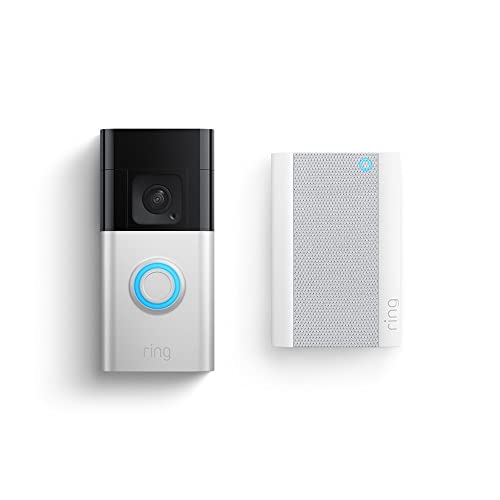 Ring Battery Doorbell Plus (2023 Release) | Check price on Amazon | |
 Arlo Video Doorbell 2K (2nd Gen) | Check price on Amazon | |
 Google Nest Doorbell (Battery) | Check price on Amazon | |
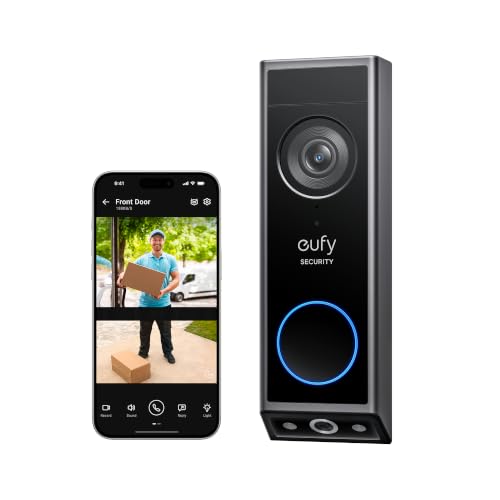 eufy Video Doorbell E340 | Check price on Amazon |
Key takeaways
- Compare the best doorbell cameras with costs explained in plain terms — upfront, subscription and install costs for five top video doorbells before you buy.
A video doorbell is one of the simplest upgrades a home can get: it shows who is at the door, lets you speak to visitors from your phone, and records motion at your entrance around the clock. The hard part is not choosing a camera, it is understanding what it will actually cost. The best doorbell cameras with costs in mind are not always the cheapest ones on the shelf, because the real total includes the hardware, any ongoing recording plan, and the extras you may need to install it properly.
This guide breaks down those costs in plain language for five well-known video doorbells sold on Amazon US. Each one is a different balance of upfront cost and long-term value, from a no-monthly-fee dual-camera model to a premium option with radar motion detection. No dollar figures are listed here, because prices shift constantly; instead, each pick is placed on a clear cost scale so you can judge which tier fits your budget before you shop.
At a Glance
| Product | Best For | Key Spec |
|---|---|---|
| Ring Battery Doorbell (2024 release) | Lowest upfront cost in an Alexa home | 1440 x 1440 head-to-toe video |
| Ring Battery Doorbell Plus (2023 release) | Sharper video with a removable battery | 1536p HD+ video, radar motion detection |
| Arlo Video Doorbell 2K (2nd Gen) | Widest view and smart-home flexibility | 1944 x 1944 2K HDR, 180-degree diagonal view |
| Google Nest Doorbell (Battery) | Google Home households, no plan required for alerts | 1080p HD, 145-degree diagonal view |
| eufy Video Doorbell E340 | No monthly fee and package coverage | Dual 2K cameras, 8 GB built-in storage |
How to Choose a Video Doorbell Camera
Upfront hardware cost. Video doorbells fall into three rough tiers. Entry-level battery models keep the initial outlay modest and suit renters or first-time buyers. Mid-range models add sharper video, wider views, or a second camera for a moderate step up. Premium models add radar motion sensing, higher resolution, and faster alerts, and they sit at the top of the range. Decide your tier first, because it narrows the field fast.
Ongoing subscription cost. Most brands charge a monthly or yearly plan for video history, package alerts, and advanced detection. Ring and Arlo both gate recording history behind their plans, while Google offers basic person, package, animal, and vehicle alerts without a plan. Eufy stands apart by recording to built-in local storage with no required monthly fee. Over two or three years, a plan can cost more than the doorbell itself, so this is often the largest part of the true total.
Power source and installation cost. Battery models install with screws and a drill in minutes and need no existing wiring, which keeps installation costs at zero for most people. Wired models reuse existing doorbell wiring and a transformer, which is convenient if your home already has both, but may need an electrician if it does not. Several models in this guide offer both options, so you can start on battery and wire later.
Video quality and field of view. A head-to-toe frame matters more than raw resolution at a front door, because it shows both a visitor’s face and packages on the step. Look for a tall aspect ratio or a second downward camera, plus color night vision if your porch is dimly lit. Higher resolution helps identify faces and read labels, but it also uses more bandwidth and storage.
Smart-home fit. Each brand works best inside its own ecosystem. Ring pairs naturally with Alexa and Echo devices, Nest with Google Home, Arlo with Alexa, Apple Home, Google Home, and SmartThings, and eufy with Alexa and Google Assistant. Choosing the brand that matches the voice assistant and app you already use saves daily friction.
Storage and privacy. Cloud storage is convenient and protects footage if the doorbell is stolen, but it depends on a subscription. Local storage avoids the monthly fee and keeps recordings in your home, though capacity is limited and footage lives on the device. Decide which trade-off you prefer before you buy, because it is hard to change later.
Ring Battery Doorbell (2024 Release)
The Ring Battery Doorbell from the 2024 release is the entry point into Ring’s lineup and the lowest-cost way to get the brand’s head-to-toe video. Its 1440 x 1440 sensor captures a square, head-to-toe frame with a 150-degree horizontal and vertical field of view, so visitors and parcels both stay in shot. Color night vision keeps the porch readable after dark, and motion detection with live view and two-way talk covers the core jobs of any video doorbell.
The built-in rechargeable battery charges over USB-C, and the doorbell can also be wired to existing doorbell wiring if your home has it. At 4.98 by 2.44 by 0.91 inches it is compact enough for narrow door frames, and it comes in Satin Nickel and Venetian Bronze finishes. Setup runs through the Ring app, and it works with Alexa for announcements and live views on Echo devices.
The cost story here is straightforward: modest hardware, with recording history and some advanced features requiring a Ring Home plan. That makes it a good fit for Alexa households that want Ring’s app and accessory ecosystem at the smallest upfront outlay, and are comfortable with a modest ongoing plan or with live viewing only.
Pros:
– Lowest upfront cost in this lineup
– Head-to-toe video shows faces and packages together
– Battery or wired power, with simple USB-C charging
– Deep Alexa and Ring accessory ecosystem
Cons:
– Built-in battery means the whole unit comes down to charge
– Video history requires a Ring Home plan
– No local storage option
Ring Battery Doorbell Plus (2023 Release)
The Ring Battery Doorbell Plus steps up from the entry model with sharper 1536p HD+ video, HDR, and radar-based motion detection. The radar sensor helps the doorbell distinguish real movement from passing cars or swaying branches, which means fewer nuisance alerts. Its expanded head-to-toe field of view and color night vision keep the picture clear in varied light, and two-way talk with noise cancellation makes conversations with visitors easier to hear.
A practical advantage over the base model is the Quick Release Battery Pack. When the battery runs low, you pop the pack out and swap in a charged spare instead of removing the whole doorbell from the wall. The unit measures 5.1 by 2.4 by 1.1 inches, runs on battery or existing doorbell wiring, and pairs with Alexa and the Ring app.
In cost terms, this is a mid-range Ring pick: a moderate step up in hardware for noticeably better video and smarter motion sensing, with the same Ring Home plan structure for recording history. It suits buyers who want Ring’s polish and are willing to pay a little more for the sharper picture and the removable battery.
Pros:
– Sharper 1536p HD+ video with HDR
– Radar motion detection reduces false alerts
– Quick Release Battery Pack for easy swaps
– Color night vision and noise-cancelling two-way talk
Cons:
– Mid-range hardware cost, above the base model
– Video history requires a Ring Home plan
– No local storage
Arlo Video Doorbell 2K (2nd Gen)
The Arlo Video Doorbell 2K, model AVD4001, is the sharpest camera in this guide. Its 1944 x 1944 2K HDR sensor delivers a head-to-toe frame with a 180-degree diagonal field of view, and its infrared night vision reaches up to 20 feet. Package, person, and vehicle recognition help the doorbell tell you what it sees rather than simply that something moved, and two-way audio lets you answer the door from anywhere.
It is also the most flexible on power and smart-home support. It runs on its rechargeable battery or on existing doorbell wiring, connects over 2.4 GHz Wi-Fi, and works with Alexa, Apple Home, Google Home, and SmartThings. The housing carries an IP65 weather rating, so rain and dust are less of a concern, and a one-month Arlo Secure plan is included so you can try cloud recording before deciding whether to keep it.
On cost, Arlo sits in the upper mid-range for hardware, and its ongoing value depends on whether you keep the Secure plan for video history and smart alerts. It is the pick for households that want the widest, sharpest view, the broadest smart-home compatibility, and the option to wire or run on battery.
Pros:
– Sharpest video here at 1944 x 1944 2K HDR
– 180-degree diagonal view covers the whole porch
– Battery or wired power, IP65 weather sealing
– Works with Alexa, Apple Home, Google Home, and SmartThings
Cons:
– Upper mid-range hardware cost
– Full smart alerts and history need an Arlo Secure plan
– Single-band 2.4 GHz Wi-Fi only
Google Nest Doorbell (Battery)
The Google Nest Doorbell in its battery version is the simplest option for a Google Home household. It records 1080p HD video in a tall 3:4 aspect ratio with a 145-degree diagonal field of view, which frames a visitor from head to toe and keeps packages in view. Its built-in intelligence distinguishes people, packages, animals, and vehicles, and sends those alerts to the Google Home app with no subscription required for the basic alerts.
The built-in rechargeable battery means it installs anywhere, with no wiring needed, and it can also be wired to an existing doorbell setup. It measures about 6.3 by 1.8 by 0.9 inches and is available in Snow, Linen, Ash, and Ivy finishes. It works with Google Assistant and Alexa, and pairs with Google Home displays for a live view on a screen in the house.
Its cost profile is appealing for buyers who dislike monthly fees. The hardware sits in the mid-range, and because core alerts work without a plan, the ongoing cost can stay at zero if you do not need extended video history. It is the natural choice for homes already running on Google Home.
Pros:
– Smart alerts for people, packages, animals, and vehicles without a plan
– Battery power allows installation anywhere
– Tall 3:4 frame shows visitors head to toe
– Clean fit with Google Home and Google Assistant
Cons:
– 1080p resolution is lower than the 2K models here
– Video history beyond the free window needs a Nest Aware plan
– Battery charging requires removing the unit from its mount
eufy Video Doorbell E340
The eufy Video Doorbell E340, model T8214, takes a different approach: two cameras instead of one. The main 2K camera faces visitors head to toe, while a second downward camera watches the doorstep where packages sit. That solves the most common blind spot of a single-lens doorbell without needing a taller sensor. It records at 2048 x 1536 on the main camera and 1600 x 1200 on the package camera, with a 160-degree view and color night vision.
Storage is the E340’s biggest cost advantage. It records to 8 GB of built-in local storage, and some versions accept a microSD card for more capacity, so there is no required monthly fee for recording. A 6,500 mAh rechargeable battery powers it, and it can also be wired to existing doorbell wiring. It works with Alexa and Google Assistant over 2.4 GHz Wi-Fi, and it can pair with a eufy HomeBase for expanded storage and chime features.
In total-cost terms, the E340 is often the cheapest option to own over several years, even though its hardware sits in the mid-range. It suits buyers who want package coverage, dislike subscriptions, and prefer their recordings stored at home.
Pros:
– Dual cameras cover visitors and packages at once
– Local storage with no required monthly fee
– 2K main camera with color night vision
– Battery or wired power, large 6,500 mAh battery
Cons:
– Mid-range hardware cost
– No included HomeBase or indoor chime in the standalone listing
– Local storage capacity is limited without an add-on
Which Doorbell Camera Fits Your Budget
If the lowest upfront cost matters most, the Ring Battery Doorbell is the natural starting point, especially in an Alexa home. Buyers who want sharper video and a removable battery can step up to the Ring Battery Doorbell Plus for a moderate increase. The Arlo Video Doorbell 2K is the choice when the widest, sharpest picture and broad smart-home support justify an upper mid-range outlay. The Google Nest Doorbell suits Google Home households that want smart alerts without paying for a plan. And the eufy E340 is the strongest long-term value for anyone who wants to avoid a monthly fee altogether, since its local storage keeps ongoing costs at zero.
The total cost of ownership is the number that matters, not the shelf tag alone. Add the hardware tier to the plan you expect to keep, and the ranking above changes quickly: a modest doorbell with a plan can outspend a mid-range doorbell with no plan within a couple of years.
Frequently Asked Questions
What does a video doorbell cost in total?
The total has three parts: the hardware, any monthly or yearly recording plan, and installation extras such as a chime, transformer, or spare battery. A doorbell with no required plan, like the eufy E340, can have the lowest total over time even if its hardware costs more than an entry-level model.
Do I need a subscription for a video doorbell?
It depends on the brand. Ring and Arlo need a plan for video history and some smart alerts. Google’s Nest Doorbell gives basic person, package, animal, and vehicle alerts without a plan. Eufy records locally with no required monthly fee. Live viewing and motion alerts generally work without a plan on most models.
Can I install a video doorbell myself?
Battery models are the easiest to install yourself, usually needing only a drill, screws, and the app. Wired models reuse existing doorbell wiring and are also manageable if your home already has a working transformer and chime. If your home has no doorbell wiring, choose a battery model or budget for professional help.
Battery or wired: which is cheaper over time?
Battery models cost nothing to install but need periodic recharging, and a spare battery adds to the upfront cost. Wired models avoid charging entirely but may need wiring work if your home lacks a transformer. Over several years, the difference is usually small compared with the cost of a recording plan.
Which video doorbell is best for packages?
A head-to-toe frame or a second downward camera matters most. The eufy E340 has a dedicated package camera, while the Ring, Arlo, and Nest models use a tall head-to-toe frame to keep the doorstep in view. Package detection alerts, available on Arlo, Nest, and Ring plans, add a notification when a delivery arrives.
Do video doorbells work without Wi-Fi?
No. Video doorbells need Wi-Fi to send live views, alerts, and recordings to your phone. They connect over 2.4 GHz Wi-Fi, so check that your front door gets a stable signal from your router before you buy, or consider a Wi-Fi extender for the entryway.
Conclusion
The best doorbell cameras with costs in mind are the ones whose total ownership fits your budget, not just the ones with the lowest shelf tag. The Ring Battery Doorbell keeps the entry cost low, the Ring Battery Doorbell Plus adds sharper video for a moderate step up, the Arlo 2K leads on picture quality and smart-home range, the Nest Doorbell keeps Google households free of plan fees for basic alerts, and the eufy E340 removes the monthly fee entirely. Match the hardware tier to your smart-home setup, then weigh the ongoing plan before you decide.
Disclosure: As an Amazon Associate, we earn from qualifying purchases.