Our Short List of 3
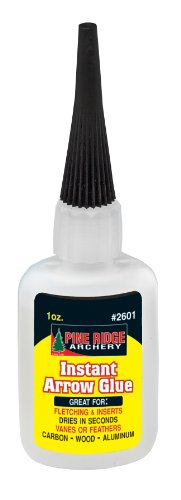
- Best for: Batch builders who fletch and fit inserts in a single session.
- Brand: Pine Ridge
- Container: 1 oz bottle
- Item form: gel
- Drying time: 7 to 10 seconds
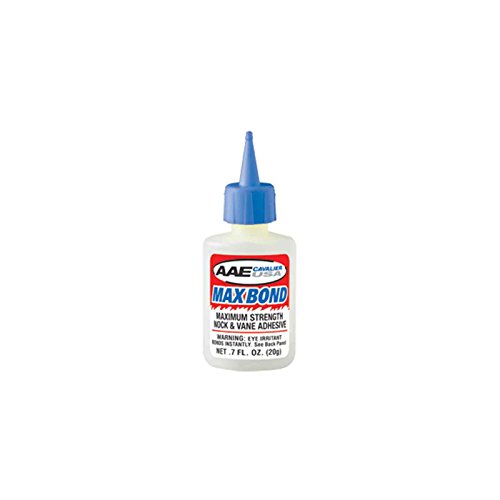
- Best for: Archers fletching AAE Max vanes on carbon shafts.
- Brand: Arizona Archery Enterprises (AAE)
- Container: .7 oz (20 gram) bottle
- Formula: high-viscosity liquid
- Formulated for: Plastifletch Max, Max Hunter, Pro Max and Max Stealth vanes
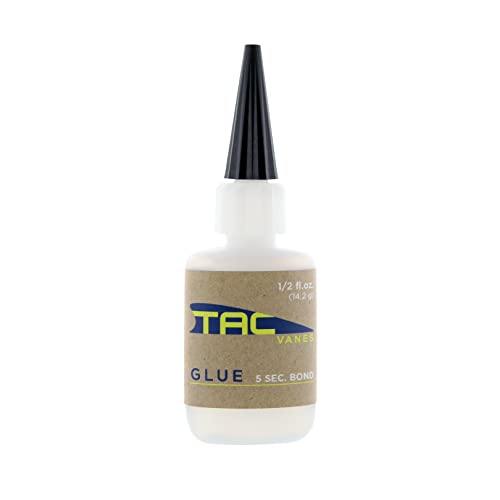
- Best for: TAC Vanes shooters doing precise, small-batch fletching and repairs.
- Brand: TAC Vanes
- Container: 1/2 fl oz bottle
- Adhesive type: cyanoacrylate
- Bond time: about 5 seconds
All 4 Picks at a Glance
| Product | Specs | Action |
|---|---|---|
| Pine Ridge Instant Arrow Glue, 1 oz |
| Check price on Amazon |
| AAE Max Bond Glue, .7 oz Bottle |
| Check price on Amazon |
| TAC Vanes TAC Glue, 1/2 fl oz Bottle |
| Check price on Amazon |
 AAE MAX Adhesion Kit |
| Check price on Amazon |
Key takeaways
- Five fletching glues for carbon shafts compared: a flexible solvent bond, two instant formulas, a precision cyanoacrylate and a full primer kit.
Fletching carbon shafts is really a decision about surface grip. Carbon is smooth and resin-rich, so a glue that holds fine on wood or aluminum can let a vane creep and lift after a few dozen shots. The real choice is how you want to manage that weak surface: a slow solvent bond you clamp and leave overnight, an instant gel that locks in seconds, or a primer step that changes how the shaft face takes glue in the first place.
This roundup is for bowhunters refletching a dozen shafts before the season, target archers who repair single vanes between rounds, and first-time builders setting up a jig at home. Every pick is a dedicated fletching glue sold for vanes or feathers, chosen from its Amazon listing title and spec block, and each one names carbon among the shafts it bonds.
Quick Picks
As an Amazon Associate we earn from qualifying purchases
| Product | Best for | Key spec from title |
|---|---|---|
| Bohning Fletch-Tite Platinum | Patient clamp-and-cure work on vanes and feathers | 3/4 oz tube |
| Pine Ridge Instant Arrow Glue | Fast batch fletching plus insert work in one session | 1 oz bottle |
| AAE Max Bond Glue | AAE Max family vanes on carbon and aluminum | .7 oz bottle |
| TAC Vanes TAC Glue | Precise placement with TAC Vanes fletchings | 1/2 fl oz bottle |
| AAE MAX Adhesion Kit | Slick carbon shafts that have shed vanes before | Kit with primer pen and wipes |
How to Choose
Bond Chemistry and Cure Style
Fletching glues split into two camps. Solvent-based cements such as Fletch-Tite Platinum stay workable for minutes, clamp for about five minutes and build strength over a full day, which forgives small alignment slips. Cyanoacrylate formulas grab in seconds and suit a practiced hand, but a vane set crooked is set for good. Neither camp is stronger in every case; the bond that survives is the one matched to your pace and your jig routine. Pick the chemistry first, then compare bottles inside it.
Shaft Preparation on Carbon
More vanes fail from a dirty shaft than from a weak glue. Carbon carries mold release and handling oils that block adhesion, so the fletching area needs a wipe-down and a fully dry surface before any bead is laid. Some systems build that prep into the box with a primer pen and cleaning wipes, while bare bottles assume you own the wipes and the habit already. If vanes have lifted on you before, treat prep as part of the product, not an optional extra.
Viscosity and Applicator Control
Glue thickness decides how the bead behaves on a narrow vane base. High-viscosity liquids and gels stay where the tip puts them, which matters on small two-inch vanes with little bonding area. Thin formulas wick under the vane foot and can run down the shaft if the bead is heavy. Tip design matters just as much: a fine nozzle lays a controlled line, while a wide tube mouth floods small vanes. Match the flow to the vane size you fletch most often.
Bottle Size and Shelf Life
Fletching glue ages once opened, and cyanoacrylates thicken as they absorb moisture from the air. A large bottle only pays off if you fletch often enough to use it while it still flows cleanly. Occasional builders usually finish a half-ounce bottle while it is fresh, while shops and club benches can work through a full ounce or a 100-gram bottle before it turns. Buy the size your season will empty, and store the bottle upright, capped tight, away from heat.
The 5 Best Options
Bohning Fletch-Tite Platinum, 3/4 oz Tube
Platinum is the slow, forgiving option in this set, and it suits builders who fletch feathers as often as vanes. The solvent formula gives you working minutes instead of seconds, so a vane can be nudged straight in the clamp before the bond grabs. Bohning positions it for every shaft material and calls out carbon and wood in particular. The trade-off is patience: the bond builds over a full cure cycle, so arrows fletched tonight are shot tomorrow, not this afternoon. For traditional-leaning setups and careful first builds, that calm pace is the point.
Specs
- Brand: Bohning
- Container: 3/4 oz tube
- Adhesive type: solvent-based
- Clamp time: 5 minutes
- Full cure: 24 hours, 48 hours in humid conditions
- Bonds: vanes, feathers and swedged nocks
- Shafts: carbon, aluminum and wood, recommended for carbon and wood
- Bond stays flexible and water repellent
Best for: Builders who want working time to align feathers and vanes.
Watch out for: Humid rooms stretch the cure toward two days, and the tube should never be stored in a refrigerator.
Pine Ridge Instant Arrow Glue, 1 oz
- Best for: Batch builders who fletch and fit inserts in a single session.
- Brand: Pine Ridge
- Container: 1 oz bottle
- Item form: gel
- Drying time: 7 to 10 seconds
Batch builders who fletch and fit inserts in a single session.
The near-instant grab leaves almost no room to reposition a vane once it touches the shaft.
Pine Ridge built this gel for speed at the bench, and it fits archers who fletch a full dozen in one sitting and set inserts in the same session. The listing gives a drying time of seven to ten seconds, so the clamp comes off almost at once and the next shaft goes in. Because the same bottle covers vanes, feathers and inserts across carbon, aluminum and wood, a small home bench needs one adhesive instead of two. The pace demands accuracy, since a vane placed wrong has almost no slide time for correction.
AAE Max Bond Glue, .7 oz Bottle
- Best for: Archers fletching AAE Max vanes on carbon shafts.
- Brand: Arizona Archery Enterprises (AAE)
- Container: .7 oz (20 gram) bottle
- Formula: high-viscosity liquid
- Formulated for: Plastifletch Max, Max Hunter, Pro Max and Max Stealth vanes
Archers fletching AAE Max vanes on carbon shafts.
Feather fletchers and non-AAE vane shooters get better matches elsewhere in this list.
Max Bond exists for one job: holding AAE Max family vanes, whose Elastimax base material shrugs off many general adhesives. The high-viscosity liquid stays on the vane foot instead of running, and AAE formulates it for Plastifletch Max, Max Hunter, Pro Max and Max Stealth vanes above all. It also covers Elite Plastifletch, Hybrid and most other plastic vanes, on carbon or aluminum shafts. If your arrows wear Max vanes and you have watched edges lift mid-season, this is the bottle built around that exact failure.
TAC Vanes TAC Glue, 1/2 fl oz Bottle
- Best for: TAC Vanes shooters doing precise, small-batch fletching and repairs.
- Brand: TAC Vanes
- Container: 1/2 fl oz bottle
- Adhesive type: cyanoacrylate
- Bond time: about 5 seconds
TAC Vanes shooters doing precise, small-batch fletching and repairs.
The bond is tuned to TAC Vanes, so mixed-brand benches should confirm fit with their own vanes first.
TAC built its glue around its own vanes, and the small bottle suits archers who repair a vane or two at a time and want each drop placed exactly. The cyanoacrylate forms a secure bond in about five seconds, and the ultra-fine tip meters flow so a short vane base gets a thin, even line rather than a flood. Used with the TAC primer pen on TAC Vanes fletchings, the maker backs the adhesion outright. The half-ounce size stays fresh for shooters who fletch in short, occasional sessions.
AAE MAX Adhesion Kit
- Best for: Archers whose vanes keep lifting off carbon and who want prep handled by the kit.
- Brand: Arizona Archery Enterprises (AAE)
- Kit contents: one 20-gram bottle of Max Bond glue
- Also included: one MAXweld primer pen
- Also included: one package of Max Clean wipes
Archers whose vanes keep lifting off carbon and who want prep handled by the kit.
The wipe-and-prime routine adds minutes per arrow compared with a bare bottle.
This kit answers the carbon problem at the surface instead of at the glue. Alongside the same 20-gram Max Bond bottle sold on its own, the box adds a MAXweld primer pen that preps the vane base and a pack of Max Clean wipes for the shaft, so cleaning, priming and gluing follow one maker-matched routine. It is aimed squarely at archers whose vanes have already lifted off slick carbon and who suspect prep, not glue choice, caused it. The extra steps slow each arrow down, but the sequence removes the guesswork.
Which One Fits Your Situation
Refletching a Full Dozen Before the Season
Volume work rewards a bottle that keeps pace without running dry. Pine Ridge Instant Arrow Glue covers a dozen shafts quickly, and its one-ounce gel also handles the inserts you seat in the same session. If your dozen wears AAE Max vanes, choose Max Bond instead, since its formula targets those vane bases directly and the bottle size matches a full set.
Vanes Keep Lifting Off Slick Carbon
Repeated lift-off usually traces back to surface prep rather than glue strength. The MAX Adhesion Kit attacks that cause with its primer pen and cleaning wipes, giving the Max Bond glue a prepared vane base and a clean shaft to grip. Work through the full routine on one arrow first and confirm the hold before committing the whole set.
Quick Repairs at the Range
A torn vane found between rounds needs seconds, not a cure cycle. TAC Glue bonds in about five seconds through a fine tip that suits single-vane work, and the small bottle rides in a range bag without much weight. Pine Ridge is the other fast option here, with a seven-to-ten-second dry time and a gel that stays put on a vertical shaft.
First Arrows on a New Jig
New builders benefit from working time more than raw speed. Fletch-Tite Platinum clamps for five minutes and lets you correct a crooked vane before the bond sets, which keeps early mistakes cheap. Once your jig routine feels steady and repeatable, an instant gel becomes easier to handle and the slower cement can retire to feather work.
Common Mistakes
- Fletching over a dirty shaft: oils and mold release on new carbon block adhesion, so wipe the fletching area and let it dry fully first.
- Shooting before the full cure: a bond that feels firm at handling strength can still fail under shot force hours later.
- Flooding the vane base: a heavy bead squeezes out, adds weight at the rear of the shaft and bonds fingers as readily as vanes.
- Keeping an old opened bottle: thickened glue that strings or skins over will not wet the vane base evenly, whatever the label promises.
- Mixing systems carelessly: a primer pen matched to one maker family may not suit another brand of vane, so keep prep and glue in one system.
Frequently Asked Questions
Does carbon need a special fletching glue?
Carbon needs a glue whose listing names carbon, plus honest surface prep. The smooth resin face gives an adhesive less to grip than wood grain, so general craft glues often let go early. Any pick in this roundup lists carbon among its shafts, and the kit adds a primer step for shafts that have already shed a vane.
How long should fletching glue cure before shooting?
Follow the bottle, because the range is wide. Instant cyanoacrylates here grab in five to ten seconds, while the solvent-based Platinum clamps for five minutes and reaches full strength in about a day, or two in humid air. Handling strength is not full strength, so give slow cements their full cycle before the arrows are shot.
Can one glue cover vanes, feathers and inserts?
Some can, within limits. Pine Ridge Instant Arrow Glue lists vanes, feathers and inserts on one label, and Fletch-Tite Platinum covers vanes, feathers and swedged nocks. Insert adhesives built for impact loads are a separate family, though, so a fletching bottle should not be stretched into heavy insert work the maker never claimed for it.
Why did a vane fall off a carbon shaft?
The usual causes are a contaminated shaft face, too little clamp time, or shooting before the cure finished. Glue left on the shaft but not the vane points at the vane base needing cleaning or primer, while glue left on the vane points at shaft prep. Strip the old vane, clean both surfaces and redo the bond.