Key takeaways
- Find the best grease for water pumps? Compare five waterproof bearing greases and seal lubricants by NLGI grade, temperature range and food-grade safety.
A water pump lives a hard life. Its bearings spin in damp air, its seals sit against moving shafts, and every splash of water tries to wash the lubricant away. Picking the best grease for water pumps is therefore less about brand loyalty and more about matching the formula to the job: a bearing grease that resists washout, or a seal lubricant that will not attack rubber.

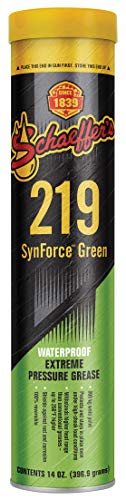
Quick answer: For most pump bearings, a waterproof NLGI 2 lithium-complex grease such as Lucas Red “N” Tacky or Schaeffer SynForce Green is the safest starting point. For seals and O-rings, a silicone grease such as Super Lube 92150 or Trident Silicone Grease protects rubber without swelling it. If the pump moves drinking water, only a food-grade, NSF H1 registered grease belongs anywhere near it.
This guide compares five real greases sold on Amazon US, with base type, NLGI grade, temperature range and food-grade status stated for each, so you can match the product to your pump instead of guessing.
Quick Picks
Our Short List of 3
- Base type: Lithium complex
- NLGI grade: 2
- Temperature range: Drop point 540°F
- Food-grade: No
- Base type: Synthetic, fortified with molybdenum
- NLGI grade: 2
- Temperature range: -10°F to 350°F
- Food-grade: No

- Base type: Silicone with PTFE
- NLGI grade: 2
- Temperature range: -40°F to 500°F
- Food-grade: Yes, NSF H1 registered
All 4 Picks at a Glance
| Product | Specs | Action |
|---|---|---|
| 1. Lucas Oil Red “N” Tacky Grease — Best All-Round Pump Bearing Grease |
| Check price on Amazon |
| 2. Schaeffer SynForce Green Extreme Pressure Grease — Best for Wet, High-Load Bearings |
| Check price on Amazon |
| 3. Super Lube Silicone Lubricating Grease 92150 — Best Food-Grade Seal and O-Ring Grease |
| Check price on Amazon |
 4. Green Grease Ultra Heavy Duty — Best Waterproof Grease for Marine and Outdoor Pumps |
| Check price on Amazon |
How to Choose
Match the Grease to the Part
A water pump has two very different lubrication jobs, and no single grease does both perfectly. Bearings need a grease that stays in place under load, resists water washout and protects steel from rust. Seals and O-rings need a lubricant that keeps rubber pliable without swelling, hardening or dissolving it. Petroleum-based greases can attack some rubber compounds, which is why silicone grease is the standard choice for seal lips and O-rings. Before you buy, decide whether you are greasing a bearing, a seal, or both, and choose accordingly.
Water Washout Resistance Matters Most
Water is the enemy of pump lubrication. A grease that washes out leaves metal unprotected, and a bearing that runs dry fails quickly. Look for products that describe themselves as waterproof or water resistant and that state resistance to spray-off and washout. Tacky greases cling to metal surfaces, while marine-grade formulas are built to survive constant splashing and even immersion. If your pump sits outdoors, in a basement that floods, or on a boat, washout resistance should be your first filter.
Understand the NLGI Grade
The NLGI grade describes how thick a grease is. NLGI 2 is the standard consistency for bearing grease: firm enough to stay in the bearing, soft enough to flow into the rolling elements. NLGI 1 is softer and suits cold weather or centralised lubrication systems, while NLGI 3 is stiffer and suits slow, heavily loaded bearings. Almost every grease in this guide is NLGI 2, which is the right default for most water pump bearings. If your pump manual specifies a different grade, follow the manual.
Check the Temperature Range
Pumps run hot and cold. A pump in an unheated shed can start below freezing in winter, while a pump motor bearing can run well above room temperature under load. A grease that stiffens in the cold starves the bearing at startup, and a grease that thins out when hot leaks away and stops protecting. Check the stated operating range against the coldest and hottest conditions your pump will see. The products below range from -40°F to 500°F, so there is a match for almost any climate.
Food-Grade and Potable Water Safety
If the pump moves drinking water, irrigation water for food crops, or water in a food processing setting, ordinary bearing grease is the wrong choice. A leak or a seal weep can carry grease into the water, so the lubricant must be safe for incidental contact. Look for NSF H1 registration, which means the grease is approved for use where incidental food contact is possible. Only one product in this roundup carries that rating, and it is the only one to use anywhere near a potable water pump.
Seal and Material Compatibility
Grease and rubber do not always get along. Lithium-based greases are generally safe with common seal materials, but some petroleum products can swell nitrile or natural rubber seals over time. Silicone grease is chemically inert and compatible with most plastics and rubbers, which is why it is the go-to choice for O-rings and seal lips. Polyurea greases have their own compatibility rules and should not be mixed with lithium greases. When in doubt, check the pump or seal maker’s recommendation before applying anything new.
Do Not Mix Grease Types
Mixing incompatible greases is one of the fastest ways to ruin a bearing. Different thickener systems, such as lithium complex, calcium sulfonate and polyurea, can react with each other, softening into a runny mess or hardening into a lump that blocks lubrication. If you are switching to a new grease, purge the old grease from the bearing first rather than topping up on top of it.
The Best Grease for Water Pumps Reviewed
1. Lucas Oil Red “N” Tacky Grease — Best All-Round Pump Bearing Grease
- Base type: Lithium complex
- NLGI grade: 2
- Temperature range: Drop point 540°F
- Food-grade: No
Lucas Red “N” Tacky is the workhorse pick for pump bearings. It is a smooth, tacky lithium-complex grease fortified with rust and oxidation inhibitors, and it is built to resist spray-off and water washout, which is exactly what a damp pump environment demands. The tacky texture helps it cling to bearing surfaces instead of slinging off at speed, and the manufacturer states it provides extreme protection for plain bearings, sliding parts and open gears.
The grease is rated NLGI 2, the standard consistency for bearing work, and it carries a drop point of 540°F, giving it a wide margin above the temperatures a typical pump bearing reaches. It is widely used across agricultural, automotive and industrial equipment, including irrigation pumps that sit in low-lying, wet ground. One limitation to note: this is a general bearing grease, not a seal lubricant, and it is not food-grade. Do not use it on rubber seal lips or anywhere it could contact drinking water. For bearing work on ordinary centrifugal, well and irrigation pumps, though, it is a dependable and widely available choice.
2. Schaeffer SynForce Green Extreme Pressure Grease — Best for Wet, High-Load Bearings
- Base type: Synthetic, fortified with molybdenum
- NLGI grade: 2
- Temperature range: -10°F to 350°F
- Food-grade: No
Schaeffer SynForce Green is an extreme-pressure, waterproof grease built for severe service. It uses a synthetic formula fortified with molybdenum, which adds a solid layer of protection under shock loads and heavy pressure, and it is rated for anti-friction bearings, Babbitt bearings, pins and bushings, and electric motor bearings. That last point matters, because many water pumps are driven by electric motors whose bearings need exactly this kind of protection.
The stated operating range is -10°F to 350°F, and the manufacturer highlights exceptional mechanical and shear stability along with strong water washout resistance. In practice that means the grease holds its structure in wet conditions instead of softening and washing away. It also carries a long list of equipment approvals, including US Steel 352, Cat, MIL-G-234C, John Deere and Komatsu, which signals it is made for industrial duty rather than light household use.
The main trade-off is that it is not food-grade, so it belongs on bearings and chassis points, not on seals in a potable water pump. For a hard-working pump that runs in wet, dirty or heavily loaded conditions, SynForce Green is a strong step up from a basic multi-purpose grease.
3. Super Lube Silicone Lubricating Grease 92150 — Best Food-Grade Seal and O-Ring Grease
- Base type: Silicone with PTFE
- NLGI grade: 2
- Temperature range: -40°F to 500°F
- Food-grade: Yes, NSF H1 registered
Super Lube 92150 is the food-grade pick in this roundup, and it fills a role the bearing greases above cannot. It is a silicone grease blended with Syncolon PTFE micro-powders, registered NSF H1 for incidental food contact, and rated safe in potable water. That makes it the right choice for pumps that move drinking water, for filter housings and O-rings in water treatment equipment, and for any seal where grease could migrate into the water supply.
The operating range is impressively wide at -40°F to 500°F, so it stays workable in a freezing pump house and stable in hot equipment. Because it is silicone-based, it is compatible with most plastics and rubbers and will not swell or degrade O-rings, gaskets and seals the way some petroleum greases can. It is also dielectric, waterproof and resistant to salt water, and it will not drip, run or dry out.
The important caveat is that silicone grease is a seal and O-ring lubricant, not a heavy-load bearing grease. It lacks the extreme-pressure additives that protect loaded steel bearings, so it should not replace a proper bearing grease in a pump’s rolling elements. Use it on seals, O-rings, gaskets and valve stems, and pair it with a bearing grease for the bearings themselves. The 14.1-ounce cartridge suits a grease gun, though a smaller tube may be more practical if you only need it for occasional seal work.
4. Green Grease Ultra Heavy Duty — Best Waterproof Grease for Marine and Outdoor Pumps
- Base type: Lithium, synthetic polymer
- NLGI grade: 2
- Temperature range: Up to 350°F, drop point 554°F
- Food-grade: No
Green Grease is a waterproof, NLGI 2 lithium grease built around a synthetic polymer formula, and it is aimed squarely at wet environments. The manufacturer states it resists fresh and salt water, holds its structure up to 350°F, and carries a drop point of 554°F. It is marketed for marine use, farm equipment and pool equipment, and it is recommended for ball and roller bearings, sealed-for-life bearings, hinges, seals, gaskets and O-rings.
What sets it apart is its stated compatibility with most existing petroleum and lithium greases, which reduces the risk of problems when topping up a bearing that was previously greased with another product. Even so, a full purge is still the safer move when switching formulas. Its rust-fighting compounds form a barrier against moisture and salt, which suits boat raw water pumps, dock pumps and outdoor irrigation pumps that live in constant humidity.
The limitation is the same as with the other bearing greases here: it is not food-grade, so it has no place in a potable water system. It is also a heavy-duty product, and its tacky, tenacious nature means it is better suited to bearings and exposed metal parts than to delicate seal lips, where a silicone grease is the better tool. For a pump that works in rain, spray or salt air, though, it is a purpose-built choice.
5. Trident Silicone Grease — Best for Raw Water Pump Seals
Trident Silicone Grease is a pure silicone paste made for the marine world, and it is the most seal-specific product in this roundup. It was developed for diving equipment, where O-rings must stay airtight and watertight under pressure, and the same qualities carry over to raw water pump seals: it resists salt water and fresh water, will not wash away, and stays in place on rubber seal lips and O-rings for extended periods.
Because it is chemically inert, it will not degrade synthetic rubber seals, which is a real risk with petroleum-based greases. Marine mechanics commonly recommend a silicone grease for the inner lip of a raw water pump shaft seal, where the seal meets the rotating shaft, precisely because it protects the rubber without attacking it. It also keeps threaded parts and fittings from seizing in salt air, which is a useful side benefit on a boat pump.
This is a seal lubricant, not a bearing grease, and that distinction matters. It has no extreme-pressure additives for loaded bearings, and it is not food-grade, so it does not belong in a drinking water system. It also comes in a small jar, which suits careful seal work but not bulk bearing packing. For anyone servicing a marine raw water pump or a pool pump seal, it is a precise, purpose-made tool.
- Base type: Pure silicone
- NLGI grade: Not stated by the manufacturer
- Temperature range: Not stated by the manufacturer
- Food-grade: No
What to Check Before You Buy
Start with the pump manual. Many pump makers specify a grease type, an NLGI grade, or a service interval, and that guidance overrides any general recommendation. Next, identify the part you are servicing: a bearing needs a waterproof, load-bearing grease, while a seal needs a rubber-safe silicone product. If the pump moves drinking water, filter the list to NSF H1 food-grade products only, which in this roundup means the Super Lube silicone grease.
Check the cartridge or tub size against the job. A 14-ounce cartridge is convenient for a grease gun and a pump with fittings, while a small jar or tube is enough for occasional seal work and wastes less product. Confirm the grease is compatible with what is already in the bearing, and purge the old grease if you are switching thickener types. Finally, check that the listing you buy matches the product described here, including the brand, size and model number, before ordering.
FAQ
Can I use regular multi-purpose grease on a water pump?
You can, but it is a compromise. A basic multi-purpose grease may lack the washout resistance a pump bearing needs, and it may wash out faster than a waterproof formula. A waterproof NLGI 2 grease with stated spray-off resistance is a better match, and a silicone grease is the right choice for seals. Regular grease is also the wrong option anywhere near drinking water unless it is NSF H1 rated.
What grease is safe for pump seals and O-rings?
Silicone grease is the standard choice for pump seals and O-rings because it is chemically inert and compatible with most rubbers and plastics. It keeps seal lips pliable without swelling them. Petroleum-based bearing greases can attack some rubber compounds, so they should not be applied to seal lips unless the seal maker approves them.
Is food-grade grease necessary for a well pump?
Yes, if the well supplies drinking water. A seal weep or a bearing leak can carry grease into the water, so the lubricant must be safe for incidental contact. Look for NSF H1 registration, which is the standard for food-grade lubricants. The Super Lube silicone grease in this guide carries that rating; the other products here do not.
How often should I grease a water pump bearing?
Service intervals vary widely by pump type, size and duty, so the pump manual is the authority. Sealed bearings need no greasing at all, while bearings with grease fittings are typically serviced on a seasonal or annual schedule, or whenever the pump is opened for maintenance. Over-greasing can be as harmful as under-greasing, because excess grease causes heat buildup and can push past seals.
Can I mix different greases in a pump bearing?
It is best not to. Different thickener systems can be incompatible, and mixing them can cause the grease to soften, harden or separate, leaving the bearing unprotected. If you switch products, purge the old grease from the bearing first. This is especially important with polyurea greases, which have the strictest no-mixing rules.
Bottom Line
The best grease for water pumps depends on which part you are protecting. For bearings, a waterproof NLGI 2 grease such as Lucas Red “N” Tacky or Schaeffer SynForce Green gives the washout resistance and load protection a pump demands. For seals and O-rings, a silicone grease such as Super Lube 92150 or Trident protects the rubber without attacking it. And for any pump that moves drinking water, the food-grade Super Lube silicone grease is the only product in this roundup that belongs in the job. Match the grease to the part, respect the temperature range, and never mix incompatible formulas.
Disclosure: As an Amazon Associate, we may earn from qualifying purchases.