Key takeaways
- Looking for the best small adventure bike? Compare compact gravel bikes with low standover, light frames, wide tires and rack mounts for mixed-surface touring.
The best small adventure bike is a compact, lightweight gravel or adventure bicycle with a low standover height, a short reach, generous tire clearance and rack mounts for carrying gear on mixed surfaces. It is a pedal-powered bicycle, not a motorbike, and the word small here refers to the frame: a bike built for shorter riders, or for anyone who wants a nimble machine that is easy to lift, store and handle on loose ground. The quick answer is the Tommaso Sentiero in its Small 53cm frame, because it pairs a real Shimano Claris drivetrain with disc brakes, 700x40c tires and rack and fender mounts in a size that suits riders who find standard frames too tall. If you are under 5 feet 5 inches, the SAVADECK carbon gravel bike in its 47cm frame is the smallest option in this guide. Every pick below is a drop-bar or adventure-geometry bicycle sold on Amazon US, judged on the same questions: does it fit a smaller rider, does it roll well on pavement and gravel, and can it carry luggage for a day trip or a longer tour.
Quick Picks
Our Short List of 3
- Check on Amazon
- Check on Amazon

- Check on Amazon
All 5 Picks at a Glance
| Product | Specs | Action |
|---|---|---|
| Tommaso Sentiero — Best first small adventure bike |
| Check price on Amazon |
| SAVADECK Carbon Gravel U6000 — Smallest frame for shorter riders |
| Check price on Amazon |
| Schwinn Sporterra RX — Simple and sturdy mixed-terrain pick |
| Check price on Amazon |
 Mongoose Elroy Adventure Bike — Best for loaded touring and commuting |
| Check price on Amazon |
 KABON Carbon Gravel Road Bike — Light carbon build for smoother gravel |
| Check price on Amazon |
How to Choose
Start with frame size and standover height
Frame size decides everything else, and it is the one choice you cannot fix later with an accessory. A small adventure bike should let you stand over the top tube with clearance, reach the handlebars without stretching, and put a foot down confidently at a stop on loose ground. Look for a published frame measurement in centimeters and compare it with the manufacturer’s own height chart. The listings in this guide publish 47cm, 53cm and 54cm frames, and that spread matters: a 47cm frame suits a rider below 5 feet 5 inches, while a 54cm frame suits a taller rider and may still feel too tall for someone at the shorter end of the range. If you fall between two sizes, size down. A slightly small frame can be adjusted with a longer stem or a raised seat post, while a frame that is too large cannot be made smaller.
Check the weight before anything else
Weight is the second reason a small bike earns its name. A lighter bicycle is easier to lift onto a car rack, carry up steps, and control when the surface turns soft. Aluminum frames keep weight reasonable at an entry-level budget, while carbon fiber frames cut weight further and soften vibration from rough roads. The carbon picks in this guide list complete-bike weights around 22 pounds, while the aluminum and steel-fork models run heavier, into the low 30-pound range. Do not treat a published weight as exact, because listings sometimes weigh different sizes or leave pedals out of the figure, but use it to compare bikes in the same class.
Look for real tire clearance
Tire clearance is what separates an adventure bike from a road bike. A small adventure bike should accept tires at least 38mm wide, and 40mm is a practical target for mixed surfaces, because wider tires grip loose gravel, float over sand and washboard, and cushion the ride. The Tommaso Sentiero, the SAVADECK and the Mongoose Elroy all ship with 700x40c tires. The Schwinn Sporterra RX ships with 700x38c tires, which still handle gravel paths and dirt roads, while the KABON ships with narrower 28 to 32c tires, which suit smoother gravel and paved roads better than deep loose surfaces. Ask whether the frame and fork leave room for a wider tire later, because a bike that only just fits its supplied tires gives you no room to adapt to rougher routes.
Count the rack, fender and bottle mounts
An adventure bike earns its keep when it carries things. Rack mounts on the rear, and ideally on the fork, let you fit panniers or a rack bag instead of wearing a heavy backpack. Fender mounts keep road spray and grit off you and your drivetrain on wet days. The Tommaso Sentiero lists rack and fender mounts on its aluminum frame, the Mongoose Elroy is built around multiple mounting points for racks, bags and fenders, and the SAVADECK and Schwinn models carry the mounting points expected of a touring-capable frame. Before you buy, picture the load you actually plan to carry: a day ride needs a bottle and a small bag, while an overnight trip needs a rack, panniers and space for a sleeping setup.
Understand the drivetrain and gearing
The drivetrain decides how the bike climbs, how easy it is to service, and how long it keeps shifting well. Shimano’s road and gravel ladder runs from Tourney at the entry level, through Claris and Sora, up to Tiagra, 105 and the gravel-specific GRX series. Claris is a sensible floor for a first adventure bike, because any bike shop can service it. Tourney and Microshift systems cost less and shift adequately for gentle terrain, but they wear faster and feel less precise on steep climbs. Count the gears, but read the ratios too: a 24-speed triple chainring setup gives a very low gear for loaded climbs, while a 14-speed double setup is simpler and lighter but has less range. For mixed-surface touring with luggage, a low bottom gear matters more than a high top gear.
Choose mechanical or hydraulic disc brakes
Disc brakes are the right choice for an adventure bike, because they stop consistently in rain, mud and dust, where rim brakes lose grip. Mechanical disc brakes are pulled by a cable, work well, and can be adjusted with basic tools, which is useful far from a bike shop. Hydraulic disc brakes use fluid, need less hand force, adjust themselves as the pads wear, and feel smoother on long descents, but they need a shop visit when they eventually require bleeding. Either type is a large step up from rim brakes for mixed-surface riding, so do not choose a worse-fitting bike only to gain hydraulic brakes.
The Best best small adventure bike Reviewed
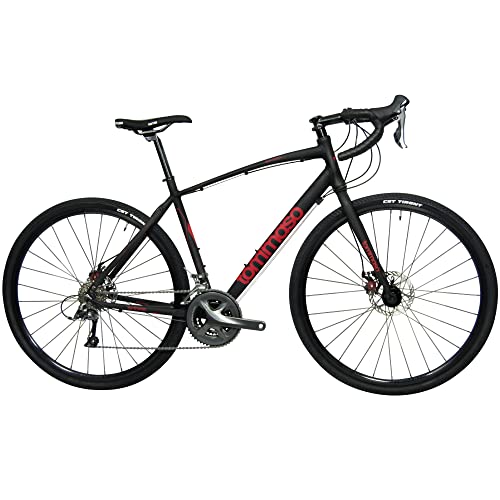
Tommaso Sentiero — Best first small adventure bike
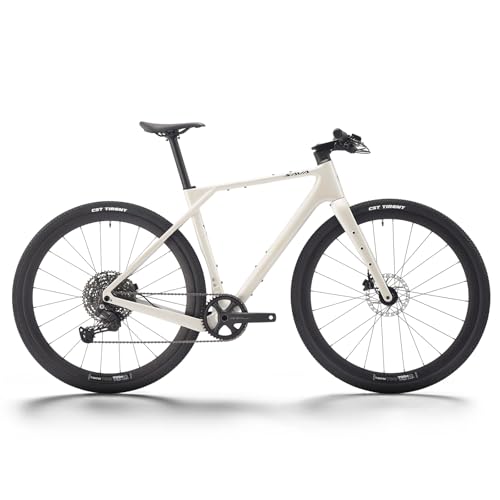
The Tommaso Sentiero is the most sensible first pick in this guide, and the reason is simple: Amazon lists it in the Small 53cm frame, which makes it a genuine small adventure bike rather than a standard frame described as compact. Its SLA 6061 aluminum frame carries rack and fender mounts, so it is ready for panniers and mudguards, and the steel fork adds durability on rough roads. Shimano Claris provides a 3 by 8, 24-speed drivetrain, which is a real, serviceable groupset that any bike shop can work on, and the gear range covers loaded climbs as well as flat cruising. Mechanical disc brakes stop reliably in wet conditions, and the supplied CST Tirent 700x40c tires are wide enough for gravel paths, dirt roads and light trails. The listed weight is around 24 pounds. The trade-offs are honest ones: mechanical discs need occasional cable adjustment, the listing does not publish a maximum tire width beyond the supplied tires, and the bike arrives partly assembled, so a shop check is wise if you are not confident with brakes and headset bolts. Note that the Small 53cm frame is the size Amazon stocks for this listing, so check the manufacturer’s height chart before ordering.
SAVADECK Carbon Gravel U6000 — Smallest frame for shorter riders
- Check on Amazon
The SAVADECK Carbon Gravel Bike with the Shimano U6000 groupset is the smallest-framed pick here, with a 47cm frame listed for riders below 5 feet 5 inches, which makes it the natural choice if standover height is your main constraint. Its T800 carbon frame and fork keep the complete bike to a listed 10.4 kilograms, or 22.92 pounds. Shimano U6000 shifting gives 11 speeds with a gravel-oriented setup, hydraulic disc brakes provide strong one-finger stopping with little hand effort, and the supplied 700 by 40c tires suit mixed surfaces straight away. The model name is SCRB0035, with a two-year warranty stated on the listing. Two flags deserve attention. First, the cached Amazon listing shows an Add to Cart button and names the SAVADECK Official Store as the seller, but its summary block reads no featured offers available, so confirm the listing and the size you need on the product page before ordering. Second, one specification field on the listing reads 22 speeds while the drivetrain description describes an 11-speed system, so treat the 11-speed groupset description as the governing detail.
Schwinn Sporterra RX — Simple and sturdy mixed-terrain pick
The Schwinn Sporterra RX is a straightforward aluminum gravel bike for riders who want a known brand, simple gearing and a comfortable adventure geometry. Its 14-speed Microshift 2 by 7 drivetrain with Shimano Tourney parts is basic but easy to understand and maintain, and mechanical disc brakes give consistent stopping in wet weather. The aluminum frame is listed as lightweight, and the 700 by 38c multi-terrain tires handle gravel paths and dirt roads. Amazon’s listing fits riders from 5 feet 6 inches to 6 feet, with a minimum rider height of 66 inches, and the model number is S8272. This is a partial fit for the keyword, and the reason should be stated plainly: the Sporterra RX is a mid-size adventure bike rather than a truly small one, so riders below 5 feet 6 inches should look at the 47cm SAVADECK or the Small 53cm Tommaso Sentiero first. It is also heavier than the carbon picks, at a listed 13.94 kilograms, and the 14-speed gearing has less range for steep, loaded climbs than the 24-speed Tommaso.
Mongoose Elroy Adventure Bike — Best for loaded touring and commuting
- Check on Amazon
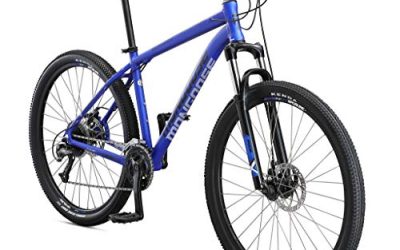
The Mongoose Elroy is the load-carrying specialist of this group, designed for everyday adventure cycling, loaded touring and commuting. Its alloy frame uses adventure geometry with a 54cm frame size, and its steel fork carries rack and bag mounts, while the frame offers multiple mounting points for racks, bags and fenders, so it accepts a full pannier setup. Shimano Tourney provides a 2 by 7, 14-speed drivetrain that is simple to operate and service, and the 700 by 40c tires give genuine grip on gravel roads and rougher trails. The riding position is stable and comfortable over long distances. The trade-off is weight: at a listed 32 to 34 pounds, the Elroy is the heaviest bike in this guide, and that weight is noticeable when lifting the bike or climbing with luggage. It is also a partial fit for smaller riders, because the 54cm frame suits taller riders better than shorter ones, so treat it as a small adventure bike in spirit and capability rather than in frame size.
KABON Carbon Gravel Road Bike — Light carbon build for smoother gravel
- Check on Amazon
The KABON Carbon Gravel Road Bike is the lightweight carbon option for riders who spend most of their time on paved roads and smoother gravel. Its T800 carbon fiber frame and fork, combined with an integrated carbon handlebar, keep the listed weight to around 20 to 22 pounds, which is the lightest class of build in this guide. The drivetrain is Shimano 105, a proven mid-range groupset with crisp shifting, and disc brakes provide reliable stopping in varied weather. The 53cm frame in the Chameleon Blue listing suits riders who fit a small to medium frame. Two partial-fit flags apply. First, the tires are narrower than the other picks, at 700 by 28 to 32c, which limits grip and comfort on deep loose gravel, so this bike suits smooth gravel and road-biased adventure riding rather than rough trails. Second, the listing title mentions 18 speeds while the specification section describes a Shimano 105 two-by-eleven setup, so confirm the exact drivetrain on the product page before ordering.
What to Check Before You Buy
Measure yourself before you measure the bike. Record your height and your inseam, then compare both with the manufacturer’s size chart for the exact frame you are considering, because sizing is not standardized between brands and a 53cm frame from one maker can fit differently from a 53cm frame from another. Check the standover height, the reach to the handlebars and the seat tube length, and if you fall between sizes, choose the smaller one. Confirm which sizes the listing actually stocks, because small frames sell out unevenly. Inspect the tire clearance, the rack and fender mounts, and the gearing on the product page, and read the specification fields rather than the headline alone, because listings sometimes disagree with themselves on speed counts. Plan for assembly: these bikes arrive partly assembled in a box, usually needing the front wheel, handlebars, seat and pedals fitted, and a shop check of the brakes and headset is money well spent if you are unsure.
FAQ
What size is a small adventure bike?
There is no single standard, but a small adventure bike usually means a frame between 47cm and 54cm, with a low standover height and a short reach. A 47cm frame suits riders below 5 feet 5 inches, a 53cm frame suits riders around 5 feet 6 inches to 5 feet 8 inches, and a 54cm frame suits taller riders. Always use the manufacturer’s own height chart for the exact model, because sizing varies between brands.
Can a small adventure bike handle gravel and touring?
Yes, if it has the right features: tires at least 38mm wide, disc brakes, a low gear for climbs, and rack and fender mounts for luggage. The bikes in this guide ship with 700 by 38c to 700 by 40c tires, except for the KABON, which uses narrower tires and suits smoother surfaces. A small frame does not reduce capability; it changes fit, not function.
Is carbon or aluminum better for a small adventure bike?
Carbon fiber is lighter and damps vibration better on long gravel rides, while aluminum costs less and resists dents. For a first adventure bike, aluminum with a named Shimano groupset is a sensible choice. For riders who already ride long distances, a carbon frame with hydraulic disc brakes is worth considering, provided the frame size fits.
Do I need hydraulic disc brakes?
No, but they help. Mechanical disc brakes stop well and are easier to adjust with basic tools, while hydraulic disc brakes need less hand force and adjust themselves as pads wear. Smaller riders often prefer hydraulic brakes on steep descents, but fit and tire clearance should come first.
Are adventure bikes sold on Amazon ready to ride?
No. They arrive partly assembled, and you will need to fit the front wheel, handlebars, seat and pedals, then check the brakes, gears and headset bolts. If you are not confident doing that, have a local bike shop assemble and check the bike before your first ride.
Bottom Line
The best small adventure bike for most compact riders is the Tommaso Sentiero in Small 53cm, because it combines a fitting frame, a serviceable Shimano Claris drivetrain, disc brakes, 700x40c tires and rack mounts in one coherent package. Riders below 5 feet 5 inches should look first at the SAVADECK carbon gravel bike in 47cm, the smallest frame here, while checking the listing carefully before ordering. The Schwinn Sporterra RX and the Mongoose Elroy suit riders who fit their mid-size frames and want simplicity or load-carrying capacity, and the KABON carbon bike suits road-biased gravel riding where light weight matters most. Whichever you choose, let the size chart decide, not the headline: a bike that fits is a bike you will ride.
Disclosure: As an Amazon Associate, we may earn from qualifying purchases.