Our Short List of 3
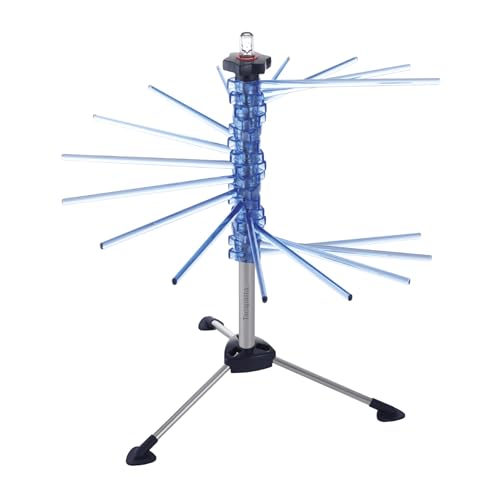
- Best for: Cooks who dry large batches of long noodles every week.
- 16 rods for hanging long pasta strands
- Stated capacity: up to 4.4 lb of fresh pasta
- Steel and polycarbonate construction
- Multipurpose transfer wand included

- Best for: Traditionalists who want a wooden rack that folds flat.
- Natural beechwood frame
- Collapsible folding design
- Dowel rows for draping long strands
- Made in Italy
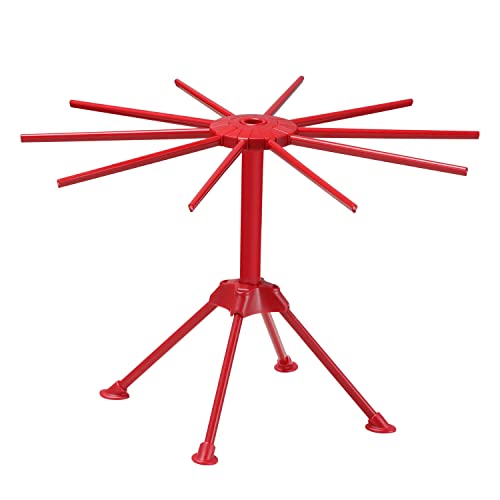
- Best for: Small kitchens, RVs and first-time fresh pasta makers.
- BPA-free plastic construction
- 10 hanging arms
- Folds to 7.8 x 3.5 in
- Stated capacity: up to 4 lb of noodles
All 5 Picks at a Glance
| Product | Specs | Action |
|---|---|---|
| Marcato Tacapasta Pasta Drying Rack, Blue |
| Check price on Amazon |
| Eppicotispai EP 102 Natural Beechwood Collapsible Pasta Drying Rack |
| Check price on Amazon |
| Ourokhome Collapsible Pasta Drying Rack with 10 Arms |
| Check price on Amazon |
 KITCHENDAO Collapsible Stainless Steel Pasta Drying Rack |
| Check price on Amazon |
 STWWO Stable Pasta Drying Rack with Stainless Steel Arms |
| Check price on Amazon |
Key takeaways
- Compare the best pasta drying racks for fresh homemade noodles, from the Marcato Tacapasta to collapsible wood, steel and plastic racks that store flat.
Fresh pasta only needs a short rest before cooking, but those minutes decide whether strands stay separate or clump into a sticky mat. A drying rack holds each strand apart with air on all sides, and the real choice is between tree-style racks with rods that fan out from a central post and flat frame racks with dowels. Capacity, material and folded size matter more than looks, because the rack has to suit both your batch size and your storage space.
This guide serves home pasta makers who roll noodles by hand or with a machine, from first-time fettuccine makers to cooks who dry several pounds every week. The five picks below were chosen from Amazon listing names and stated specifications: rod counts, stated capacities, materials and folded dimensions. They cover a high-capacity Italian tree rack, a traditional beechwood frame, and three collapsible designs in plastic, stainless steel and wood with steel arms.
Quick Picks
As an Amazon Associate we earn from qualifying purchases
| Product | Best for | Key spec from title |
|---|---|---|
| Marcato Tacapasta Pasta Drying Rack, Blue | Weekly batches of long noodles | 16 rods, holds up to 4.4 lb |
| Eppicotispai EP 102 Beechwood Pasta Drying Rack | Traditional wooden frame drying | Natural beechwood, made in Italy |
| Ourokhome Collapsible Pasta Drying Rack | Tiny kitchens and RV cooking | 10 arms, folds to 3.5 in wide |
| KITCHENDAO Stainless Steel Pasta Drying Rack | Fast setup and simple cleanup | Rotary arms, holds up to 6 lb |
| STWWO Stable Pasta Drying Rack | Compact counters, warmer look | Wood base, 10 stainless steel arms |
How to Choose
Capacity and batch size
Rack capacity is stated in pounds of fresh pasta, and it should match the batch you actually make. A single batch from a standard dough recipe usually weighs about one pound, so a compact rack suits couples and small families. If you regularly double or triple recipes for guests, look for a stated capacity of four pounds or more, like the Marcato Tacapasta at 4.4 pounds. Overloading a small rack forces strands to touch, and touching strands stick together as they dry, which defeats the purpose of hanging them in the first place.
Rack style: rods, arms or dowels
Tree-style racks hang pasta from rods or arms arranged around a central post, which keeps long strands separated and easy to lift off with a transfer wand. Frame racks use parallel dowels on a folding wooden frame; strands rest across several dowels at once, which feels steadier for very long noodles. Both styles work for spaghetti, fettuccine and linguine. Neither style suits short shapes such as rigatoni or fusilli, which dry better spread in a single layer on a clean cloth or a flat tray.
Material and cleaning
Polycarbonate and plastic racks wipe clean quickly and tolerate moisture well, but their arms can flex under heavy loads. Stainless steel arms resist rust and stay rigid, which suits frequent use, and many steel models detach for washing. Wooden racks in beechwood or bamboo look traditional and grip strands gently, yet they should never be soaked; a dry brush or slightly damp cloth is the right cleaning method. Match the material to how often you make pasta: weekly makers benefit from steel, while occasional makers can choose plastic or wood.
Storage and setup
A drying rack earns its place only if it is easy to store, because most kitchens lack spare counter space. Collapsible tree racks fold down to a slim profile that slides into a drawer or stands in a cupboard, while frame racks fold flat like a book. Check the folded dimensions in the listing against the space you actually have, and note the open height too: tall racks need clearance under wall cabinets. Tool-free assembly matters for racks with detachable arms, since a rack that takes minutes to build will be skipped on busy weeknights.
The 5 Best Options
Marcato Tacapasta Pasta Drying Rack, Blue
- Best for: Cooks who dry large batches of long noodles every week.
- 16 rods for hanging long pasta strands
- Stated capacity: up to 4.4 lb of fresh pasta
- Steel and polycarbonate construction
- Multipurpose transfer wand included
Cooks who dry large batches of long noodles every week.
It is built for long strands; short shapes need a tray or cloth, and the blue finish is one of several color listings for the same rack.
The Tacapasta is the rack for cooks who make pasta often and in quantity. Its sixteen rods fan out from a central column, giving long strands room to hang without touching, and the included wand lifts cut noodles from the machine and lays them over the rods in one motion. The stated 4.4 pound capacity covers a triple batch of fettuccine with space to spare. It folds down when the session ends, so the capacity does not cost permanent counter space, and the steel and polycarbonate build suits weekly use.
Eppicotispai EP 102 Natural Beechwood Collapsible Pasta Drying Rack
- Best for: Traditionalists who want a wooden rack that folds flat.
- Natural beechwood frame
- Collapsible folding design
- Dowel rows for draping long strands
- Made in Italy
Traditionalists who want a wooden rack that folds flat.
The listing gives limited dimension detail, so measure your storage space first, and never soak the beechwood when cleaning.
The EP 102 is a folding frame rack in natural beechwood, made in Italy by a maker known for traditional pasta tools. Instead of rods on a post, it opens into a frame with dowel rows, and strands rest across the dowels, which many cooks find steadier for very long noodles cut by hand. It suits makers who value wooden tools and a classic look, and it collapses flat for storage in a cupboard or against a wall. There are no plastic parts and nothing to assemble beyond unfolding the frame.
Ourokhome Collapsible Pasta Drying Rack with 10 Arms
- Best for: Small kitchens, RVs and first-time fresh pasta makers.
- BPA-free plastic construction
- 10 hanging arms
- Folds to 7.8 x 3.5 in
- Stated capacity: up to 4 lb of noodles
Small kitchens, RVs and first-time fresh pasta makers.
The plastic arms are fixed in place rather than adjustable, and the design suits occasional batches better than daily heavy use.
This collapsible rack is built for kitchens where storage space decides everything. Ten plastic arms open around a central post for hanging, then the whole rack folds down to a strip only 3.5 inches wide that fits in a drawer. Rubber feet keep it steady on the counter while strands hang. The stated capacity of four pounds is honest for a plastic design, and it handles a family batch of spaghetti or fettuccine without complaint. It is a sensible first rack for occasional fresh pasta nights and for RV or small-apartment cooking.
KITCHENDAO Collapsible Stainless Steel Pasta Drying Rack
- Best for: Weeknight cooks who want the fastest setup and cleanup.
- Stainless steel construction
- Stated capacity: up to 6 lb of pasta
- Rotary arms for quick setup
- Detachable, foldable design
Weeknight cooks who want the fastest setup and cleanup.
Check that the transfer wand is listed in the box contents before ordering, since it is part of how the rack is loaded.
KITCHENDAO’s stainless steel rack is the quick-setup option in this group. Its rotary arms swing out in seconds, strands go on with the included transfer wand, and the arms detach afterward so the parts rinse clean and store in a small space. Stainless steel shrugs off moisture and stays rigid under load, and the stated capacity reaches six pounds, the highest figure in this guide. That combination suits cooks who make fresh pasta on weeknights and want the rack open, loaded and put away again with the least possible fuss.
STWWO Stable Pasta Drying Rack with Stainless Steel Arms
- Best for: Compact counters where the rack stays out between uses.
- Natural wood base with 304 stainless steel arms
- 10 arms, each 8.8 in long
- Height 15.7 in; base diameter 7.7 in
- Tool-free assembly
Compact counters where the rack stays out between uses.
Capacity is modest compared with the large tree racks, so very big batches may need a second drying round.
The STWWO rack pairs a natural wood base with ten arms in 304 stainless steel, a mix that looks at home on the counter and still folds away when the pasta is cooked. The round base is 7.7 inches across, so the footprint stays small, while the 15.7 inch height and 8.8 inch arms give long strands a clean drop. Assembly needs no tools, and the arms detach for cleaning or storage. It fits cooks who want a compact rack with a warmer look than all-plastic or all-steel designs.
Which One Fits Your Situation
You make fresh pasta every week
Go straight to the Marcato Tacapasta. Sixteen rods and a 4.4 pound stated capacity absorb big batches without crowding, the wand speeds up loading, and the steel and polycarbonate build is made for repeated use. It folds away afterward, so weekly volume does not mean a permanent counter fixture in your kitchen.
You prefer wooden, traditional tools
The Eppicotispai EP 102 matches a kitchen built around wooden boards and hand tools. Its beechwood frame opens in seconds, holds strands across dowels in the traditional way, and folds flat against a cupboard wall. Keep it dry, brush it clean, and it will serve for years of Sunday pasta making.
Your kitchen has almost no storage
Choose the Ourokhome collapsible rack. Folded, it is a strip 3.5 inches wide that disappears into a utensil drawer, yet it still hangs a four pound batch on ten arms with rubber feet for stability. For a small apartment or an RV galley, that folded size matters more than any other specification on this page.
You want fast setup in metal
Pick between the two steel designs by footprint. The KITCHENDAO opens with rotary arms, carries the largest stated capacity here at six pounds, and breaks down into detachable parts for washing. The STWWO trades some capacity for a wood-based, furniture-like look and a small round footprint. Both assemble without tools and store flat or in parts.
Common Mistakes
- Judging capacity by arm count alone: sixteen short arms can hold less than ten long ones, so check the stated pound capacity and arm length together.
- Hanging strands in thick bunches: noodles that touch will stick as they dry, so spread each portion thinly across the rods or dowels.
- Skipping the light flour dusting before hanging: fresh strands are moist and tacky, and a little semolina or flour keeps them separate.
- Soaking a wooden rack to clean it: beechwood and bamboo should be brushed or wiped, never left in water, or the wood can warp and crack.
- Buying a tall rack without measuring cabinet clearance: check the open height in the listing against the space under your wall cabinets.
Frequently Asked Questions
How long should fresh pasta dry on a rack?
Most long pasta needs only a short rest, often around 15 to 30 minutes, until the surface feels dry and leathery while the strand still bends without snapping. Exact timing depends on room humidity and strand thickness. Pasta left hanging for many hours can become brittle, so transfer it to a floured tray or cook it once the surface has set.
Can a pasta drying rack dry short shapes like rigatoni?
Not well. Tree and frame racks are designed for long strands that can hang or drape, and short shapes simply fall through or pile up. Dry rigatoni, fusilli or orecchiette spread in a single layer on a floured cloth, a baking sheet or a flat mesh tray, turning them once so every side meets the air.
Should I flour pasta before hanging it?
A light dusting helps. Freshly cut strands are moist and will stick to each other and to the rack where they touch. Toss the cut noodles gently with a little semolina or flour before hanging, and shake off the excess. Semolina is a popular choice because its coarse grains keep strands separated without disappearing into the dough.
How do I clean a pasta drying rack?
Shake off loose flour first, then follow the material. Plastic and stainless steel parts can be washed with warm water and mild soap, and detachable arms make this easier. Wooden racks should never be soaked; brush them with a dry brush or wipe with a slightly damp cloth, then let them air dry fully before folding them away.