Our Short List of 3

All 4 Picks at a Glance
| Product | Specs | Action |
|---|---|---|
 Sonos Arc Ultra (B0DFK28LBB) — the flagship all-in-one | Check price on Amazon | |
| Bose Smart Ultra Soundbar (B0C548MYF3) — calibration plus dialogue clarity | Check price on Amazon | |
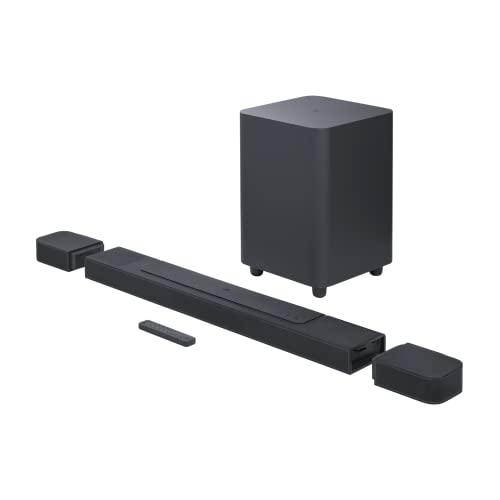 JBL Bar 1000 (B0BQPPMBJG) — true surround for large volumes | Check price on Amazon | |
 Sony HT-S400 (B09SQWQ4TC) — the simpler, strong-output option | Check price on Amazon |
Key takeaways
- The best soundbars for high ceilings, with room calibration, strong output and clear dialogue that can fill tall, echo-prone living rooms and open spaces.
A high ceiling changes everything about how a soundbar behaves. In a standard room, sound from the bar reaches your ears, reflects gently off nearby surfaces, and settles. In a tall room — a vaulted living room, a loft, an open-plan space with a double-height ceiling — the sound has far more air to fill, hard surfaces sit much farther away, and reflections arrive late enough to smear dialogue into a hollow echo. A soundbar that sounds rich and controlled in a small den can sound thin, distant, and strangely quiet in a room with a fourteen-foot ceiling, even at the same volume setting.
That is why shopping for a soundbar for a high-ceiling room is not just a matter of picking the bar you like in a normal room. You need output headroom, so the bar can fill a larger volume without straining. You need room calibration, because no two tall rooms reflect sound the same way, and automated tuning is the most reliable way to tame echo. You need strong, well-controlled bass from a separate subwoofer, since low frequencies lose impact quickly in large volumes. And if you want Dolby Atmos height effects, you need to think carefully, because the up-firing drivers in most soundbars are designed to bounce sound off a flat ceiling of ordinary height — with a very tall or vaulted ceiling, that bounce weakens or misses the listening position entirely.
This guide explains what actually matters in a tall room, then walks through four soundbars that handle the challenge in different ways: a flagship all-in-one bar with powerful room tuning, a compact bar with outstanding dialogue processing and calibration, a full surround system with detachable rear speakers for genuinely large spaces, and a simpler two-piece setup for tighter budgets.
What a High Ceiling Does to Sound
Three acoustic problems show up again and again in tall rooms. The first is volume. Sound pressure drops as it spreads, and a room with a high ceiling simply contains more air between the bar and your seat. Bars with modest amplification run out of headroom, and when an amplifier strains, the sound turns harsh exactly when a film gets loud.
The second problem is reflection timing. Sound bouncing off a ceiling twelve or fifteen feet above you travels a long extra path before it reaches your ears. When a reflection arrives noticeably after the direct sound, your brain hears it as echo rather than ambience, and speech — which depends on crisp consonants — loses clarity first.
The third problem is bass behaviour. Low frequencies are less directional, and in a large volume they can feel weak at the listening position while booming in a corner. A separate wireless subwoofer you can reposition is worth far more in a tall room than in a small one, because placement is your main tool for evening out the bass.
What to Look For
Room calibration. This is the single most valuable feature for a high-ceiling room. Systems that measure your room with a microphone and adjust their output — Sonos Trueplay, Bose ADAPTiQ, JBL’s calibration routine — can pull down the frequencies that echo and lift the ones that get swallowed. In a standard room calibration is a nice extra; in a tall room it is close to essential.
Output headroom. Look for bars with substantial amplification and larger drivers rather than slim bars designed for bedrooms. You are filling more air, and a bar working comfortably at moderate output sounds cleaner than a small bar pushed to its limit.
A separate subwoofer. Every pick below except the Bose pairs with a subwoofer, and that matters. Bass carries the sense of scale in film soundtracks, and a dedicated sub with placement freedom beats a bar trying to do everything from one cabinet.
Realistic Atmos expectations. Up-firing height drivers assume a flat, reflective ceiling roughly eight to twelve feet up. With a vaulted or very high ceiling, height effects become vague. Bars with room calibration and strong front soundstage still sound excellent with Atmos content — you simply get a big, enveloping front image rather than precise overhead placement. If your ceiling is extremely tall, prioritise calibration and output over the number of height channels.
Dialogue processing. Echo attacks speech first, so a dedicated dialogue or centre-channel emphasis mode is genuinely useful. Bose’s A.I. Dialogue Mode and Sonos’s Speech Enhancement both exist for exactly this situation.
HDMI eARC. A single eARC connection passes full-quality audio from the TV and keeps lip sync under control. All four picks support it.
The Picks
Sonos Arc Ultra (B0DFK28LBB) — the flagship all-in-one
The Arc Ultra is Sonos’s top soundbar, a 9.1.4-channel bar with fourteen drivers, including up-firing drivers for Atmos height content and the company’s Sound Motion woofer technology, which produces far more bass from the single cabinet than its size suggests. For a high-ceiling room, its headline feature is Trueplay: you walk around the room with a phone while the bar plays test tones, and it builds a correction profile for your exact space. In a tall, reflective room that correction is the difference between a soundtrack that sounds distant and one that sounds anchored to the screen.
Speech Enhancement lifts dialogue in the mix, which helps when reflections are blurring consonants, and Night Sound reins in loud passages for evening viewing. The honest caveat is Atmos: with a very tall or vaulted ceiling, the reflected height channel loses definition, as it does on every up-firing bar. What you keep is a wide, powerful, well-tuned front soundstage, and the option to add a Sonos Sub and Era rear speakers later if the room demands more. If your room is large but you want one clean cabinet under the TV, this is the strongest starting point.
Bose Smart Ultra Soundbar (B0C548MYF3) — calibration plus dialogue clarity
The Bose Smart Ultra is a compact all-in-one bar with nine drivers and Dolby Atmos support, and it brings two tools that suit tall rooms unusually well. The first is ADAPTiQ, Bose’s room calibration system, which uses a headset microphone worn at your listening positions to measure how the room actually responds — including the late reflections a high ceiling creates — and tunes the bar to compensate. The second is A.I. Dialogue Mode, which continuously separates speech from the rest of the mix and balances it forward. In an echo-prone room, that combination addresses the two complaints owners of tall rooms raise most: hollowness and hard-to-follow dialogue.
TrueSpace processing upmixes non-Atmos content into a spacious presentation, and the bar connects over HDMI eARC with Alexa and Google voice control built in. It is a bar-only design, so deep bass is more limited than the systems with separate subwoofers; Bose sells the Bass Module 700 as an add-on, and in a genuinely large room most owners will want it. Choose the Bose if dialogue clarity is your priority and your room is tall rather than enormous.
JBL Bar 1000 (B0BQPPMBJG) — true surround for large volumes
The JBL Bar 1000 takes a different approach: it is a 7.1.4-channel system built around a main bar, a ten-inch wireless subwoofer, and two battery-powered surround speakers that dock on the ends of the bar to charge and detach when you want real rear channels. In a big, tall room, physical rear speakers solve the problem that reflected surround effects cannot — instead of hoping sound bounces correctly off distant walls and ceilings, the sound simply comes from behind you.
MultiBeam technology widens the front soundstage, the system supports Dolby Atmos and DTS:X, and a built-in calibration routine tunes the output to your room. Total system output is rated well above the all-in-one bars, which matters when the room volume is working against you. The detachable speakers run for hours on a charge and return to the bar to recharge, so there are no cables to run across a large room. For an open-plan space where the seating sits far from the walls, this is the most complete answer in the guide.
Sony HT-S400 (B09SQWQ4TC) — the simpler, strong-output option
Not every tall room needs Atmos. The Sony HT-S400 is a 2.1-channel bar with a wireless subwoofer and a rated total output that embarrasses many pricier slim bars, using Sony’s S-Force PRO Front Surround processing to widen the soundstage virtually. It lacks room calibration, which is its main compromise in this company, but its raw output and clear dialogue mode make it a sensible pick for a high-ceiling room used mostly for TV, sport, and everyday viewing rather than critical film watching.
The wireless sub gives you the placement freedom that matters for bass in a large volume, the bar connects over HDMI ARC, and a wall-mountable design keeps it tidy under a TV mounted on a tall wall. Treat it as the headroom-first, features-second choice: fewer tricks, plenty of volume, and a noticeably fuller sound than any TV’s built-in speakers could produce in the same space.
Setting Up a Soundbar in a Tall Room
Placement and setup matter more in a high-ceiling room than in a normal one. Run the calibration routine — whatever your bar calls it — after the furniture is in its final position, and re-run it if you rearrange the room. Keep the bar at ear height when seated and clear of cabinet walls that can trap reflections. Experiment with the subwoofer: moving it a short distance along a wall, or into a corner for extra reinforcement, can transform bass response in a large volume. Soft furnishings help more than any setting — a rug between the bar and the seating, curtains, and upholstered furniture all absorb the late reflections that make tall rooms sound hollow. Finally, use the dialogue mode for speech-heavy programmes and turn it off for music if it thins the sound; these modes are tools, not defaults.
Verdict
For most high-ceiling rooms, the Sonos Arc Ultra is the best single purchase: serious output, the strongest room tuning in its class, and a clear upgrade path. If dialogue disappearing into echo is your main frustration, the Bose Smart Ultra’s calibration and dialogue processing target exactly that. For a genuinely large, open space, the JBL Bar 1000’s detachable surrounds and big subwoofer fill volume the others cannot. And if the room is tall but your needs are everyday TV at honest volume, the Sony HT-S400 delivers the headroom that matters without paying for height channels your ceiling cannot use anyway.
Disclosure: As an Amazon Associate, this site may earn from qualifying purchases made through links in this article, at no additional cost to you.