Our Short List of 3
All 4 Picks at a Glance
| Product | Specs | Action |
|---|---|---|
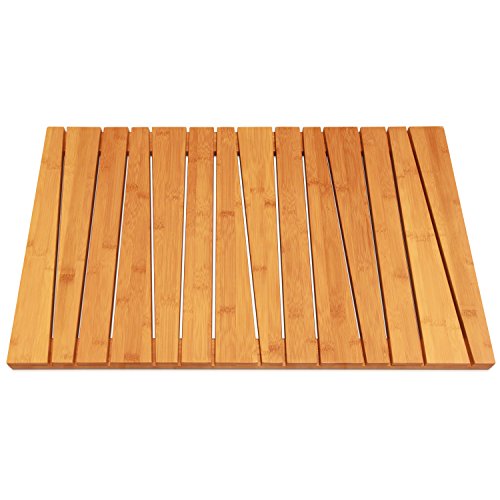 ToiletTree Products Bamboo Deluxe Bath Mat (ASIN: B00N41NPP4) | Check price on Amazon | |
 Bare Decor Giza Teak Mat, 36 x 20 (ASIN: B01MSLJXU4) | Check price on Amazon | |
 Gorilla Grip Chenille Bath Rug, 30 x 20 (ASIN: B06ZYTPJBP) | Check price on Amazon | |
 Yimobra Chenille Bath Rug, 24 x 17 (ASIN: B0B12T692V) | Check price on Amazon |
Key takeaways
- Mold resistant bath mats that stay fresh: raised bamboo and teak slats that dry fast, plus washable chenille rugs you can launder before mildew gets a hold.
A bath mat lives in the worst spot in the house. It gets soaked at least once a day, sits on a cool floor in a steamy room, and often stays damp for hours between showers. That is exactly the environment mold and mildew need: constant moisture, warmth, and something organic to feed on. If your current mat smells musty a day after washing, or the underside has developed dark spots that no wash cycle removes, the problem is not your cleaning routine. The problem is the mat itself — its material holds water instead of releasing it.
Mold resistant bath mats attack the problem from the material side. Some never absorb water at all, shedding it through slats so both the mat and the floor underneath dry quickly. Others are built from synthetic fibers that dry fast and survive frequent hot washing, so mildew never gets the long, damp window it needs to establish itself. This guide explains how each approach works, then walks through four mats that fit the brief in different ways: two raised wood-slat designs that stay dry by construction, and two washable chenille rugs for people who want a soft surface underfoot.
One note on scope: this article is about mold resistance as a buying intent. A general softness-and-absorbency roundup is a different question, and the picks here were chosen for drying behavior first and comfort second.
Disclosure: As an Amazon Associate, this site may earn from qualifying purchases made through links in this article, at no additional cost to you.
Why Bath Mats Grow Mold in the First Place
Mold spores are everywhere, including in your bathroom air. They only become a visible problem when three conditions line up: moisture that lingers, a food source, and time. A thick cotton or memory foam mat supplies all three. The pile or foam absorbs a full shower’s worth of water, the rubber backing traps that water against the floor, and the mat’s core can stay damp for most of the day in a bathroom without strong ventilation. Natural fibers and foam give mildew plenty to feed on, and once colonies establish deep in the pile, surface washing no longer reaches them.
That is why the familiar advice — wash the mat weekly, hang it over the tub edge — only delays the outcome for absorbent mats. It helps, and the care section below covers it, but the durable fix is choosing a mat whose design shortens the damp window to an hour or two instead of most of the day. Every pick in this guide does that, each in a different way.
The Three Mold-Resistant Design Strategies
Raised slat mats in bamboo or teak. Water passes straight through the gaps between slats and pools on the floor briefly instead of soaking into the mat. The wood itself sits raised on rails, so air moves underneath and both surfaces dry. Bamboo and teak are the two woods used because they tolerate constant wetting far better than softwoods; teak in particular has a long history in boat decks and shower floors for exactly this reason.
Stone mats in diatomaceous earth. A rigid slab of compressed diatomite pulls water off your feet on contact and then releases it to the air, so the surface feels dry again within minutes. There is no pile and no backing to trap moisture. These are covered below as a category, because the specific listing we wanted to anchor this section to could not be confirmed cleanly enough to print a purchase link for it — see the note after the main picks.
Washable synthetic rugs. Chenille and microfiber rugs still absorb water, but the better ones are thin enough to dry between uses and tough enough to go through the washing machine and dryer repeatedly. Mildew cannot establish itself on a rug that gets laundered and fully dried on a regular cycle. The trade-off is discipline: a washable rug only stays mold resistant if you actually wash it.
The Picks
ToiletTree Products Bamboo Deluxe Bath Mat (ASIN: B00N41NPP4)
The Bamboo Deluxe is the straightforward answer for most bathrooms. It is a slatted platform of bamboo measuring about 25.3 by 15.7 inches, raised roughly 1.3 inches on its frame, so shower water drains through the gaps and airflow reaches the underside. Nothing in the design holds water: the surface you stand on is smooth bamboo, and the mat can be lifted and leaned against the tub to dry completely after use. The listing notes an OEKO-TEX Standard 100 certification for the material, and the platform folds for storage, which suits smaller bathrooms where a mat cannot stay out all day.
Bamboo is not invincible — left sitting in a puddle for days it can eventually spot — but in normal use, where the mat dries between showers, it removes the damp-core problem entirely. It feels firm and slightly cool underfoot rather than plush, which is the honest trade-off of every slat design. Choose this one if your priority is a mat that simply does not stay wet.
Bare Decor Giza Teak Mat, 36 x 20 (ASIN: B01MSLJXU4)
The Giza is the larger, heavier take on the same idea: solid teak slats with an oiled finish, in a generous 36 by 20 inch footprint that covers the full step-out zone in front of a tub or a wide shower door. At roughly ten pounds it stays planted, and teak is the premium choice for wet environments — the wood’s natural oils are why it has been used for boat decking and outdoor shower floors for decades. Water sheets off the slats, the mat dries in place, and there is no fabric anywhere in the construction for mildew to colonize.
Two practical notes. First, an oiled teak surface can be slippery when wet until it has been used for a while, so place it on a level floor and step onto it squarely. Second, teak benefits from an occasional light oiling if you want to keep the warm color; left alone it weathers toward a silvery grey, which is cosmetic only. Pick the Giza if you have the floor space and want the most durable version of the slat-mat approach.
Gorilla Grip Chenille Bath Rug, 30 x 20 (ASIN: B06ZYTPJBP)
If a hard slat surface is not for you, the Gorilla Grip chenille rug is the washable route to the same goal. The pile is chenille microfiber — synthetic, so it does not feed mildew the way cotton does — over a rubber backing that grips the floor. The 30 by 20 inch size suits a standard tub frontage. The mold resistance here comes from the care cycle rather than the material alone: the rug is machine washable, it is thin enough to dry fully in a dryer or over a rail, and following that routine on a weekly rhythm keeps the backing and pile from ever reaching the permanently damp state where mildew takes hold.
Be honest with yourself about laundry habits before choosing this style. A chenille rug that gets washed monthly and left bunched on a cold floor will grow the same musty smell as any other fabric mat. Washed and dried regularly, it stays fresh for a long service life and gives you the soft, warm landing that slat mats cannot.
Yimobra Chenille Bath Rug, 24 x 17 (ASIN: B0B12T692V)
The Yimobra is the compact version of the washable approach, sized at 24 by 17 inches for a single standing spot — in front of a sink, beside a shower door, or in a small ensuite where a 30-inch rug would crowd the floor. Its listing highlights quick drying alongside the usual chenille traits: a soft microfiber pile, a non-slip backing, and full machine washability. The smaller footprint is itself a mold-resistance feature, because a small rug dries noticeably faster than a large one and is easier to hang over a rail after a shower.
This is the pick for a second bathroom, a camper or boat head, or any space where the mat gets used once a day and can dry undisturbed in between. Pair it with the habit of draping it over the tub edge rather than leaving it flat, and the damp window shrinks to almost nothing.
A Note on Stone Mats
Diatomaceous earth stone mats are the third strategy and, on pure drying speed, the strongest: the surface pulls water off your feet and is dry to the touch again within minutes, with no pile, foam, or backing anywhere in the design. The SUTERA stone mat in charcoal grey, at 23.5 by 15 inches, is the reference product in this class and the one we intended to anchor this section. During verification for this article, the records for that listing conflicted — some showed it actively selling while one summary block showed it with no featured purchase option at all — so no purchase link or ASIN is printed for it here rather than risk sending you to a listing that may not be orderable. If you shop the stone-mat class on Amazon, confirm on the product page that the size and finish match what you intend, and check that the mat ships with its non-slip underlay sheet, which most stone mats need on smooth tile.
Care Habits That Keep Any Mat Mold Free
Even the most resistant mat benefits from three habits. First, give it air: hang fabric rugs over the tub edge or a rail after the morning showers, and stand slat mats on edge occasionally so the underside dries too. Second, wash fabric mats on a regular cycle and dry them completely before putting them back — a rug returned to the floor while still damp in the core is worse off than one never washed. Third, run the bathroom fan during showers and for a while afterward, or crack a window; lowering the room’s overall humidity shortens every drying time in it. If a mat already smells musty after washing, or shows dark spotting on the backing that does not fade, replace it — by that point the colonies are inside the material, and no surface treatment reliably removes them.
How to Choose
Start with the surface you want to stand on. If firm and dry beats soft and warm, take a slat mat: the ToiletTree bamboo for a standard bathroom, the Bare Decor teak if you have a wide step-out zone and want the heaviest, longest-lasting build. If you want a soft landing, take a washable chenille rug — the Gorilla Grip in the standard size or the Yimobra where floor space is tight — and commit to the weekly wash-and-dry routine that makes the strategy work. Whichever route you choose, measure your step-out zone before ordering, confirm the size and finish on the product page, and check the current listing before you buy, since marketplace stock for home goods rotates often.