Key takeaways
- Find the best 1 2 hp water pumps for basements, pools, ponds, and wells. Compare flow, lift, float switches, and installation needs before you choose.
Introduction
A 1/2 HP water pump sits in a useful middle ground. It is stronger than the small utility pumps used for a single puddle, and it is easier to handle, wire, and place than a larger pump built for a whole house. For many homes, that middle ground is where the work gets done: clearing a flooded basement, draining a pool cover or a hot tub, moving water out of a pond, emptying a window well, or lifting water from a well to a storage tank.
The phrase best 1 2 hp water pumps covers several pump shapes that share the same motor size. Some are submersible sump pumps that sit in a pit and switch on when water rises. Some are portable utility pumps that you drop into standing water, connect to a garden hose, and move from job to job. One is a deep well pump that lives down a well casing and pushes water upward. They are all water pumps in the 1/2 HP class, but they are not interchangeable.
This guide compares five 1/2 HP water pumps listed on Amazon US, with details taken from each listing.
Switch type matters just as much. A pump with a float switch can turn itself on and off as water rises and falls, which suits a sump pit that fills on its own. A pump with a manual mode, or a piggyback plug that lets you bypass the float, can run continuously until you unplug it, which suits draining a pool or a pond down to a low level. Most pumps here run on standard 115 volt household current, and submersible pumps should never run dry.
At a Glance
| Pump | Type | Stated Flow | Stated Lift | Switch | Best For |
|---|---|---|---|---|---|
| WAYNE CDU800 | Submersible sump pump | Up to 5,100 GPH | See listing | Vertical float | Basement pits, high inflow |
| WAYNE VIP50 | Submersible utility pump | Up to 2,600 GPH | Low lift | Manual | Portable draining, pools |
| FLUENTPOWER FSP550C | Sump and utility pump | Up to 2,500 GPH | Up to 26 ft | Float, auto or manual | Flood cleanup |
| VEVOR Deep Well 1/2 HP | Deep well pump | Up to 28 GPM | Up to 167 ft | Built-in controller | Deep wells |
| AQUASTRONG 1/2HP | Submersible sump pump | Up to 3,450 GPH | Up to 25 ft | Tethered float | Wide sump pits |
WAYNE CDU800 1/2 HP Submersible Sump Pump

WAYNE CDU800 1/2 HP Submersible Sump Pump — ASIN B0002YVPQW
The WAYNE CDU800 is a submersible sump pump built around a 1/2 HP motor and a cast iron and stainless steel body. The listing states a flow of up to 5,100 gallons per hour, the highest in this group at low lift. It uses an integrated vertical float switch, so it turns on when water in the pit rises and turns off when the level falls. That vertical float suits a narrow sump pit, where a tethered float would need more room to swing and could catch on the side of the pit.
Considerations: the vertical float needs a pit deep enough for the float to rise and fall without obstruction. Measure the pit before you order, and check that the discharge pipe, check valve, and power cord can be routed without pinching the float. Install it in a proper sump basin with a discharge line that carries water well away from the foundation.
WAYNE VIP50 1/2 HP Reinforced Thermoplastic Submersible Multi-Use Pump

WAYNE VIP50 1/2 HP Reinforced Thermoplastic Submersible Multi-Use Pump — ASIN B000CQ6CU4
The WAYNE VIP50 is a portable multi-use pump made from reinforced thermoplastic, lighter than a cast iron sump pump and easier to carry from job to job. The listing states a flow of up to 2,600 gallons per hour, and the product description states that it can pump up to 2,500 gallons per hour in normal use and drain water down to 1/8 inch. That low drain level is a main strength: it can clear the last shallow layer from a flat surface, where a taller sump pump would leave more water behind.
The VIP50 connects to a garden hose, which makes it simple to set up for draining a pool, a hot tub, a pond, a window well, a boat, or a flooded area with a flat floor. It is a manual pump, so it runs when plugged in and stops when unplugged. Listing features include the 1/2 HP motor, the 2,600 GPH stated flow, the garden hose connection, the ability to drain down to 1/8 inch, and a 1-year warranty.
Considerations: because the VIP50 is manual, it will not switch itself off if the water runs out, so do not leave it running unattended, and never let it run dry. It is best for jobs where you can stay nearby, watch the water level, and unplug the pump when the job is done. A long or narrow hose will reduce flow, so use the shortest practical hose run. This pump is not a replacement for a permanent sump pump in a pit that fills on its own, because it has no float switch to respond when you are away.
FLUENTPOWER 1/2HP Submersible Sump Pump 2500GPH

FLUENTPOWER 1/2HP Submersible Sump Pump 2500GPH Utility Water Pump — ASIN B08KTKK2GH
The FLUENTPOWER FSP550C is a submersible sump and utility pump that offers both automatic and manual operation. The listing states a 1/2 HP motor, a flow of up to 2,500 gallons per hour, and a maximum head of 26 feet. In automatic mode, an integrated float switch activates the pump when water reaches about 4 inches and shuts it off at about 2 inches. In manual mode, the pump runs continuously until you unplug it, which allows it to drain water down to about 1/2 inch.
That dual mode makes it flexible for flood cleanup. You can leave it in automatic mode in a basement or a low area that fills and needs to be kept clear, and switch to manual mode when you need to clear the last shallow water from a pool, a pond, or a flooded floor. The listing states a 16.4 foot power cord, which gives more reach than a shorter cord.
Considerations: in automatic mode the pump will leave about 2 inches of water, so manual mode is the right choice when you need a lower finish. Check the float movement before first use, and make sure the pump sits level on a firm base so the float is not held up by debris.
VEVOR Deep Well Submersible Pump 1/2 HP

VEVOR Deep Well Submersible Pump 1/2 HP 115V/60Hz 28 GPM Flow 167 ft Head — ASIN B0BJKB14DD
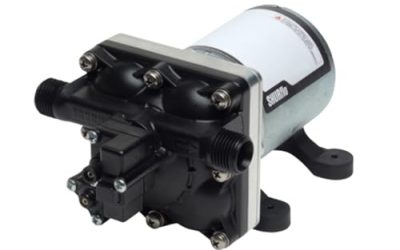
The VEVOR Deep Well Submersible Pump is the only deep well pump in this group, built for a different job from the sump and utility pumps above. It is a 4-inch submersible pump designed to sit down a well casing and push water upward to a house, a storage tank, or an irrigation system. The listing states a 1/2 HP motor, a flow of up to 28 gallons per minute, and a maximum head of 167 feet. That head figure is the key number for a well: compare it with the depth from the pump to the surface and then to the pressure tank.
The body is stainless steel, including the outlet and connecting components, with a filtration mesh at the intake to keep sand and grit out. The listing states five thermoplastic impeller stages, a built-in check valve to stop back-flow, a built-in controller, and a 33-foot electric cord. The pump runs on 115 volts at 60 hertz, and it is built to stay submerged, with an IP68 waterproof design.
Considerations: a deep well pump is a permanent installation, not a portable pump. It needs proper drop pipe, a waterproof splice for the power cable if the well is deeper than the factory cord, and a pressure tank and pressure switch at the surface. The motor must never run dry, so set the pump below the lowest expected water level, with clearance above the bottom to avoid drawing in sediment. Check local well codes and the diameter of your casing before you order, because a 4-inch pump needs a 4-inch or larger casing.
AQUASTRONG 1/2HP Sump Pump 3450 GPH

AQUASTRONG 1/2HP Sump Pump, 3450 GPH Submersible Pump, 1-1/2 inch NPT Discharge — ASIN B0CF9FRZBV
The AQUASTRONG 1/2HP Sump Pump pairs a stainless steel and thermoplastic body with a cast iron volute. The listing states a 1/2 HP motor, a flow of up to 3,450 gallons per hour, and a lift of up to 25 feet. The discharge is 1-1/2 inch NPT, a standard size for sump pump pipe, which makes it easier to connect to an existing sump discharge line.
The float is a tethered float with a piggyback plug, and the listing notes an adjustable tethered float. A tethered float suits a wide pit, where it has room to swing as the water rises and falls. The piggyback plug lets you run the pump in manual mode by plugging the pump directly into an outlet and bypassing the float, which is useful for draining a pit down to a low level. The listing also notes thermal overload protection and a 20-foot power cord.
Considerations: a tethered float needs a pit wide enough for the float to move freely, usually 18 inches or more in diameter. Do not use it in a narrow pit where the float could catch on the wall or the discharge pipe. Match the 1-1/2 inch discharge with pipe of the same size, and fit a check valve to stop back-flow.
How to Choose
Start with the job, not the flow number. If the job is a basement sump pit that fills on its own, choose a sump pump with a float switch that fits the pit. A vertical float suits a narrow pit, and a tethered float suits a wide pit. If the job is draining a pool, a hot tub, a pond, or a shallow flood on a flat floor, choose a portable utility pump with a garden hose connection and a low drain level. If the job is lifting water from a well, choose a deep well pump with enough head for the depth of the well and a body that fits the casing.
Next, compare flow at the lift you actually need. Every pump here states its highest flow at or near zero lift, and flow falls as lift rises. Look for the flow at the height of your discharge point, not just the headline number. For a basement, that height is the distance from the pump to the point where the discharge pipe leaves the house. For a well, it is the distance from the pump to the pressure tank, plus the pressure the tank needs.
Then check the discharge and the hose or pipe you will use. A garden hose connection is convenient for portable work, but it limits flow and is best for short runs. A 1-1/4 inch or 1-1/2 inch discharge with rigid or flexible sump pipe will carry more water over a longer run, and it is the right choice for a permanent sump installation. Avoid reducing the discharge size with a small adapter, because that will cut flow and put extra load on the motor.
Switch type should match how the pump will be used. Automatic operation suits a pit that fills when you are away. Manual operation suits a job you are watching. Power and cord length are practical checks that are easy to miss. Confirm the voltage, confirm that the circuit can carry the pump, and confirm that the cord reaches the outlet without an extension cord that is not made for outdoor or wet use.
Fit and Installation Considerations
Measure before you order. For a sump pump, measure the pit diameter and depth, the height to the discharge exit, the length of the discharge run, and the distance to the nearest outlet. For a utility pump, measure the depth of the water, the distance to the drain point, and the length of hose you will need. For a deep well pump, measure the casing diameter, the depth to water, the total well depth, and the height to the pressure tank.
Place the pump on a stable base. A sump pump should sit on a flat, solid base in the pit, not directly on silt or gravel that could be drawn into the intake. A utility pump should sit level on a firm surface, with the intake clear of leaves and debris. A deep well pump should be set with clearance above the bottom of the well and below the lowest water level, so it does not draw sediment and does not run dry.
Route the discharge so water goes well away from the house. A sump discharge that ends beside the foundation will send the same water back into the pit, and the pump will run in a loop. Carry the discharge at least several feet from the foundation. For a pool or pond, route the hose to a drain or a low area where the water will not flood a path or a garden bed.
Fit a check valve on a permanent sump installation. The check valve stops water in the vertical discharge pipe from flowing back into the pit when the pump stops. Fit the valve in an accessible place, with the flow arrow pointing away from the pump. Use a grounded outlet, keep connections dry and above the water level, and never lift a pump by its power cord. Check the installation with clean water before a storm or a real flood, watching the float rise, the pump start, and the discharge flow.
Frequently Asked Questions
What size sump pit do I need for a 1/2 HP sump pump?
It depends on the float type. A pump with a vertical float can work in a narrower pit, because the float moves up and down beside the pump body. A pump with a tethered float needs a wider pit, usually 18 inches or more in diameter, so the float can swing freely without catching on the pit wall or the discharge pipe. Measure the pit before you choose.
Can a 1/2 HP pump drain a pool?
Yes, for many pools, pool covers, hot tubs, and ponds, a 1/2 HP portable utility pump with a garden hose connection is a practical choice. It can move water at a useful rate and drain down to a low level, especially in manual mode. Use the shortest practical hose, keep the hose as straight as possible, and stay nearby to stop the pump when the water is gone, because a manual pump will not switch itself off.
How high can a 1/2 HP water pump lift water?
It depends on the pump type. A sump or utility pump in this class typically lists a maximum lift of 25 to 26 feet, and its flow falls sharply as lift rises. A deep well pump in the same power class can list a much higher head, such as 167 feet, because it is built with multiple impeller stages for lifting water from a well. Always compare the stated head with the actual lift in your job, and look for the flow at that lift, not just the flow at zero lift.
Do I need a check valve with a sump pump?
For a permanent sump installation, a check valve is strongly recommended. It stops water in the discharge pipe from flowing back into the pit when the pump stops, which prevents short cycling and keeps the pit from refilling with the same water. Some pumps include a check valve, and some do not, so check the listing and fit a valve if one is not included. Place the valve where you can reach it for inspection and cleaning, and make sure the flow arrow points away from the pump.
Conclusion
The best 1 2 hp water pumps are the ones that match the job in front of you. For a basement sump pit with high inflow, the WAYNE CDU800 offers high stated flow and a vertical float that suits a narrow pit. For portable draining of pools, hot tubs, and shallow water, the WAYNE VIP50 offers a light thermoplastic body, a garden hose connection, and a low drain level. For flood cleanup that needs both automatic and manual modes, the FLUENTPOWER FSP550C offers a dual-mode float switch and a 26-foot maximum head. For a deep well, the VEVOR Deep Well Submersible Pump offers 28 gallons per minute and 167 feet of head. For a wide sump pit, the AQUASTRONG 1/2HP Sump Pump offers 3,450 gallons per hour and a tethered float with a piggyback plug.
Before you order, measure the pit or the well, check the lift to the discharge point, confirm the discharge size and the power supply, and choose the float type that fits the space.
As an Amazon Associate, we earn from qualifying purchases.